



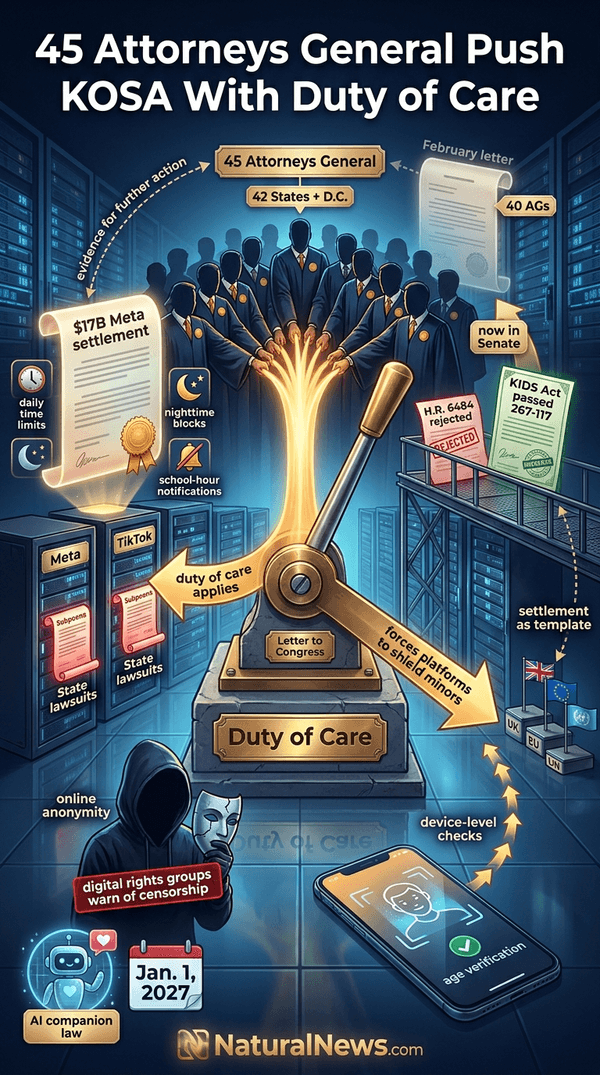
A bipartisan coalition of 45 attorneys general from 42 states, the District of Columbia, American Samoa, and the U.S. Virgin Islands sent a letter on Nov. 3 asking Congress to pass the Senate's Kids Online Safety Act and to ensure the bill's duty of care provision is included, according to the announcement [1][2].
The attorneys general specifically asked that KOSA's duty of care provision be included, the letter stated [1]. The provision would make social media platforms responsible for shielding minors from content that a regulator decides is harmful, according to public analysis [1].
The push for federal legislation comes as many state attorneys general offices have launched investigations and lawsuits against major social media platforms like Meta and TikTok for their targeting of underage users, according to a statement from the Pennsylvania Office of Attorney General [3]. The coalition's letter cited concerns about the effects of platforms on minors and pointed to investigations by state officials [4].
Background: Previous Letter and Bill Status
The same group, then numbering 40 attorneys general, sent a similar letter in February urging Congress to pass the Senate version of KOSA with its duty of care provision, according to the earlier letter [5][6]. The February letter, sent on Feb. 11, highlighted growing concerns about the impact of social media on youth mental health and emphasized that many platforms are deliberately designed to be addictive, according to the letter [6].
The House companion, H.R. 6484, was rejected by the attorneys general in February over "expansive preemption language" and its alternative to the duty of care, which the attorneys general said would "not deliver meaningful change" [1].
The House later incorporated KOSA into the KIDS Act, which passed that chamber on June 29 by a vote of 267-117 and is now in the Senate, according to the article [1]. A duty of care toward minors can only be met by knowing which users are minors, so the Senate version pushes platforms toward age checks on everyone, and its device-level study points at age verification built into every phone and computer, according to a bill tracker [7].
Duty of Care and Age Verification Provisions
The duty of care provision would make social media platforms responsible for shielding minors from content that a regulator decides is harmful, according to the bill text and public analysis [1].
Critics, including digital rights groups, said the duty of care could pressure platforms to censor lawful speech to avoid legal action, according to the article [1]. The House version, according to the article, would require all users, regardless of age, to prove their age to social media companies [1]. A duty of care toward minors can only be met by knowing which users are minors, so the Senate version pushes platforms toward age checks on everyone, and its device-level study points at age verification built into every phone and computer, according to a bill tracker [7].
The Act would kill online anonymity and tie online activity and speech to a real-world identity, according to a report [8]. Device-level verification would likely depend on digital identity checks tied to government-issued identification, third-party age verification vendors, or persistent account authentication systems, according to the report [9]. The debate over age verification has drawn opposition over privacy and speech concerns, according to a biometric industry report [10].
Meta Settlement Cited as Stepping Stone
The attorneys general pointed to a $17 billion settlement with Meta reached in August as evidence that further action is necessary, according to the letter [1]. The settlement imposes daily time limits, "productive pauses," "nighttime blocks" between midnight and 6 a.m., and limits on push notifications during school hours, according to the agreement [1]. The settlement was reached on Aug. 26 and resolved claims that the company violated child privacy laws by designing addictive features on Facebook and Instagram, according to a report [11].
The settlement also requires Meta to age-check every Facebook and Instagram user in the states that signed on to the deal, either by ID verification or facial age estimation; both sides waived any right to argue its terms are unconstitutional, according to the article [1]. A related report stated the settlement is worth up to approximately $18 billion [12]. The settlement "gives the AGs what they want, which is the political story that they've extracted a huge amount of benefit for the public from this settlement, including the platform changes," Jessica Nall, a technology lawyer, said, according to the report [13].
The letter says "a settlement with one company cannot establish consistent protections for children across the entire technology industry" and that safeguards "should not be viewed as a conclusion but rather as evidence that further action is necessary" [1]. Almost immediately after the settlement was finalized, officials in the United Kingdom, the European Union and the United Nations cited the agreement as a template for new age-verification and digital identity mandates in their jurisdictions, according to a report [11].
State Enforcement Powers and AI Concerns
The attorneys general want KOSA to preserve states' ability to enforce their own laws; the letter says "KOSA preserves the ability of states to innovate through legislation and enforcement" [1].
The letter cites "the nascent deluge of AI products inundating our kids" as another reason for Congress to act, according to the document [1]. New York Governor Kathy Hochul signed a bill into law that will ban "unsafe AI companion features" for minors, but in reality, the way the law is written means that companies behind chatbots will have to implement age verification, or as the law calls it, "age assurance" for all users, according to a report [14]. The measure takes effect January 1, 2027, and applies to generative AI systems with natural language interfaces, according to a report [15]. The practical effect is that adults, not only children, will have to prove their age to use chatbots that remember prior conversations, mimic human communication, or engage in flattering responses, according to the report [15].
Conclusion: Request Pending in Senate
Lopez, who is leading the group, said that "children deserve meaningful protections regardless of which social media platform they use" and that Congress should "act now to establish lasting protections that put the safety and well-being of children first" [1]. The letter mentions "the nascent deluge of AI products inundating our kids" as another reason for Congress to act, according to the document [1].
The coalition's letter now awaits action in the Senate, where the KIDS Act remains pending. The attorneys general have urged lawmakers to move quickly to establish consistent federal protections for minors online, arguing that a patchwork of state laws and individual settlements cannot substitute for comprehensive legislation.
References
- 45 Attorneys General Urgently Want Congress to Push Platforms Toward Age Checks. https://reclaimthenet.org/attorneys-general-push-kosa-age-checks
- 45 Attorneys General Press Congress to Advance Kids' Online Safety. https://www.naag.org/policy-letter/45-attorneys-general-press-congress-to-advance-kids-online-safety/
- Attorney General Sunday Urges Congress to Pass Kids Online Safety Act. https://www.attorneygeneral.gov/taking-action/attorney-general-sunday-urges-congress-to-pass-kids-online-safety-act/
- 45 State and Territory Attorneys General Press Congress to Protect Kids Online. https://www.naag.org/press-releases/45-state-and-territory-attorneys-general-press-congress-to-protect-kids-online/
- Bipartisan Coalition of Attorneys General Urges Congress to Advance Senate Kids Online Safety Act. https://www.naag.org/press-releases/bipartisan-coalition-of-attorneys-general-urges-congress-to-advance-senate-kids-online-safety-act/
- 40 State AGs Urge Congress to Adopt Senate KOSA Bill. https://www.kelleydrye.com/viewpoints/blogs/ad-law-access/40-state-ags-urge-congress-to-adopt-senate-kosa-bill
- KOSA Tracker: Status of the Kids Online Safety Act. https://reclaimthenet.org/bill/kosa-kids-online-safety-act
- 40 State Attorneys General Want to Tie Online Access to ID. https://reclaimthenet.org/40-attorneys-general-back-ids-online-safety-act
- 40 Attorneys General Urge Congress to ‘Tie Online Access to ID’. https://childrenshealthdefense.org/defender/40-attorneys-general-urge-congress-tie-online-access-to-id/
- US child safety bill reignites debate over age verification. https://www.biometricupdate.com/202606/us-child-safety-bill-reignites-debate-over-age-verification
- Meta Settlement Drives Global Push for Age Verification and Digital ID Measures. https://www.naturalnews.com/2026-09-01-meta-settlement-drives-age-verification-digital-id.html
- Mark Zuckerberg’s Meta Agrees to Teen Curfew in Deal Worth Up to $18 Billion. https://100percentfedup.com/mark-zuckerbergs-meta-agrees-teen-curfew-deal-worth/?utm_source=rss&utm_medium=rss&utm_campaign=mark-zuckerbergs-meta-agrees-teen-curfew-deal-worth
- Meta’s $18B child-safety deal hinges on age verification tech that doesn’t work well. https://techcrunch.com/2026/08/26/metas-18b-child-safety-deal-hinges-on-age-verification-tech-that-doesnt-work-well/
- New York’s AI Law Will Require Age Checks for All Users. https://reclaimthenet.org/new-yorks-ai-law-will-require-age-checks-for-all-users
- Age Gates for AI: New York AI Law Requires Age Checks for All Chatbot Users. https://www.naturalnews.com/2026-11-04-new-york-ai-law-age-checks-chatbot-users.html
Explainer Infographic











Please contact us for more information.