



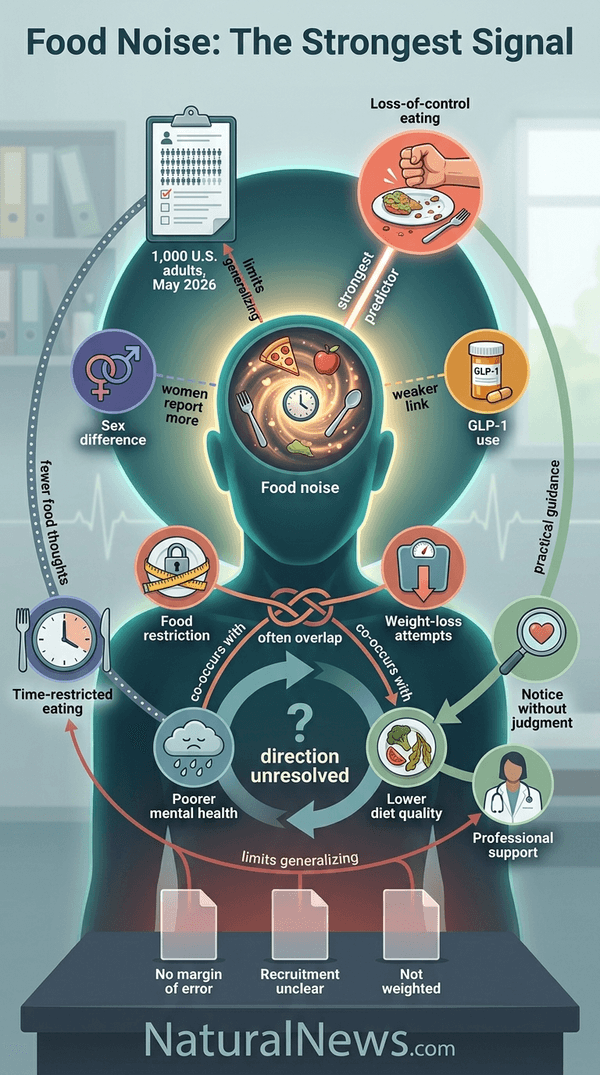
Loss-of-control eating was the strongest predictor of frequent food thoughts among U.S. adults, according to a survey of 1,000 people conducted in May 2026. The report found that about half of respondents experienced food noise at least sometimes, and nearly 1 in 5 reported it often or always.
The report defines food noise as persistent thoughts about food, eating, or the next meal that can intrude on daily activities. The finding places eating behavior at the center of the conversation about why some people feel preoccupied with food, a topic that has gained attention alongside the rise of GLP-1 medications.
According to the report, the survey compared several factors, including loss-of-control eating, current GLP-1 use, sex, food restriction to change weight or body shape, and recent weight-loss attempts.
Study Design and Definitions
Researchers surveyed 1,000 U.S. adults in May 2026 and asked how often they experienced food noise. The survey also collected information on current GLP-1 medication use, sex, loss-of-control eating, food restriction to change weight or body shape, and recent weight-loss attempts.
For the analysis, frequent food noise was defined as experiencing it often or always. Researchers then compared the measured factors to identify which one was most strongly associated with frequent food noise when all factors were considered together.
The report did not specify a margin of error or describe how respondents were recruited. It also did not state whether the sample was weighted to match U.S. demographics. Those details were not included in the summary reviewed for this article.
According to the report, the survey is a cross-sectional snapshot, meaning it captures experiences at a single point in time.
Key Findings
More than half of respondents who reported loss-of-control eating also reported frequent food noise, according to the report. Among all respondents, about half experienced food noise at least sometimes, while nearly 1 in 5 reported it often or always.
Current GLP-1 users were more likely than non-users to report frequent food noise, and women were more likely than men to report it. However, the report states that neither association was as strong as the link between loss-of-control eating and frequent food noise when the factors were considered together.
The report also found that people reporting frequent food noise tended to rate their diets as lower quality and report poorer mental health. The survey did not establish whether those patterns preceded or followed the onset of frequent food thoughts.
A separate review of time-restricted eating found that participants who fasted lost just as much weight as those who counted calories but experienced fewer food-related thoughts and felt less need to monitor overeating [1]. That finding suggests that eating patterns can influence food preoccupation, though the survey reviewed here did not test that relationship directly.
Researchers Caution on GLP-1 Findings
The researchers cautioned that the survey cannot determine what causes food noise or whether medication use changes it, according to the report. They noted a possible explanation for the GLP-1 finding: people who already struggle with persistent food thoughts or eating behaviors may be more likely to seek GLP-1 medications.
Because of that dynamic, the association between GLP-1 use and frequent food noise does not mean the medications increase food noise, the report states. The direction of any relationship remains unresolved in the survey data.
In an attributed statement, the study authors said eating behaviors deserve a closer look. The report frames loss-of-control eating as a factor that warrants further investigation, separate from questions about medication.
The survey's limitations echo broader cautions in the clinical literature about drawing causal conclusions from observational data.
Guidance and Limitations
The report offers guidance for people who experience frequent food thoughts: notice when food noise occurs, including after food restriction, skipped meals, or strict eating rules, and observe those patterns without judgment.
People who regularly feel unable to stop eating or who cycle between restriction and overeating may seek support from a registered dietitian or another qualified health professional, according to the guidance. The report does not recommend self-treatment for persistent symptoms.
The report states that frequent food thoughts are not automatically a sign of disordered eating and can be influenced by hunger, stress, emotions, and food availability. According to the Alliance for Eating Disorders, incessant thoughts about food can sometimes indicate a deeper issue, such as an eating disorder [2].
The survey's cross-sectional design limits what can be concluded about cause and effect. The findings describe associations among the measured factors at one point in time and do not establish that any factor produced frequent food noise in respondents.
References
- The hidden advantage of intermittent fasting: Why timing your meals could be better than counting calories - NaturalNews.com, July 06, 2026.
- What is "Food Noise" And How to Know if it Signals .... https://www.allianceforeatingdisorders.com/what-is-food-noise/
Explainer Infographic












Please contact us for more information.