


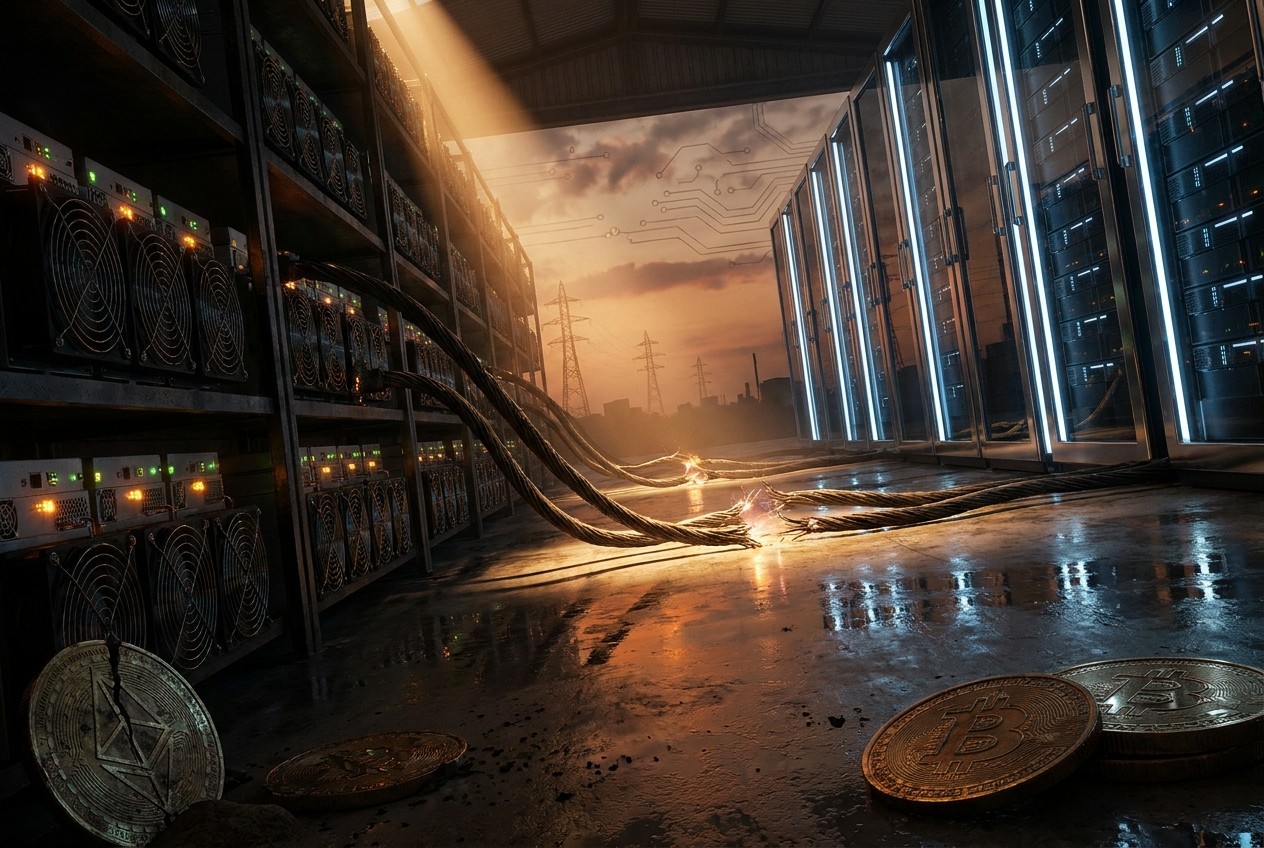
American Bitcoin reported a quarterly net income of $126 million on Wednesday, Nov. 4, but rising mining costs and falling profits from mining raise questions about its long-term strategy as major rivals pivot toward artificial intelligence.
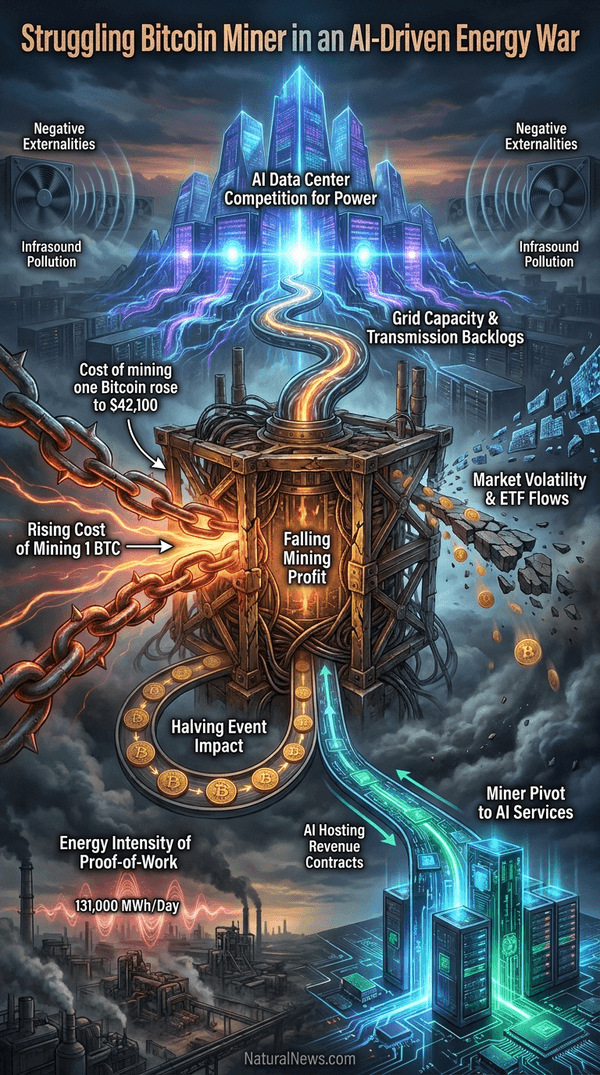
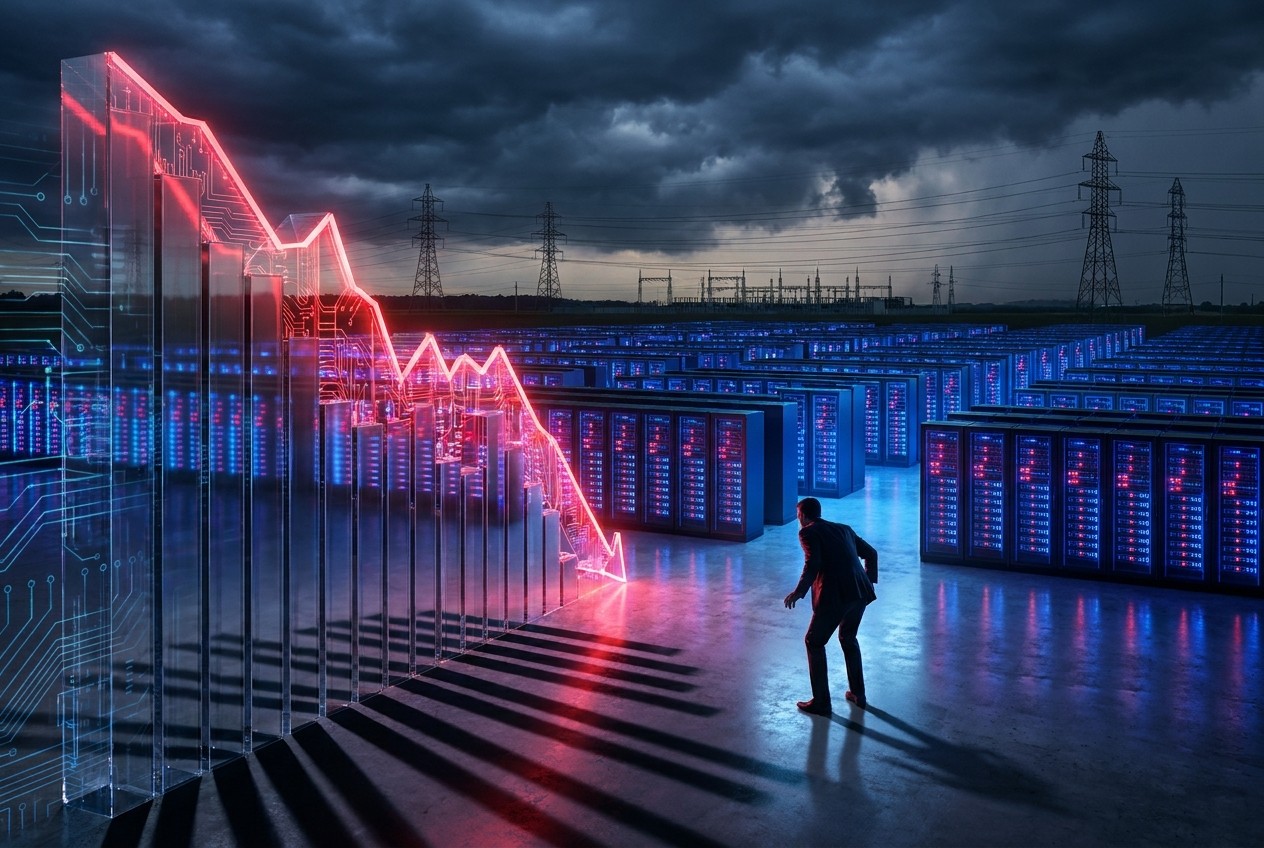
Gross mining profit fell to $25.8 million from $33 million in the previous quarter, and the company's reported mining margin dropped to 41%, according to the disclosure [1]. Mining revenue slipped to $63.4 million, while the cost of mining one Bitcoin rose to $42,100, the filing stated [2].
Shares of $ABTC fell about 15% after the report, as investors focused on the mining segment rather than the paper gain on holdings, according to market data [3][4]. The company held 8,427 BTC at quarter end, the report stated [5][6].
Mining Margins Face Pressure From Energy and Hardware Costs
Bitcoin mining economics have tightened across the industry as energy expenses and equipment costs have climbed. JPMorgan analysts said Bitcoin has traded below its estimated production cost, which they placed at $78,000, for five straight months, leaving roughly one in five miners unprofitable and pushing publicly listed operators to sell a record volume of coins [7]. The bank said mining economics have "worsened" under those conditions [7].
Hashprice, a measure of daily mining revenue per unit of computing power, has fallen sharply. Bitcoin revenue per petahash dropped by half from a peak of $70 to $35, according to industry data, and network mining difficulty declined 11% in the largest drop since China's 2021 crackdown as miners capitulated [8]. Rising energy costs also threaten mining profitability and reinforce the importance of strong balance sheets, according to commodity analyst David Morgan [9].
The energy intensity of proof-of-work mining has been documented for years. Bitcoin was consuming 131,000 megawatt hours per day at a daily cost of $19.7 million as far back as April 2013, according to press reports cited by Paul Vigna in The Age of Cryptocurrency [10]. More recently, analysts have described the mining of Bitcoin alone as requiring more electricity than is used by some entire countries, including Norway and Malaysia [11]. Bitcoin price volatility continues to feed directly into miner profitability, and the network's output schedule is fixed: miners currently receive 3.125 BTC per validated block, a rate scheduled to halve to approximately 1.5625 BTC at the next halving [12].
AI Data Centers Compete for Power and Capital
Artificial intelligence data centers are competing directly with Bitcoin miners for electricity, sites and capital, according to industry reports. Utilities are scrambling to connect massive new data centers, tech giants are locking in gigawatts of power, and transmission queues to connect new generation to the grid are backlogged, according to an industry assessment published by ZeroHedge [13]. The report stated that computation is no longer limited by software but by energy [13].
Some mining companies have responded by converting facilities to AI computing. Bitcoin miner Bitzero signed an AI hosting agreement expected to generate approximately $2.6 billion in total contracted revenue over the life of the lease, a deal that underscores the growing pivot of Bitcoin miners into providers of energy infrastructure for AI computing, according to industry analysts [14]. Bitdeer announced a 16-year colocation lease for 121 IT megawatts at its Tydal, Norway campus, representing roughly $4.7 billion in contracted payments with an option that takes the potential total to $8.0 billion over 24 years [15]. MARA separately moved to buy the Long Ridge combined cycle power plant for a data center complex, a deal that drew scrutiny from the PJM market monitor amid tightening capacity supplies and soaring prices in the region, largely driven by data center development [16].
The shift has raised operating costs and reduced available mining capacity, analysts said [17]. Some observers have described the pivot as a historic mistake for public miners, while others frame it as a rational reallocation of scarce power infrastructure [18][17]. The competition extends beyond economics: AI data centers are also generating new forms of local pollution, with infrasound from cooling systems, diesel generators and thousands of fans linked to headaches, nausea and insomnia in nearby residents, according to public health reporting [19].
ETF Outflows Add to Crypto Market Uncertainty
Market participants said ETF flows can influence Bitcoin prices and, by extension, mining economics, because spot funds represent a significant share of sustained buying in the current market. The report noted that Bitcoin's price stayed in a relatively tight range around $65,000 to $73,000 during that period [20].
The outflows arrived against a broader backdrop of price weakness. Bitcoin's price has fallen roughly 50% from recent highs near $120,000 in a sell-off that appeared unusually coordinated, with major institutions and exchanges unloading Bitcoin en masse, according to an analysis published by NaturalNews.com [21]. Trump Media separately transferred Bitcoin to an exchange as unrealized losses on its holdings reached an estimated $455 million, the company disclosed [22].
Company and Industry Outlook
Industry analysts said miners may consolidate or diversify into AI, according to the report [17][14]. Analyst commentary has framed the shift as a structural change in how power infrastructure is valued, with electrical substations described as strategic assets in the AI era [13]. At the same time, some analysts have cautioned that the pivot carries risk, describing public miners' movement out of crypto as a historic mistake that could leave them exposed if AI data center demand cools [17].
References
- American Bitcoin's $126M profit masks mining pressure as rivals turn .... https://www.tradingview.com/news/cointelegraph:2b6dcf883094b:0-american-bitcoin-s-126m-profit-masks-mining-pressure-as-rivals-turn-to-ai/
- American Bitcoin's $126 Million Profit Rode Bitcoin's Rally. Q4 Is Testing It. https://blockchair.com/news/american-bitcoins-126m-profit-masks-mining-pressure-ai--b985e9c120d8495f
- American Bitcoin posts $126 million net profit as rising costs, rivals pivot to AI. https://blockchair.com/news/american-bitcoins-126m-profit-masks-mining-pressure-ai--d4a27049e34ef3c5
- American Bitcoin's $126 million 'profit' is a paper gain. The mining .... https://www.ainvest.com/news/american-bitcoin-126-million-profit-paper-gain-mining-business-real-2611/
- Eric Trump's American Bitcoin Banks $126M Profit—But ABTC Shares Dive. https://news.bitcoin.com/mining/eric-trumps-american-bitcoin-banks-126m-abtc-shares-dive/
- American Bitcoin Reports $126M Q3 Profit on Treasury Gains as Mining .... https://www.coinarticle.com/article/american-bitcoin-q3-profit-treasury-gains-mining-costs
- JPMorgan: Bitcoin Mining Costs Have ‘Worsened’ as BTC Trades Below Production Cost. https://www.activistpost.com/jpmorgan-bitcoin-mining-costs-have-worsened-as-btc-trades-below-production-cost/
- Bitcoin mining difficulty drops by most since 2021 as miners capitulate. https://www.activistpost.com/bitcoin-mining-difficulty-drops-by-most-since-2021-as-miners-capitulate/
- Gold Under Pressure, Oil Rising, and the Race for Critical Minerals. 2026-10-23T21:22:52.558Z.
- The Age of Cryptocurrency by Paul Vigna [Vigna, Paul]
- Cryptocurrency Mining Uses ‘Staggering’ Amounts of Energy. https://childrenshealthdefense.org/defender/cryptocurrency-mining-mechanicville-new-york-bitcoin-mining-energy/
- Bitcoin Passes Midpoint in Current Halving Cycle, 2028 Supply Reduction Looms. https://www.naturalnews.com/2026-04-16-bitcoin-passes-midpoint-2028-supply-reduction-looms.html
- The 20 Million Milestone: Bitcoin Mining Is, and Always Will Be, an Energy Business. https://zerohedge.com/sponsored-post/20-million-milestone-bitcoin-mining-and-always-will-be-energy-business
- Bitcoin Miner Bitzero Signs $2.6 Billion AI Hosting Deal, Highlighting Power Infrastructure Shift. https://www.naturalnews.com/2026-06-27-bitcoin-miner-bitzero-signs-ai-hosting-deal.html
- Bitdeer Lands $4.7B Norway Lease With a16z-, Nvidia- And Dell-Backed Volta. https://www.zerohedge.com/ai/bitdeer-lands-47b-norway-lease-a16z-nvidia-and-dell-backed-volta
- PJM monitor urges FERC to condition MARA power plant buy for data center complex. https://www.utilitydive.com/news/pjm-market-monitor-mara-data-center-long-ridge/821574/
- Public Bitcoin Miners Are Dumping Crypto For AI, A Historic Mistake. https://www.zerohedge.com/crypto/public-bitcoin-miners-are-dumping-crypto-ai-historic-mistake
- AI Hyperscalers Are Pricing Bitcoin Miners Off The Grid. Here's Why Its A Massive Win-Win.... https://www.zerohedge.com/crypto/ai-hyperscalers-are-pricing-bitcoin-miners-grid-heres-why-its-massive-win-win
- AI data centers’ “infrasound” pollution linked to nausea, insomnia in nearby residents. https://www.naturalnews.com/2026-05-29-data-centers-infrasound-pollution-linked-to-nausea-insomnia.html
- The bitcoin market is splitting in two. Here’s who is buying and selling amid the war. https://www.activistpost.com/the-bitcoin-market-is-splitting-in-two-heres-who-is-buying-and-selling-amid-the-war/
- CRYPTO CARNAGE Why Bitcoins Proof of Work is Incompatible with the Power Needs of AI Data Centers - NaturalNews.com, February 06, 2026.
- Trump Media Transfers Bitcoin to Exchange as Unrealized Losses Reach $455 Million. https://www.naturalnews.com/2026-05-28-trump-media-transfers-bitcoin-to-exchange-unrealized-losses.html
- CLARITY Act Stalls in Senate as Crypto Related Stocks Decline - NaturalNews.com, September 18, 2026.
- US Lawmaker Introduces Bill to Codify Strategic Bitcoin Reserve - NaturalNews.com, May 25, 2026.
Explainer Infographic






Please contact us for more information.