


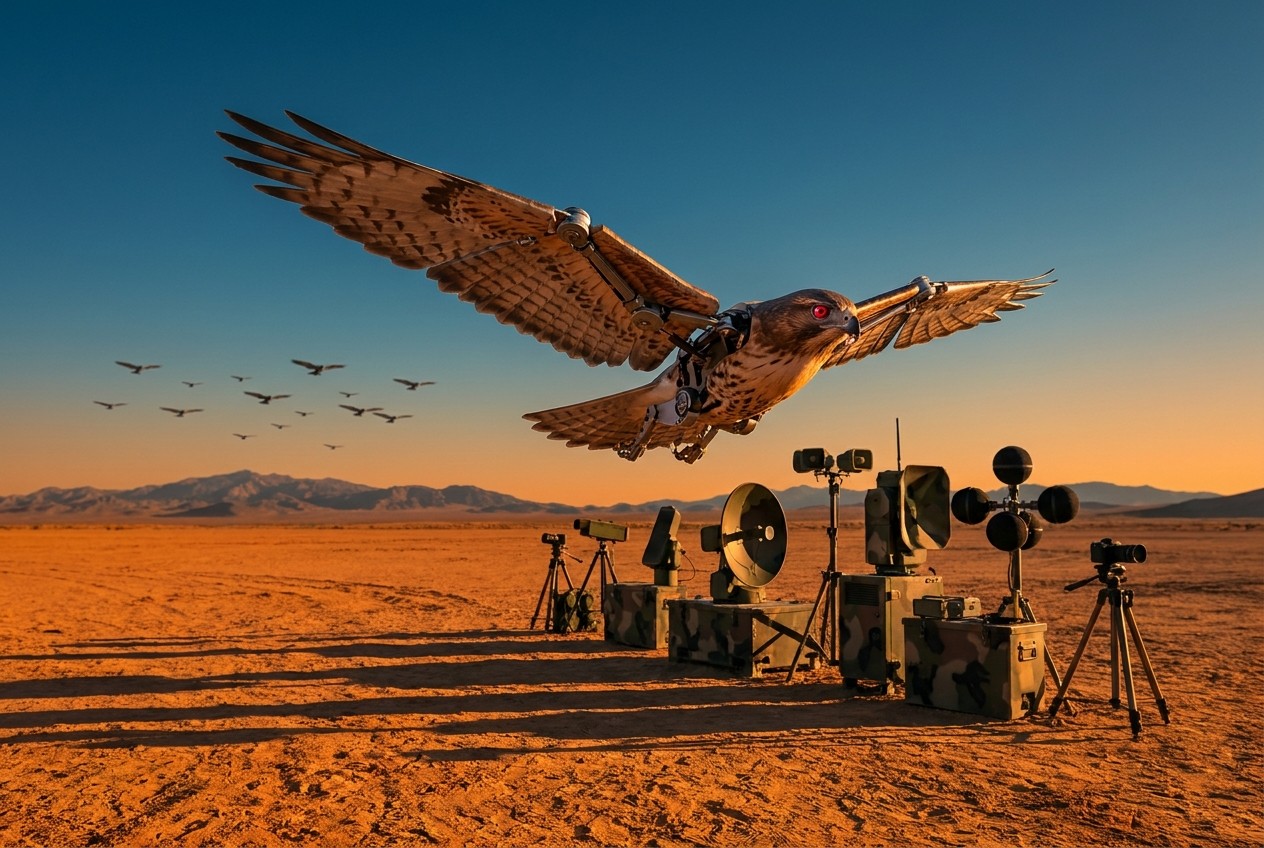
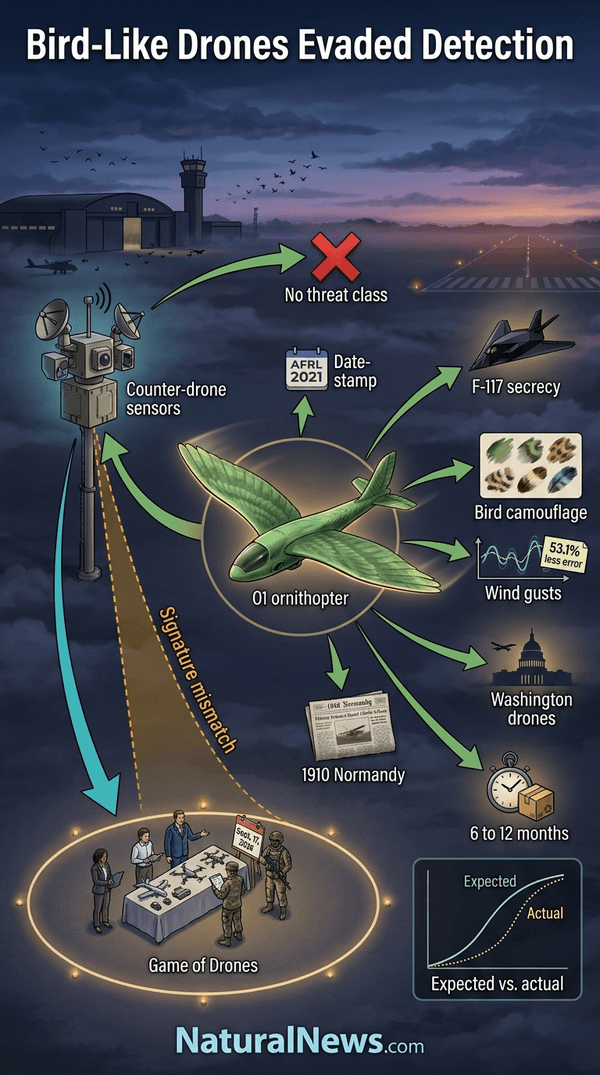
A bird-like drone developed by Los Angeles startup Ornadyne reportedly evaded detection by military counter-drone systems during a U.S. Air Force evaluation at a Nevada base on Sept. 17, 2026, raising questions about whether existing surveillance technology can distinguish unconventional unmanned aircraft from ordinary wildlife. The O1 ornithopter mimics a bird's flight by flapping its wings rather than using conventional propellers, according to reports on the Defense Contract Management Agency-sponsored exercise. [1][2].
The O1 does not use propellers like most drones. Instead, it mimics the flight mechanics of a bird by flapping its wings to stay in the air, according to Armed Forces Press [3]. The exercise, part of the Defense Contract Management Agency-sponsored "Game of Drones" series, brings together vendors and warfighters in an experimental test environment to demonstrate how different drone capabilities fare against each other in different scenarios, according to the agency [4].
Attribution for the account rests with the ZeroHedge report and Task & Purpose, which did not specify every detection system involved or release the full underlying technical data. The report stated that the craft was able to avoid being classified as a threat by the systems used in the exercise.
Background on the Exercise and Bird-Like Drones
The DCMA-sponsored event brings together vendors and warfighters in an experimental test environment to demonstrate how different drone capabilities fare against each other in different scenarios [4].
Bird-like drones, also called biomimetic or flapping-wing unmanned aerial vehicles, are designed to match the appearance and flight patterns of birds. The Air Force has examined the concept before. In June 2021, the Air Force Research Laboratory described a mini air vehicle developed with a California-based partner that would be able to imitate either insect or bird flight and was intended for surveillance purposes, according to a statement at the time [5]. The laboratory noted the vehicle would perform insect-like maneuvers with flapping wings [5].
The research literature on animal flight has long informed engineering work. Author Amina Khan described experimental work in which researchers raced to gather aerodynamic data from controlled setups, noting that air flows over a body are incredibly complex and require extensive processing to assemble into a coherent picture [6]. Separate research on flapping-wing robots has focused on the stability problems such craft face, including susceptibility to wind gusts; one team from Japan's Chiba University reported a control method that reduced X-axis position error by 53.1 percent [7].
How the Drones Reportedly Evaded Detection
The O1 was reported to have bypassed counter-drone systems that failed to classify the craft as a man-made threat, according to an account of the test [8]. The drone can also be colored to match local bird species, according to that account [9].
The reported result points to a structural limitation in detection design. Sensors tuned to recognize the signatures of propeller-driven quadcopters or fixed-wing aircraft may treat a slow, flapping profile as wildlife. The incident echoes earlier accounts of unidentified flying objects that were difficult to classify; a 1910 report cited in Charles Fort's collected records described a large, black, bird-like object seen off the coast of Normandy that fell into the sea and disappeared, leaving no traceable evidence [10].
A person familiar with the exercise said the results demonstrated limitations in current detection methods, according to the report. The manufacturer, a Los Angeles startup, has said it targets delivery to operators within 6 to 12 months, according to an account of the evaluation [9].
Reactions and Implications
The results raise questions about the ability of existing systems to identify unconventional drones, the report stated.
The question of what counts as a threat in domestic airspace has grown more urgent. NaturalNews reported that military officials and defense analysts are raising alarms that unmanned aerial systems have rapidly evolved from tactical tools into one of the most pervasive and challenging threats facing both the modern battlefield and the homeland, with adversaries and non-state actors deploying inexpensive drones capable of carrying explosives or surveillance equipment [11]. Officials have also detected unidentified drones above an army base in Washington where senior officials reside, though they have not determined where the drones came from [12].
This also illustrates the distance between what the public is told and what agencies know. As author Annie Jacobsen documented in her history of Area 51, the U.S. government kept the F-117 Nighthawk secret for years after variations of the aircraft had already been flying at the Nevada test sites [13]. No injuries or operational disruptions were reported during the exercise, officials said.
References
- Drones Built To Look Like Birds Evaded Detection At Air Force Tech Exercise. https://www.zerohedge.com/technology/drones-built-look-birds-evaded-detection-air-force-tech-exercise
- Drones Built To Look Like Birds Evaded Detection At Air Force Tech Exercise. https://www.zerohedge.com/technology/drones-built-look-birds-evaded-detection-air-force-tech-exercise
- Drones built to look like birds evaded detection at Air Force tech exercise. https://x.com/AFP_press/status/2117973444616757711
- Bird-mimicking drone passes detection test. https://www.dcma.mil/News/Article/4615524/bird-mimicking-drone-passes-detection-test/
- Air Force developing small remote-control drones with flapping wings - NaturalNews.com, August 05, 2021
- Adapt how humans are tapping into nature's secrets to design and build a better future by Khan Amina author
- Researchers develop control system that helps bird-inspired robots stay stable in windy conditions. https://roboticsandautomationnews.com/2026/08/04/researchers-develop-control-system-that-helps-bird-inspired-robots-stay-stable-in-windy-conditions/103864/
- Ornadyne’s Bird-Like Drone Evades Military Sensors in Desert Test. https://www.archyde.com/ornadynes-bird-like-drone-evades-military-sensors-in-desert-test/
- Ornadyne Bird-Mimicking Drone Evades Counter-UAS Sensors at Air Force Evaluation. https://www.sofx.com/ornadyne-bird-mimicking-drone-evades-counter-uas-sensors-at-air-force-evaluation/
- The books of Charles Fort by Tiffany Thayer
- FBI warning highlights growing fear of drone attacks on U.S. soil. https://www.naturalnews.com/2026-03-16-fbi-warning-drone-attacks.html
- US reportedly detects drones over Washington base where Rubio, Hegseth live. https://www.timesofisrael.com/us-reportedly-detects-drones-over-washington-base-where-rubio-hegseth-live/?utm_campaign=most_popular&utm_source=website&utm_medium=article_end&utm_content=9
- Area 51: An Uncensored History of America's Top Secret Military Base by Annie Jacobsen
Explainer Infographic





Please contact us for more information.