


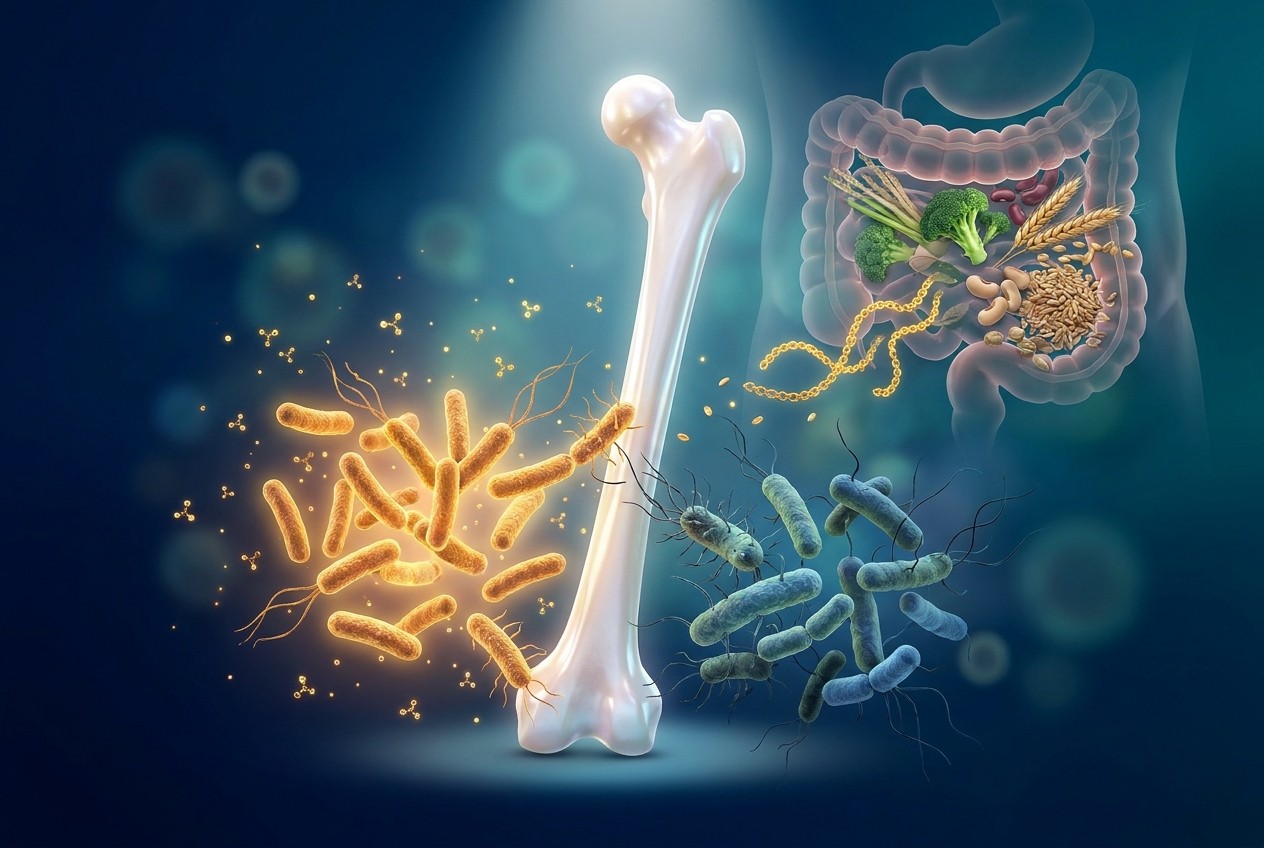
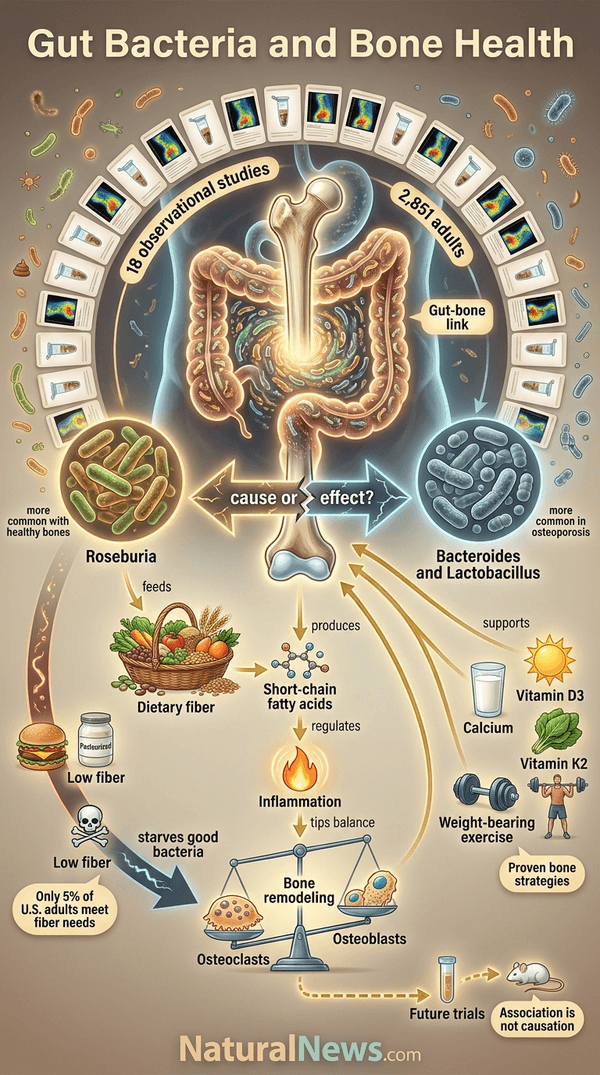
A new review of 18 observational studies involving 2,851 adults has found that certain types of gut bacteria appear more frequently in people with healthier bones, while other bacterial groups are more common in those with osteoporosis or low bone mass, according to researchers.
The review, described in a report by mindbodygreen, compared participants' bone density measurements with the types of bacteria found in their stool samples. Roseburia appeared more often in people with healthy bones, while Bacteroides and Lactobacillus were more common in those with osteoporosis or low bone mass, the report stated.
The findings do not establish cause and effect. The studies were observational, meaning researchers could not determine whether the bacteria influence bone health or whether bone health influences the composition of the gut microbiome, according to the report. The review adds to a growing body of research examining the relationship between the gut microbiome and skeletal integrity, an area that has drawn increasing scientific attention in recent years [1].
Review Methodology and Scope
Researchers combined 18 observational studies involving 2,851 adults, many of whom were postmenopausal women, according to the report. The review compared participants' bone density with the types of bacteria found in their stool samples to determine whether people with different levels of bone health harbored different communities of gut bacteria.
The researchers did not find a difference in the overall variety of gut bacteria between people with healthy bones and those with osteoporosis or low bone mass, the review stated. Instead, specific types of bacteria showed up more frequently in one group than the other. This distinction matters because it suggests that the relationship, if any, may be driven by particular bacterial groups rather than by broad differences in microbiome diversity.
The studies were observational in design, which limits what conclusions can be drawn. Previous reviews have also noted that while associations between gut microbiota and bone health have been reported, mechanistic links are often absent from the published literature [2]. Other reviews in this field have similarly indicated knowledge gaps and highlighted possible avenues for future research, including intervention studies on pre-, pro-, or postbiotics targeting bone mineral density loss in both animal models and human beings [3].
Bacteria Patterns and Bone Health
Roseburia appeared more often in people with healthy bones, while Bacteroides and Lactobacillus were more common in those with osteoporosis or low bone mass, according to the review. These patterns were consistent across the smaller group of studies that specifically examined these bacteria, researchers said.
The review cannot determine whether more Roseburia helps protect bones or whether bone health influences the gut microbiome, the authors stated. The studies were observational, so researchers could not establish cause and effect. This limitation is common in microbiome research. As one review of probiotics and prebiotics has noted, there are a large number of publications that offer intriguing associations between the microbiota and disease, but mechanistic links are frequently absent [2].
The growing interest in this area extends beyond osteoporosis. Researchers at the CU Anschutz School of Medicine have said microorganisms living in the gut may hold the key to improving symptoms of osteoarthritis [4]. The Marcus Institute for Aging Research has also reported growing evidence that a relative abundance of certain gut microbes may be related to skeletal health [5]. Researchers there identified specific bacteria in the gut microbiome linked to skeletal health [6].
Potential Mechanism: Short-Chain Fatty Acids and Inflammation
Roseburia helps break down dietary fiber into compounds called short-chain fatty acids, according to the review. These compounds support the gut lining and help regulate inflammation, researchers stated. The human gut is a complex ecosystem teeming with trillions of bacteria that influence immunity, mental health, inflammation and chronic disease, and modern diets laden with processed foods, antibiotics and environmental toxins disrupt this balance [7].
Inflammation helps regulate bone remodeling, the ongoing process in which bones constantly break down old tissue and replace it with new tissue. Too much inflammation can disrupt the balance between breaking down old bone and building new tissue, the review stated. Short-chain fatty acids may help regulate that process, potentially explaining why Roseburia was more common in people with healthy bones.
However, the observational studies could not establish whether short-chain fatty acids directly affect bone health, the authors noted. The connection between gut bacteria and bone is part of a broader pattern in which gut microbiota exerts systemic physiological regulation [8]. Separate research has linked chronic stress to aging of the immune system via a gut-brain-bone marrow axis in mouse models, with blood stem cells shrinking in number and shifting production toward inflammatory cell types [9].
Dietary fiber, which feeds bacteria like Roseburia, acts as a food source for gut microbiota, helping beneficial bacteria do their jobs [10]. Fibrous foods such as nuts and seaweed provide this fuel. A separate review pointed to research examining how nutrients interact with gut bacteria, including findings on how specific compounds are metabolized by microbial communities in the digestive tract [11].
Dietary and Lifestyle Factors
Roseburia feeds on fiber, so eating a variety of plant foods may support its growth, according to the report. Vegetables, beans, lentils, fruit and whole grains provide the fiber gut bacteria need. Only about 5% of U.S. adults meet the recommended daily intake of 25 to 38 grams of fiber, according to the U.S. Department of Agriculture. That shortfall matters because fiber lowers cholesterol, stabilizes blood sugar, supports weight management and feeds the beneficial bacteria that drive gut health [12].
Fermented foods such as yogurt, kefir and sauerkraut can introduce beneficial microorganisms and support a healthy gut environment, the report stated. A separate guide on fermented foods noted that most jars labeled kimchi on supermarket shelves are pasteurized, sugar-laden counterfeits stripped of the living probiotics that make the traditional Korean superfood one of the most powerful fermented foods [13]. Consumers seeking the benefits of fermented foods may need to verify that products contain live cultures.
These habits are not proven treatments for osteoporosis. Getting enough calcium and vitamin D, along with regular weight-bearing exercise and resistance training, remains important for maintaining strong bones, according to the report. Vitamin K is also primarily involved in blood clotting, bone metabolism and protein building [14]. Vitamin D3 and vitamin K2 work together to help the body absorb calcium and direct it toward the bones [15].
Conclusion
The review identified an association between certain gut bacteria and bone health, but it cannot establish causation, researchers said. More research is needed to determine whether Roseburia helps protect bones or is simply a marker of other factors, according to the authors. The studies were observational, and the findings do not prove that altering gut bacteria through diet or supplements will improve bone density or reduce fracture risk.
The relationship between the gut microbiome and bone health remains an active area of investigation. Reviews have noted that targeting the gut microbiome may be a potential alternative avenue for those with osteopenia or osteoporosis [16]. Other researchers have pointed to the link between gut bacteria and bone metastasis as an area only beginning to be explored [17].
Current recommendations for bone health remain unchanged. A colorful plate, adequate fiber intake and consistent strength training remain the foundation of bone-supporting habits, according to the report.
References
- The interaction between gut microbiome and bone health. https://pmc.ncbi.nlm.nih.gov/articles/PMC11062616/
- Probiotics and Prebiotics
- Gut microbiome and bone health: update on mechanisms, clinical correlations, and possible treatment strategies. https://pubmed.ncbi.nlm.nih.gov/39643654/
- New CU Anschutz Research Explores the Connection Between the Gut and Skeletal Health. https://news.cuanschutz.edu/medicine/gut-skeletal-health-research
- Study Finds Connection Between Gut Microbiome and Bone Density. https://www.marcusinstituteforaging.org/news/study-finds-connection-between-gut-microbiome-and-bone-density
- Osteoporosis: Could a healthy gut microbiome prevent bone loss? https://www.medicalnewstoday.com/articles/gut-microbiome-bone-health
- Healing the gut: How probiotic and prebiotic foods restore digestive health. https://www.naturalnews.com/2026-04-11-how-probiotic-prebiotic-foods-restore-digestive-health.html
- The gut microbiota-derived metabolites regulate bone extracellular matrix homeostasis: Mechanisms and therapeutic implications. https://www.sciencedirect.com/science/article/pii/S0898656825006606
- Study: Chronic Stress Ages Immune System via Gut-Brain-Bone Marrow Axis, Mouse Data Shows. https://www.naturalnews.com/2026-07-09-chronic-stress-ages-immune-system-mouse-data-shows.html
- Why Are Walnuts and Seaweed Good for Your Gut - Mercola.com, May 21, 2018.
- Advances in applied microbiology.
- Fiber powerhouses: Why broccoli isn’t the only vegetable worth celebrating. https://www.naturalnews.com/2026-09-25-fiber-powerhouses-broccoli-isnt-the-only-vegetable.html
- The Ultimate Guide to Real Kimchi Fermented Superfoods, Health Benefits, and spotting Supermarket Counterfeits. https://books.brightlearn.ai/The-Ultimate-Guide-to-Real-Kimchi-Fermented-Superfoods-44b536688-en/index.html
- Vitamin K: Benefits, Food Sources and Recommended Intake, According to Research. https://www.naturalnews.com/2026-10-04-vitamin-k-benefits-food-sources-recommended-intake.html
- Vitamin D3 and vitamin K2: How these essential nutrients work together to support good health. https://www.naturalnews.com/2026-10-23-vitamin-d3-k2-essential-nutrients-good-health.html
- Healthy Gut, Healthy Bones: Targeting the Gut Microbiome to Promote Bone Health. https://pmc.ncbi.nlm.nih.gov/articles/PMC7933548/
- Bones and guts – Why the microbiome matters - ScienceDirect. https://www.sciencedirect.com/science/article/pii/S2212137424000034
Explainer Infographic





Please contact us for more information.