



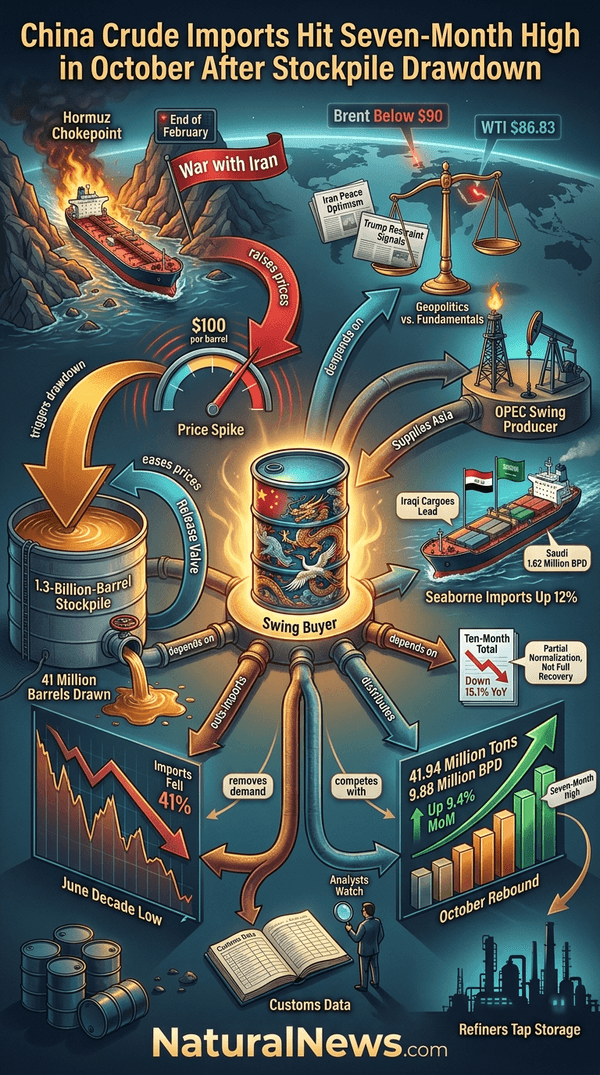
China's crude oil imports rose to a seven-month high in October, climbing to 41.94 million tons, or about 9.88 million barrels per day, according to official customs data cited by Reuters. The October average marked a 9.4% increase from the previous month and represented the highest monthly volume since March, the report stated.
Seaborne crude imports specifically rose 12% in October from September, according to data from Kpler. The increase was led by Iraqi cargoes, though imports remained 13.3% below October 2025 levels, customs data showed. Chinese oil imports for the first ten months of 2026 were 15.1% lower than the ten-month total for 2025.
The rebound followed months of reduced buying during the U.S. and Israeli war with Iran, which began at the end of February. China, the world's largest crude importer, drew heavily from its 1.3-billion-barrel stockpile after oil prices jumped above $100 per barrel.
Stockpile Drawdown Preceded Import Rebound
Since the U.S. and Israeli war with Iran began at the end of February, China relied on its crude oil inventories after prices rose above $100 per barrel. The world's biggest crude importer drew from a 1.3-billion-barrel stash for most months after March as it cut imports amid higher prices.
China reduced total crude imports to a decade low in June, leaning heavily on its inventory cushion. Analysts had noted at the time that China's massive strategic crude stockpile helped offset a supply shock that might otherwise have sent global prices soaring.
The drawdown allowed Chinese refiners to meet domestic demand from storage rather than increasing imports, easing pressure on global oil supplies during the conflict in Iran. However, since summer, imports have begun to pick up, according to customs and Kpler data cited by Reuters. By September, analysts at Energy Aspects said China's crude purchases had increased over levels seen in the spring but were not expected to return to prewar levels.
Saudi Crude Flows Recover to Prior-Year Levels
Imports from Saudi Arabia rose to 1.62 million barrels per day in October, in line with last year's Saudi monthly total, customs data showed. The October volume marked an increase from earlier months in 2026 when the Middle East war prompted Chinese buyers to sharply cut purchases from the region and overall.
The recovery in Saudi flows was part of a broader rebound in shipments from the Persian Gulf. The data indicated a partial recovery in Saudi flows, though total Chinese imports remained below 2025 levels.
Saudi Arabia's production decisions have been closely watched during the conflict. The kingdom has historically served as OPEC's swing producer, adjusting output to manage global prices. The October customs data suggested Saudi crude remained a significant component of China's import mix despite the wartime disruptions.
Analysts Flag Potential Price Impact
Some analysts called the pickup in Chinese buying a potentially worrying development on the basis that if China's low oil-buying had kept a lid on prices, higher buying could take that lid off.
For now, that effect has not appeared, with oil prices moved mostly by reports on geopolitical topics and developments in the Middle East. The report included analyst commentary but did not endorse a specific price forecast.
The dynamic reflects China's role as what market analysts have described as the ultimate swing oil buyer. China's import patterns, refinery margins, and strategic stockpiling increasingly shape marginal demand and near-term price discovery, according to market analysts. During the war, China's reduced purchasing helped absorb a supply shock that might otherwise have sent global prices soaring, according to reports.
Market Reaction and Price Context
Brent crude futures traded below $90 for the first time since August, while WTI crude futures were around $86.83, according to OilPrice.com price data. Brent had previously crashed 7% on Iran peace hopes before recovering some ground.
Oil prices have been influenced by reports on Iran peace optimism and signals from former President Trump on restraint toward Iran, according to market headlines. Oil prices plunged below $92 as Trump signaled restraint on Iran, and later fell below $90 on renewed Iran optimism.
The Chinese import data was not described as the primary driver of recent price moves. Traders have focused on geopolitical developments and diplomatic signals rather than the monthly customs figures.
Outlook Remains Data-Dependent
China's crude imports remain below 2025 levels despite the October rebound, customs data showed. Whether the import recovery continues depends on crude prices, Middle East developments, and inventory levels, according to analysts.
Oil purchases by Chinese refiners are climbing back toward 10 million barrels daily but may not hit that number until the end of the year, according to analysts from Rystad Energy, Energy Aspects, and FGE NexantECA. Fourth-quarter import rates could reach 9.9 million barrels daily, which would be much lower than last year's peaks of between 12 and 13 million barrels daily.
The Chinese buying activity has been at similar levels to July and August and is unlikely to dramatically ramp up beyond that, according to Kpler data. Beijing is seen as a savvy buyer that will lean more on inventories and keeping refinery runs in check rather than buying oil in triple digits. The next set of official customs data is expected to provide further indication of China's buying pace.
Reference:
- China Is Buying Oil Again After Months of Living Off Its Stockpiles. https://oilprice.com/Latest-Energy-News/World-News/China-Is-Buying-Oil-Again-After-Months-of-Living-Off-Its-Stockpiles.html
Explainer Infographic








Please contact us for more information.