


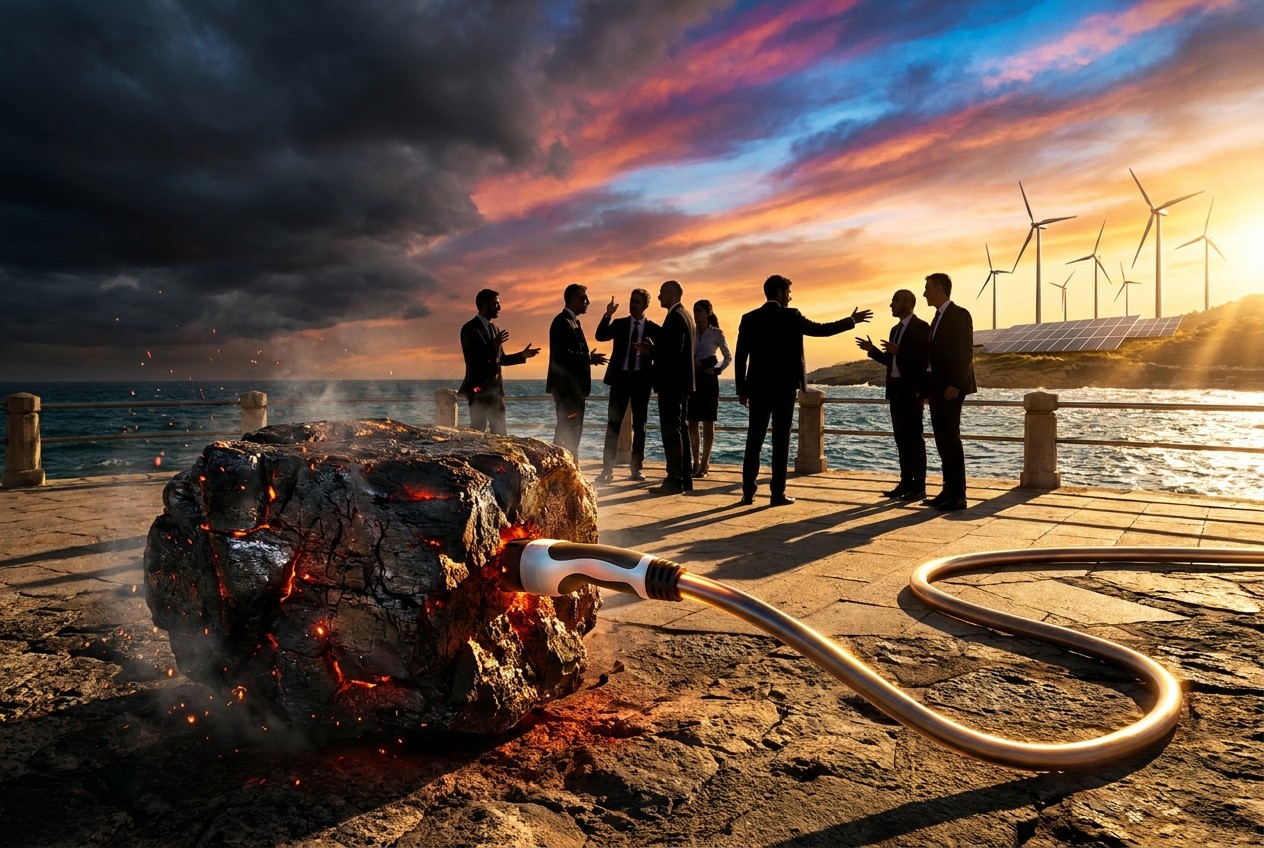
World leaders set out their climate priorities in speeches at COP31 in the city of Antalya in Turkey on Wednesday, Nov. 11, as negotiators from nearly 200 countries seek agreement on a plan to increase the share of electricity in global energy use and revive stalled efforts to move away from fossil fuels.
The summit opened Monday, Nov. 9, in the Mediterranean resort city as global greenhouse gas emissions show little sign of falling and wars, inflation and other crises compete for political attention.
A United Nations report last month found the world on course to break through the 1.5 C warming limit that countries had agreed to pursue under the Paris Agreement. The negotiating agenda at COP31 is narrower than at any other major climate conference in the decade since the Paris Agreement, according to Bloomberg. The United States, the world's largest historical emitter, has skipped the talks for the second year in a row after President Donald Trump withdrew the country from climate cooperation following his return to office in 2025.
Leaders' Speeches Began Wednesday
Scores of world leaders – including presidents and heads of government – began their rapid-fire speeches on Wednesday afternoon and continued through the day on Thursday, Nov. 12, according to the COP31 schedule. Wednesday's speakers are expected to include Brazilian President Luiz Inacio Lula da Silva, who was re-elected at the end of October and whose country hosted last year's climate talks. European Commission President Ursula von der Leyen, Chinese Vice President Han Zheng and Marshall Islands President Hilda Heine will also speak on Wednesday [1].
Former French Prime Minister Laurent Fabius, who presided over the 2015 Paris climate conference and leads an advisory council of former COP presidents, said the speeches could give political impetus to the negotiations. Aside from Trump, French President Emmanuel Macron, German Chancellor Friedrich Merz and Italian Prime Minister Giorgia Meloni are also skipping the event, according to RTE [3].
Turkey's Electrification Proposal
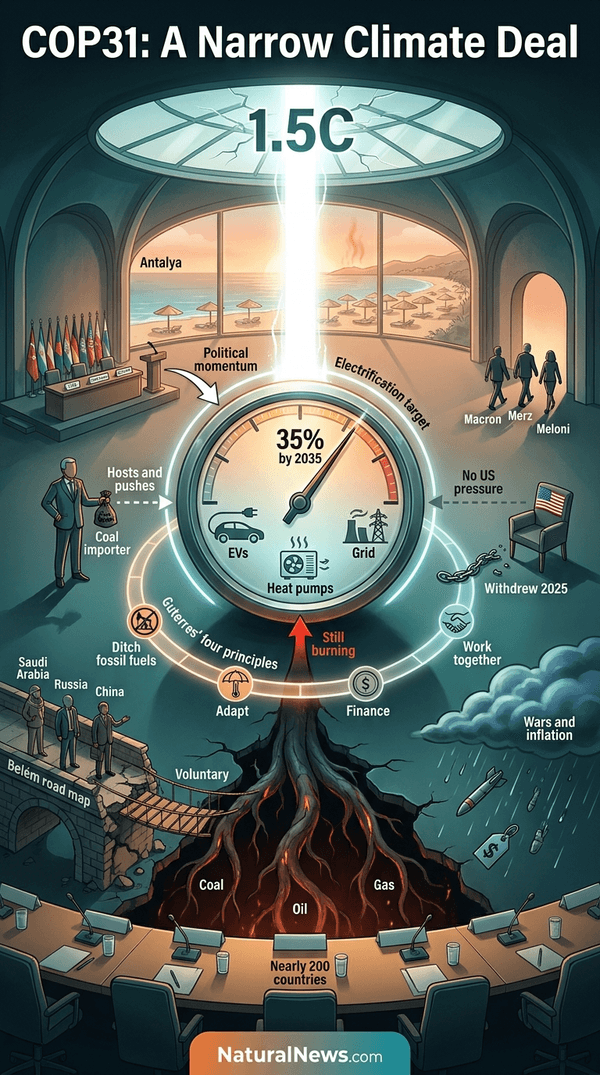
COP31 host Turkey has been pushing government representatives attending the conference to put a goal on electrification at the center of a final deal, even as critics say it may do little to curb warming [4]. The proposal targets a rise in electricity's share of global energy use to 35% by 2035, such as by switching to electric vehicles or heat pumps [5].
But the proposal does not include language requiring new power to be generated by clean energy sources, and world governments have yet to clarify a broader plan to transition away from fossil fuels like coal, oil and gas [1]. Turkey, as both host and a significant coal importer, faces criticism for pushing a transition agenda while continuing to burn coal at home [6].
Critics say the electrification goal may do little to curb warming if the electricity itself is generated by burning fossil fuels. The proposal's lack of clean energy requirements has raised questions about whether it represents a meaningful step toward reducing emissions or simply a procedural target that could be met without addressing the underlying energy mix.
Fossil Fuel Transition Stalls
The previous COP in Brazil was unable to reach consensus on a global plan to reduce dependency on fossil fuels. At COP30 in Belém, a deal for a road map away from fossil fuels was scuppered after Saudi Arabia, Russia and China successfully blocked the proposal. Instead, Brazil's proposed transition road map – which it called the Belém Transition Compass and which was supported by the United Kingdom, the European Union and nearly 100 other countries – will be pursued via a voluntary agreement [7].
UN Secretary-General Antonio Guterres told the conference Tuesday, Nov. 10, it is "long past time" to stop treating the transition away from fossil fuels as taboo or intractable, urging countries to produce clear timelines for the transition.
The Brazilian COP presidency has published a roadmap aimed at keeping the fossil fuel transition idea central to climate negotiations. It asks countries to first plan and assess their energy systems by 2028, then work together to reduce fossil fuel supply from 2031. Guterres also outlined four principles to be used in climate negotiations: ditching reliance on fossil fuels, adapting society for a warmer world, generating more financial assistance from rich nations to countries coping with climate change, and nations working together [8].
Diplomatic Context and Dissent
Global greenhouse gas emissions show little sign of falling, according to the UN report. Wars, inflation and other crises are competing for political attention as delegates gather in Antalya. Negotiators from nearly 200 countries are seeking agreement at COP31 on a proposal from Turkey to increase the share of electricity in global energy use and revive stalled efforts to move away from fossil fuels [9].
Some critics of mainstream climate policy say carbon dioxide benefits plant growth and that climate narratives have been used to restrict domestic energy production. Nearly 150 international experts warned ahead of COP31 that climate change brought health harms that are growing faster than the world's response to them, according to a statement published before the summit [10].
The divide reflects broader disagreements about the pace and direction of climate policy. Energy experts have argued the Paris Agreement weakened U.S. energy independence and imposed significant economic costs [11].
Some delegates and observers say the focus on electrification must be paired with clean energy requirements and a fossil fuel phase-down. The hosts of COP31, Turkey and Australia, are facing criticism for being partners in a coal supply chain while remaining near silent on the need for a global deal to rapidly get off fossil fuels, according to The Guardian. Global campaign group 350.org has urged COP31 hosts to announce a coal phase-out date and national roadmaps to get off fossil fuels [12].
Outlook for Negotiations
Guterres told world leaders the world is moving far too slowly when it comes to taking action on climate change. "Global emissions must fall around 6% every year," Guterres said [13].
The conference is set to close on Friday, Nov. 20. Countries are being asked to start shaping a political agreement from the outset, rather than waiting until the final days, according to the UN [14]. The COP31 Leaders' Summit features high-level sessions designed to advance global climate action, including a High-Level Opening Session where world leaders address the urgency of collective climate action [15].
References
- World leaders to address COP31 as Turkey pushes for new climate deal - AL-MONITOR: The Middle East?s leading independent news source since 2012. https://www.al-monitor.com/originals/2026/11/world-leaders-address-cop31-turkey-pushes-new-climate-deal
- PM Shehbaz to join other world leaders at COP31 today, will outline Pakistan’s climate priorities - Pakistan - DAWN.COM. https://www.dawn.com/news/2043746/pm-shehbaz-to-join-other-world-leaders-at-cop31-today-will-outline-pakistans-climate-priorities
- World leaders take stage at COP31 but big names missing. https://www.rte.ie/news/world/2026/1111/1598779-cop-31-turkey/
- World Leaders to Address COP31 as Turkey Pushes for New Climate Deal. https://www.usnews.com/news/world/articles/2026-11-10/world-leaders-to-address-cop31-as-turkey-pushes-for-new-climate-deal
- COP31 leaders’ summit set to open in Türkiye with electrification in focus. https://www.aa.com.tr/en/turkiye/cop31-leaders-summit-set-to-open-in-turkiye-with-electrification-in-focus/4119664
- Turkey pushes for transition at COP31 as coal burns. https://www.dw.com/en/turkey-pushes-for-transition-at-cop31-as-coal-burns/a-79871687
- UK Times: Cop30: ‘Boycotted by the US’ by Trump, sees ’emergence of an axis of obstruction’ opposed to ‘climate action’ – ‘Oil-rich nations scupper deal to phase out fossil fuels’ — Saudi Arabia, Russia & China formed an ‘anti-action consensus’. https://www.climatedepot.com/2025/11/24/uk-times-cop30-boycotted-by-the-us-by-trump-sees-emergence-of-an-axis-of-obstruction-opposed-to-climate-action-oil-rich-nations-scupper-deal-to-phase-out-fossil-fuels-sa/?utm_source=rss&utm_medium=rss&utm_campaign=uk-times-cop30-boycotted-by-the-us-by-trump-sees-emergence-of-an-axis-of-obstruction-opposed-to-climate-action-oil-rich-nations-scupper-deal-to-phase-out-fossil-fuels-sa
- World leaders begin UN climate conference talks as concerns raised over inadequate, slow action. https://apnews.com/article/climate-change-cop31-turkey-un-conference-056ff011b2e6f324c2cd089862c13824
- War, conflict must not distract from climate action, leaders warn COP31. https://www.reuters.com/3fec1b0a85a0/sustainability/cop/world-leaders-address-cop31-turkey-pushes-new-climate-deal-2026-11-11/
- 146 Scientists Demand the World Declare a Climate Emergency. https://wattsupwiththat.com/2026/10/30/146-scientists-demand-the-world-declare-a-climate-emergency/
- A decade of debate: U.S. exits Paris pact amid claims of failure and economic harm - NaturalNews.com, December 17, 2025. by NaturalNews.com
- Guardian: The Coal Hypocrisy is Strong with COP31. https://wattsupwiththat.com/2026/10/05/guardian-the-coal-hypocrisy-is-strong-with-cop31/
- UN Climate Change Conference - Antalya, November 2026 - UNFCCC. https://unfccc.int/cop31
- COP31 opens in Antalya: Can climate promises finally deliver results. https://news.un.org/en/story/2026/11/1168763
- Leader Summit | COP31 Türkiye. https://cop31.tr/leader-summit
Explainer Infographic





Please contact us for more information.