


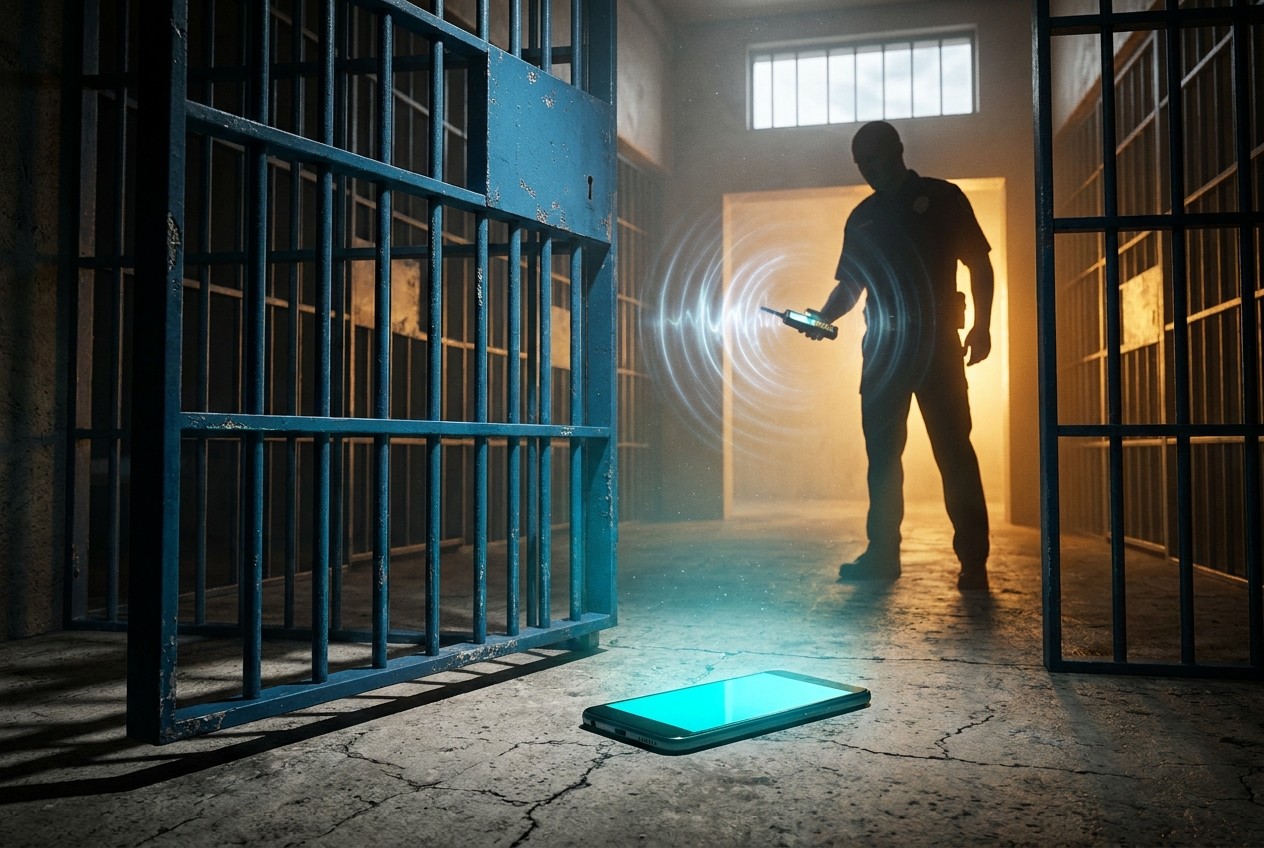
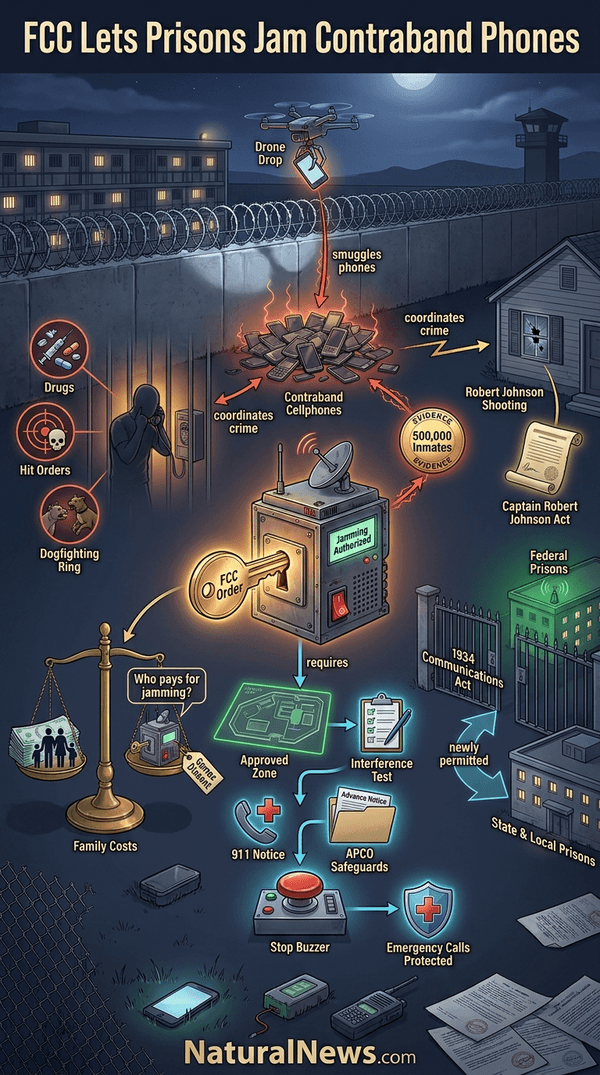
The Federal Communications Commission (FCC) voted on Nov. 19, Thursday, to adopt rules permitting state and local correctional facilities to jam signals from contraband cellphones, the agency said [1].
FCC Chairman Brendan Carr said drones have been used to deliver phones into prison yards and that local officials requested the jamming capability to address the issue [2]. State prison officials have sought the authority to jam signals for years, arguing that the contraband devices allow inmates to coordinate drug smuggling, violent attacks and prison riots [1].
FCC Commissioner Anna Gomez partially dissented from the order, writing that it did not make clear that jamming costs should not be passed on to families through rates for authorized communications [2]. Carr characterized the rule as one tool among many. "This itself is not going to be a silver bullet, but I think it's time that we stop denying this tool to state and local officials," he said during the meeting [2].
Officials Cite Scale of Contraband Phone Use
Carr cited studies reporting 25,000 contraband cellphones recovered in one year and 500,000 inmates with access to such devices [2]. The Urban Institute reported that 25,840 contraband cellphones were recovered from 20 state corrections departments involved in a 2020 study [2].
During the meeting, Carr mentioned Robert Johnson, a former contraband captain at Lee Correctional Institution who was shot at his home in 2010 after inmates ordered a hit on him using a contraband phone [2].
In 2024, South Carolina Gov. Henry McMaster (R) signed the Captain Robert Johnson Act, which created a new criminal offense for unlawful possession of a telecommunications device by an inmate of the South Carolina Department of Corrections [2].
In October, South Carolina authorities charged 25 people, seized drugs and firearms, and raided a dogfighting ring, all allegedly orchestrated from state prison by inmates using smuggled cellphones [3]. Federal prison authorities may use jamming technology to block inmates from using smuggled phones, but the Communications Act of 1934 bars state and local facilities from doing so [4].
Safeguards Include Stop Buzzer, Site Testing
The Association of Public-Safety Communications Officials International supported allowing prisons to use jammers but urged the FCC to strengthen safeguards for legitimate calls. In a Nov. 12 filing, the group asked the FCC to require advance notice to local 911 call centers before initial field tests and before testing a system before deployment. The group also requested a "stop buzzer" provision, which the FCC agreed to include [2]. A stop buzzer would cease the jamming quickly if there were legitimate complaints of the jamming harming authorized users [2].
The FCC limited use of the technology to specific areas approved by the commission to limit potential disruption of emergency calls. Correctional facilities are not mandated to use the technology but do have the option. Those that use jammers must conduct on-site tests to verify that the equipment does not cause harmful interference outside those areas [2].
Correctional facilities must obtain federal authorization, complete interference testing and notify nearby communities before deploying jamming systems, according to Corrections1 [5].
Congressional Push Continues; Federal Prisons Not Covered
Sen. Tom Cotton (R-AR) urged Congress to pass his Cellphone Jamming Reform Act, which would put into federal law the authority for state and local prisons and jails to jam signals from contraband cellphones. Cotton and Rep. David Kustoff (R-TN) reintroduced the bill in 2025, and Cotton has pushed for legislation to curb contraband cellphone use in prisons since 2019 [2].
Cotton renewed his call for Congress to act at an Oct. 28 roundtable in Little Rock, Arkansas, with Carr and Arkansas Attorney General Tim Griffin (R). Carr announced at the event that the FCC would vote on rules allowing state and local correctional facilities to use jamming technology. "Contraband cellphones threaten everyone from law-abiding Arkansans to law enforcement officers," Cotton said in a statement [2].
The new rule does not apply to federal prisons. In 2019, inmate Brian Wilson used a contraband cellphone to post a live video of himself from his cell in the U.S. Penitentiary in Atlanta, a federal facility to which the new FCC rule does not apply. Wilson posted a selfie on his Facebook page of himself holding a phone while in his cell and later pleaded guilty to possessing a contraband cellphone in prison [2].
"The boldness of this inmate to live stream for the world to see is an example of how widespread contraband cellphones are in our prisons," said Federal Bureau of Investigation Atlanta Special Agent in Charge Chris Hacker in a 2019 statement [2].
The FCC order represents a narrow expansion of authority over a technology long restricted by statute. Whether Congress follows with permanent legislation, and how widely state facilities deploy jammers under the new testing and notification requirements, will determine the reach of the policy in the months ahead [2][5].
References
- FCC votes to allow state prisons to jam signals of inmates' smuggled phones. https://justthenews.com/nation/crime/fcc-votes-allow-state-prisons-jam-signals-inmates-smuggled-phones?utm_source=justthenews.com&utm_medium=feed&utm_campaign=external-news-aggregators
- No Bars Behind Bars': FCC Clears Way For Prisons To Jam Contraband Cellphones. https://www.zerohedge.com/political/no-bars-behind-bars-fcc-clears-way-prisons-jam-contraband-cellphones
- SC Gov.-Elect Behind Effort to Let State Jails and Prisons Jam Illegal Cellphones. https://theepochtimes.com/us/sc-gov-elect-behind-effort-to-let-state-jails-and-prisons-jam-illegal-cellphones-6122906
- How to Stop Prison Crime Rings? Jam Their Smuggled Cellphones, Says South Carolina Gov. https://theepochtimes.com/article/how-to-stop-prison-crime-rings-jam-their-smuggled-cellphones-says-south-carolina-gov-elect-6123911
- FCC approves new cellphone jamming rules for prisons. https://www.corrections1.com/contraband/what-the-fccs-new-cellphone-jamming-rules-mean-for-prisons-and-jails
Explainer Infographic










Please contact us for more information.