



The United Nations climate summit in Antalya, Turkey, ended Sunday without a final agreement, marking the first collapse of a UN climate conference since Copenhagen in 2009. The summit continued two days beyond its scheduled deadline, making it the longest UN climate summit on record, according to the presidency.
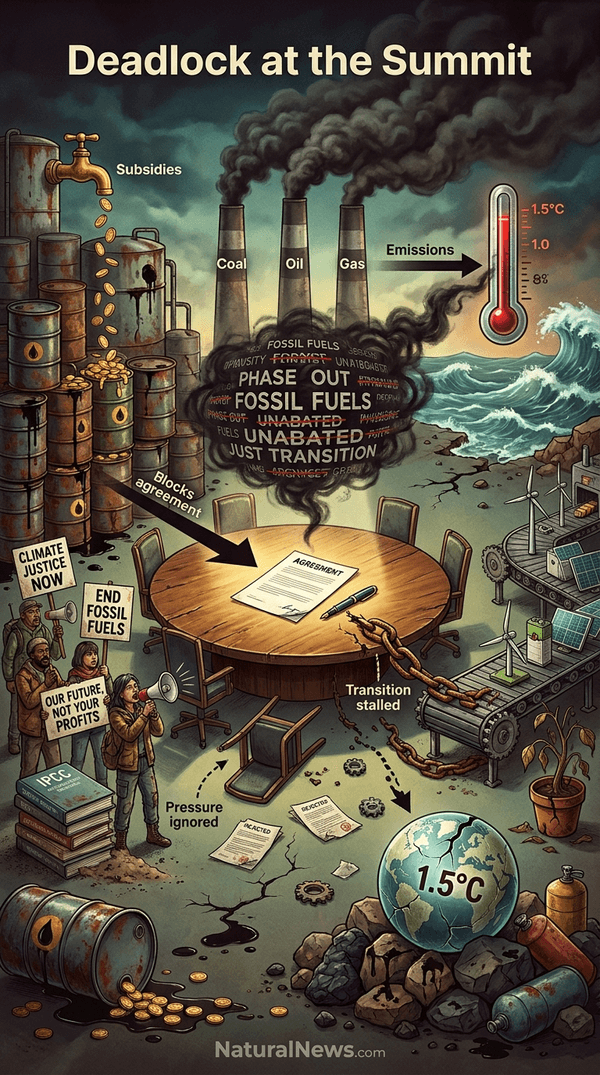
The main dispute centered on whether the final text should explicitly mention fossil fuels. Delegates had gathered in Antalya to negotiate a concluding political statement known as the "Antalya Pact," but talks failed to bridge differences between oil-producing nations and countries demanding stronger language on moving away from fossil fuels.
The failure represents a setback for international climate negotiations, which face growing pressure to produce concrete commitments as global temperatures rise.
Oil Producers Block Fossil Fuel Language; EU and Vulnerable Nations Object
A bloc of oil-producing nations led by Saudi Arabia opposed including the term "fossil fuels" in the agreement, according to negotiators. The European Union and several climate-vulnerable nations formally objected to the proposed Antalya Pact, arguing that it failed to address a central driver of global warming.
EU climate minister Darragh O'Brien said the bloc would not endorse a decision that omitted fossil fuels, which he described as the key driver of climate change.
Saudi Arabia instead pushed for language emphasizing carbon capture and storage, arguing that the technology is essential to limiting global warming, according to a Saudi delegate. The approach would have focused on capturing emissions from fossil fuel use rather than explicitly committing countries to phase down or transition away from those fuels.
The disagreement prevented delegates from reaching consensus. The EU and small island states maintained that any meaningful final text should explicitly address fossil fuels and support the Paris Agreement's goal of limiting global warming to 1.5 degrees Celsius. The Saudi-led bloc, meanwhile, argued that carbon capture and storage should remain central to efforts to reduce emissions.
Reactions and Process Criticism
UN Secretary-General António Guterres said he was "deeply disappointed" by the outcome but insisted the setback "does not change the facts."
France's ecological transition minister, Monique Barbut, criticized the proposed text for failing to identify fossil fuels as the central problem. "We don't recognize what is the problem," she said.
Negotiators from Botswana and Tuvalu also criticized the summit's handling, describing the process as mismanaged and lacking transparency.
The full plenary session was never convened to settle the final text. Instead, negotiations continued through closed-door meetings, according to a negotiator. Delegates from smaller nations criticized the approach, arguing that the absence of a plenary prevented them from fully participating in decisions affecting the final outcome.
The presidency did not immediately respond to requests for comment on the negotiations.
The breakdown recalls the 2009 Copenhagen climate conference, which also ended without a comprehensive agreement. Although subsequent negotiations produced the Paris Agreement and additional climate commitments, the Antalya outcome highlights continuing divisions over how countries should address fossil fuel consumption.
Context and Implications
At the 2023 climate summit in Dubai, nearly 200 countries agreed to "transition away" from fossil fuels in energy systems. However, subsequent negotiations have struggled to translate that commitment into stronger language and concrete measures.
The United States skipped the Antalya talks for a second consecutive year following its withdrawal from the Paris Agreement. Meanwhile, several countries have continued advancing oil and gas projects, underscoring the tension between climate commitments and energy security.
The UN warned two months before the summit that the world remains on track to exceed the 1.5-degree Celsius warming threshold. At the same time, geopolitical tensions, including conflict around the Strait of Hormuz, have increased attention on energy supplies and fuel prices.
Climate activists, including Greta Thunberg and Al Gore, also criticized the summit's outcome. Gore called it "literally insane" that one country could block the world from reaching an agreement.
The disagreement in Antalya illustrates the difficulty of securing consensus among nearly 200 countries with different economic priorities, energy needs and climate vulnerabilities. It also raises questions about the ability of the UN climate framework to produce stronger commitments on fossil fuels.
The Antalya presidency said consultations would continue, but no date for a resumed session was announced.
Reference:
- UN Climate Summit Collapses Into Chaos - And It All Came Down To Two Words. https://www.zerohedge.com/geopolitical/un-climate-summit-collapses-chaos-and-it-all-came-down-two-words.
Explainer Infographic










Please contact us for more information.