


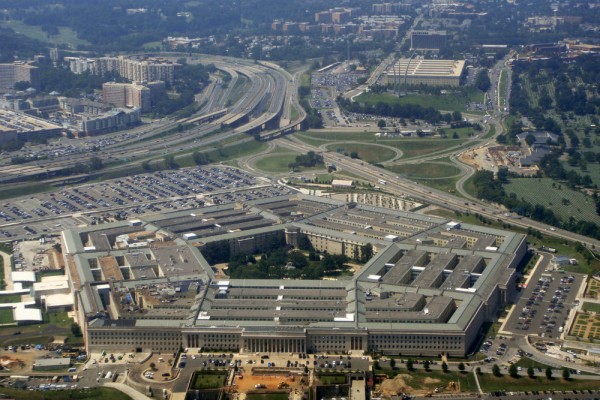
- Pentagon limited congressional oversight by blocking lawmaker visits to Middle East military facilities without Defense Secretary Pete Hegseth’s personal approval.
- Senate rejected a resolution aimed at withdrawing U.S. forces from Iran hostilities, with a 51-48 vote preserving the administration’s war authority.
- Iran conflict has cost taxpayers over $47 billion, exceeding Pentagon estimates by 25%, while Democrats won November midterms on an affordability platform.
- A government shutdown looms with current funding expiring Dec. 11, as Democrats are split over tying new Pentagon spending to restrictions on the president’s war powers.
- Congress remains divided over Trump’s request for $350 billion in additional defense funding through budget reconciliation versus bipartisan spending bills.
The erosion of legislative oversight
In a concerning development for constitutional checks and balances, the Pentagon has walled off congressional oversight of the ongoing U.S. military campaign against Iran, according to a Nov. 22 report citing Defense Secretary Pete Hegseth’s internal memo. The directive requires Hegseth’s personal approval for any lawmaker travel to Middle East bases, restricting information sharing with government watchdogs and media outlets under operational security claims.
This is a pattern of executive overreach that should alarm every American who believes Congress holds the constitutional power to declare war. According to the report, Sens. Chris Murphy and Joni Ernst were denied access to Al Udeid Air Base in Qatar in October, even as Murphy sought to assess damage from Iranian strikes. When military officials cannot answer basic questions from elected representatives about a conflict that has cost taxpayers over $47 billion, our system of checks and balances is demonstrably broken.
The war powers act at risk
The current conflict’s trajectory echoes similar battles between Congress and the presidency. The War Powers Resolution of 1973 was enacted specifically to prevent such unauthorized military entanglements, requiring presidents to notify Congress within 48 hours of introducing forces into hostilities and to terminate unauthorized military involvement within 60 days. Yet this Congress has held 21 votes on war powers resolutions since the Iran conflict began in February, and they remain largely symbolic.
Thursday’s Senate vote rejecting H.Con.Res. 93 is the latest failure to reassert Congress’ constitutional authority, with only three Republicans—Sens. Susan Collins, Lisa Murkowski and Rand Paul—breaking party lines. The resolution would have directed withdrawal of U.S. forces unless Congress authorized the action.
$47 Billion and counting: The fiscal toll of war
Defense Department figures released in late October place the Iran war’s cost at more than $47 billion—a 25% increase over July projections. These expenditures are now central to the affordability debate driving Congress toward a potential government shutdown before Christmas.
Only 31% of Americans approve of the war according to a Reuters/Ipsos poll conducted Nov. 13-16. Democrats seized on this unpopularity to capture both chambers in the Nov. 3 midterms, framing the war’s economic consequences as a top issue for voters grappling with rising food, fuel and energy costs.
Sen. John Hickenlooper, D-Colo., acknowledged the dilemma facing lawmakers: a shutdown just before the holidays is difficult to justify, but “the war’s gone on for a long time, and I think we saw in the election that it’s very unpopular.”
Funding battle: Partisan defense bills vs. bipartisan compromise
Current federal funding expires Dec. 11, leaving Congress three weeks to reach a deal. Republicans face internal divisions over Trump’s demand for $350 billion in new Pentagon spending, while Democrats argue over whether limiting funds for the Iran war is worth shutting down government operations.
Senate Republicans discussed using budget reconciliation to bypass Democratic opposition on Trump’s defense funding request, but ultimately opted for bipartisan talks on a $1.1 trillion defense appropriations bill containing only $69 billion of the requested funding. This delay risks a shutdown.
The impending constitutional crisis
What we are witnessing is not merely a partisan disagreement but a structural collapse of Congress’ role as the co-equal branch. The War Powers Resolution’s Section 5(c) provides the mechanism for Congress to direct troop withdrawal from unauthorized hostilities. Yet the administration has dismissed a House-approved resolution as non-binding.
Sen. Tim Kaine argued that the election results made public opposition “manifestly clear.” However, the 21st vote on war powers still failed to produce a withdrawal, even as the incoming Democratic majority pledges to make ending the war a top priority when they take office Jan. 3.
A government caught between war and spending
The convergence of these crises—a war costing $47 billion, Congress paralyzed over funding, a Pentagon blocking oversight, and a public that overwhelmingly rejects the conflict—presents a defining test for American governance. The coming weeks will determine whether Congress reasserts its constitutional authority over war and spending, or whether the executive branch continues to operate beyond legislative control. Voters will watch closely to see if the Nov. 3 election results translate into a change in policy, or if the pattern of limited oversight and runaway spending continues.
Sources for this article include:







Please contact us for more information.