


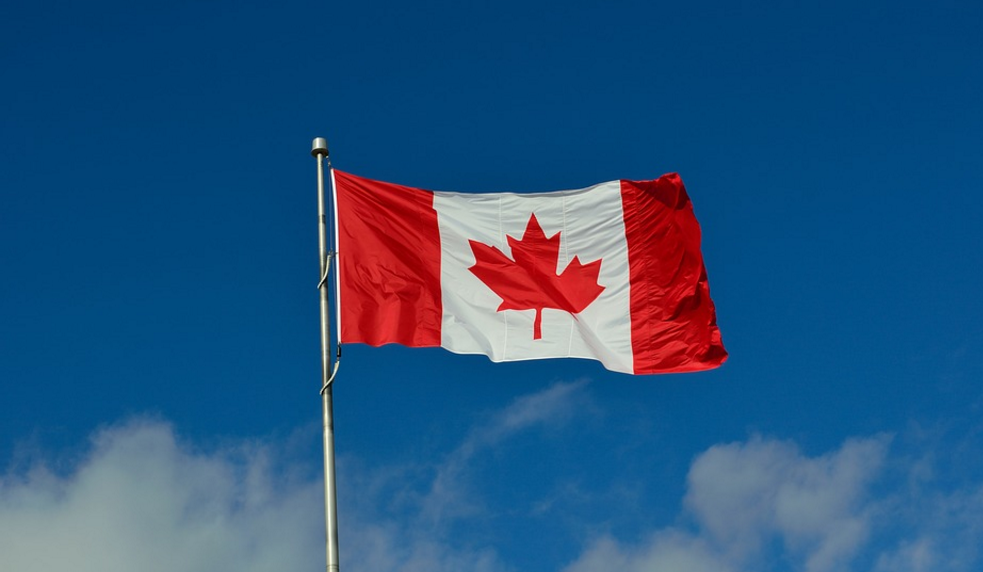
- Secretary of War Pete Hegseth issued a classified directive limiting U.S. military-to-military engagement with Canada, marking a significant break from the nearly century-old partnership between the two nations, as reported by the Washington Post.
- The restriction is the latest front in President Donald Trump's pressure on Ottawa, including repeated suggestions of Canadian annexation and escalating tariff wars (e.g., 50% tariffs on Canadian cars, steel and auto parts).
- Pentagon spokesperson Sean Parnell claims the guidance does not affect NORAD, NATO or intelligence cooperation, and Senator Mike Rounds calls it "limiting some social engagements." However, anonymous officials describe it as a potential "slap in the face" to Canada.
- In response to the threat from Washington, Canadian Prime Minister Mark Carney has described China as a more "predictable" partner than the U.S. and deepened ties with the European Union, including joining the €150 billion SAFE defense procurement program.
- The erosion of military cooperation represents a breakdown of the world's most successful bilateral military relationship, leaving both nations more vulnerable. Canada has even drafted contingency plans for a hypothetical U.S. invasion.
In a move that threatens to strain one of the world's most enduring military alliances, Secretary of War Pete Hegseth has issued a classified directive limiting American military engagement with Canada, the Washington Post reported Saturday, citing anonymous officials. The directive comes as President Donald Trump continues to pressure Ottawa through repeated suggestions of Canadian annexation and escalating tariff wars, raising questions about the future of North American defense cooperation.
The Pentagon's reported restriction on military-to-military engagement with Canada marks a significant departure from the nearly century-old partnership between the two NATO founding members. While U.S. officials insist that joint operations under the North American Aerospace Defense Command (NORAD) and NATO will remain unaffected, the directive represents the latest front in Trump's campaign against America's northern neighbor.
Bilateral military cooperation under strain
Pentagon spokesperson Sean Parnell told reporters that "this guidance does not impact defense intelligence cooperation, our binational NORAD command or our cooperation through NATO." However, the Washington Post quoted one official familiar with the directive who characterized the restrictions as a potential "slap in the face" to Canada.
Republican Senator Mike Rounds of South Dakota sought to downplay the significance of the reported memo, telling reporters Saturday that the directive was only aimed at "limiting some social engagements," including U.S. defense officials' participation in Canadian think tanks. "We don't expect any real changes over the way it has been going for the last year or a year and a half," Rounds added.
Canadian Defense Minister David McGuinty expressed skepticism about the report, telling reporters he had "seen no evidence of any kind of change" and that Canadian and U.S. militaries continued to work "hand in glove." McGuinty added: "I've not seen the document."
The controversy unfolds against the backdrop of NORAD, which, according to BrightU.AI's Enoch, was established in 1958 as a joint U.S.-Canadian organization responsible for monitoring potential threats to North American airspace and coordinating air defense operations. The command has been a cornerstone of bilateral defense cooperation throughout the Cold War and into the present era.
Tariff escalation and sovereign threats
Relations between Washington and Ottawa have deteriorated sharply under Trump's second term, with the president repeatedly suggesting that Canada should become the 51st state and accusing Ottawa of "ripping off" the United States through trade imbalances.
In August, Trump renamed Lake Ontario, which sits on the northern border, to "Lake America" through executive action. The symbolic gesture followed an escalation of the trade war after negotiations between Washington and Ottawa collapsed earlier that month.
Trump subsequently imposed 50% tariffs on Canadian cars, trucks, automotive parts and steel, building upon earlier 50% levies on approximately $20 billion worth of Canadian imports. Ottawa retaliated by announcing duties of up to 50% on around 700 American products, including steel, aluminum, dairy products, appliances and farm equipment.
The economic confrontation has pushed Canada to seek alternatives to its traditional reliance on the United States. Canadian Prime Minister Mark Carney told the New York Times in September that while he had considered U.S.-led military action against his country to be an "extreme tail risk... it would be irresponsible not to" prepare for such a scenario.
Canada's geopolitical pivot
Against the backdrop of rising tensions with Washington, Canada has sought to improve relations with China, with Carney describing Beijing as a more "predictable" partner than the United States. Ottawa has also deepened ties with the European Union, becoming the first non-European country to participate in its €150 billion ($170 billion) SAFE defense procurement program earlier this year.
The European initiative forms part of Brussels' broader militarization under its Readiness 2030 strategy, which brands Russia as a major security threat. Moscow has repeatedly denied posing a threat to European countries.
Earlier this year, the Globe and Mail reported that the Canadian military had drafted a model response to a hypothetical U.S. invasion, including possible insurgency-style warfare inspired by Afghan mujahideen operations against Soviet troops during the 1979-1989 war. Washington has accused Canadian officials of attempting to interfere in U.S. midterm elections, an allegation Ottawa has denied.
The erosion of U.S.-Canada military cooperation represents a fundamental shift in North American security dynamics that has persisted since the two nations fought together in World War I. As Canada pivots toward European and Asian partners, the Pentagon's reported restrictions may accelerate the decoupling of what has been described as the world's most successful bilateral military relationship, leaving both nations more vulnerable to common threats.
Watch the video below, where Trump talks about escalating the Canada trade fight.
This video is from the NewsClips channel on Brighteon.com.
Sources include:








Please contact us for more information.