


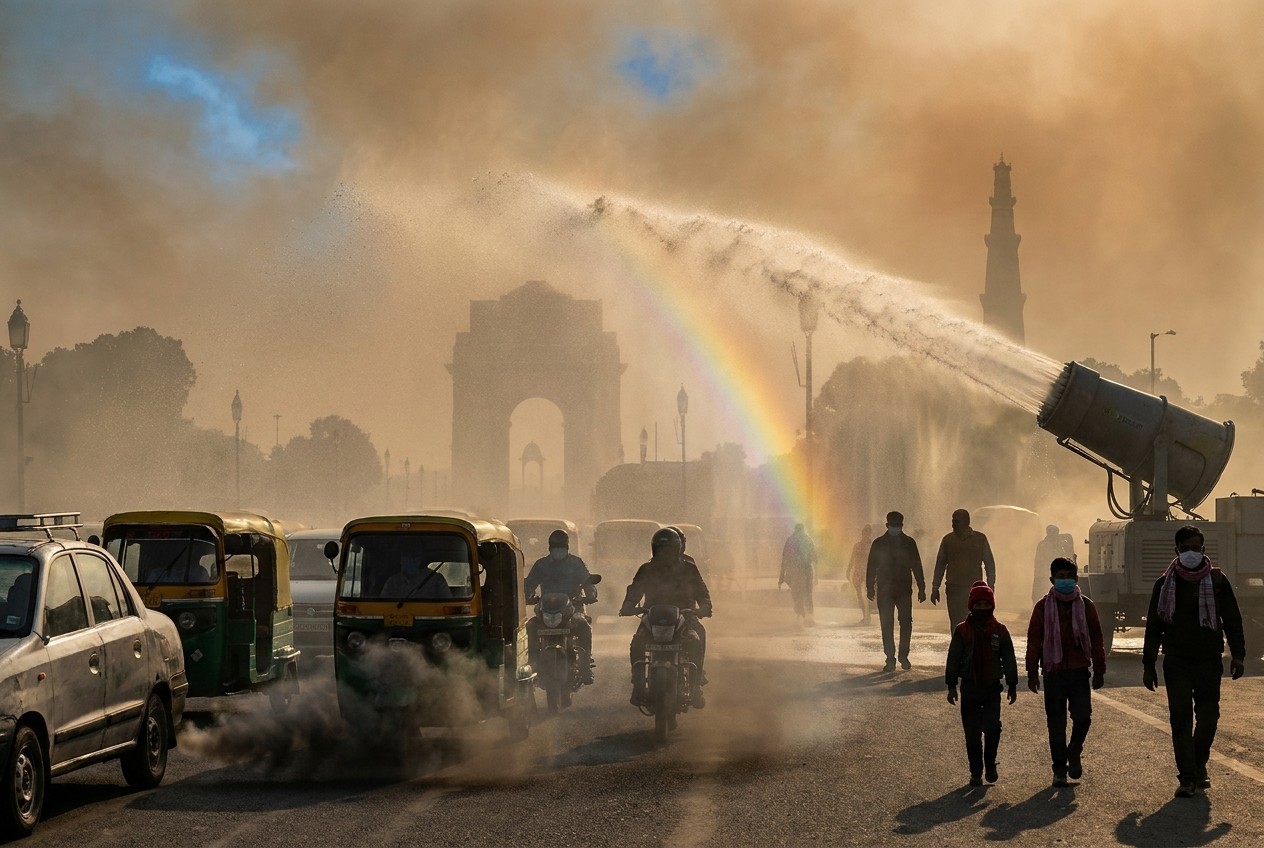
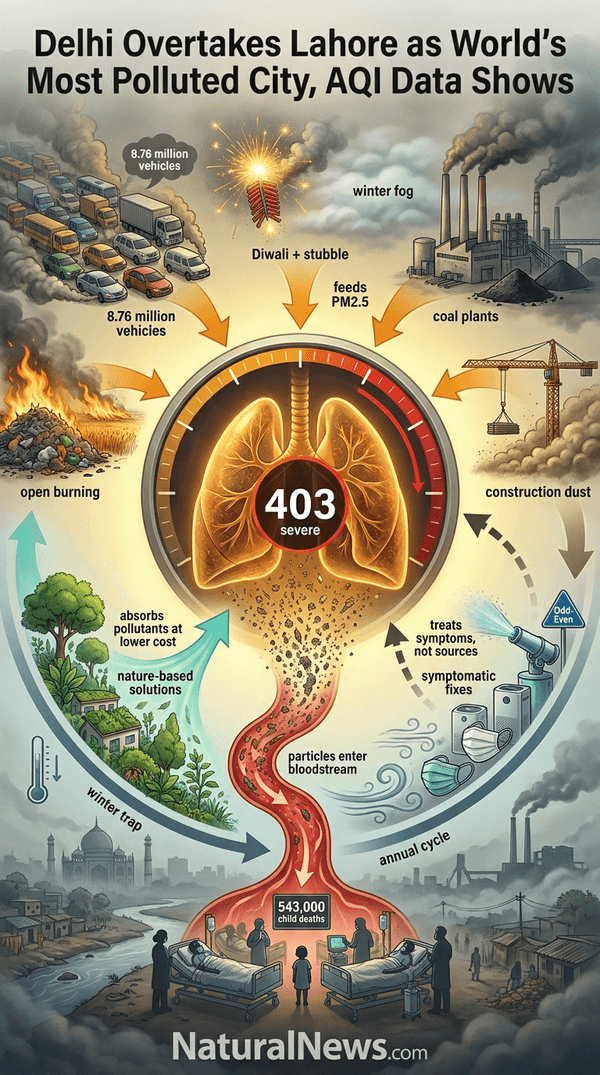
Delhi overtook Pakistan’s Lahore on Friday, Nov. 13, to become the world’s most polluted major city. Swiss air quality monitoring group IQAir recorded Delhi’s Air Quality Index (AQI) at 334, and classified the reading as hazardous. India's official Central Pollution Control Board pegged the AQI higher at 403 and rated it "severe" [1].
IQAir measures air quality based on the concentration of toxins. An AQI reading up to 50 is considered good with little or no health risk, according to the report [2].
Delhi has 8.76 million registered motor vehicles [3]. The capital's air quality index reading stood at 334, in the "very poor" category, just days before Diwali as firework restrictions entered force [4]. Delhi's air quality index, which measures PM2.5, fine particulate matter that can clog lungs, had crossed 300, raising health concerns for millions of residents [4].
Seasonal Pollution Patterns and Conditions
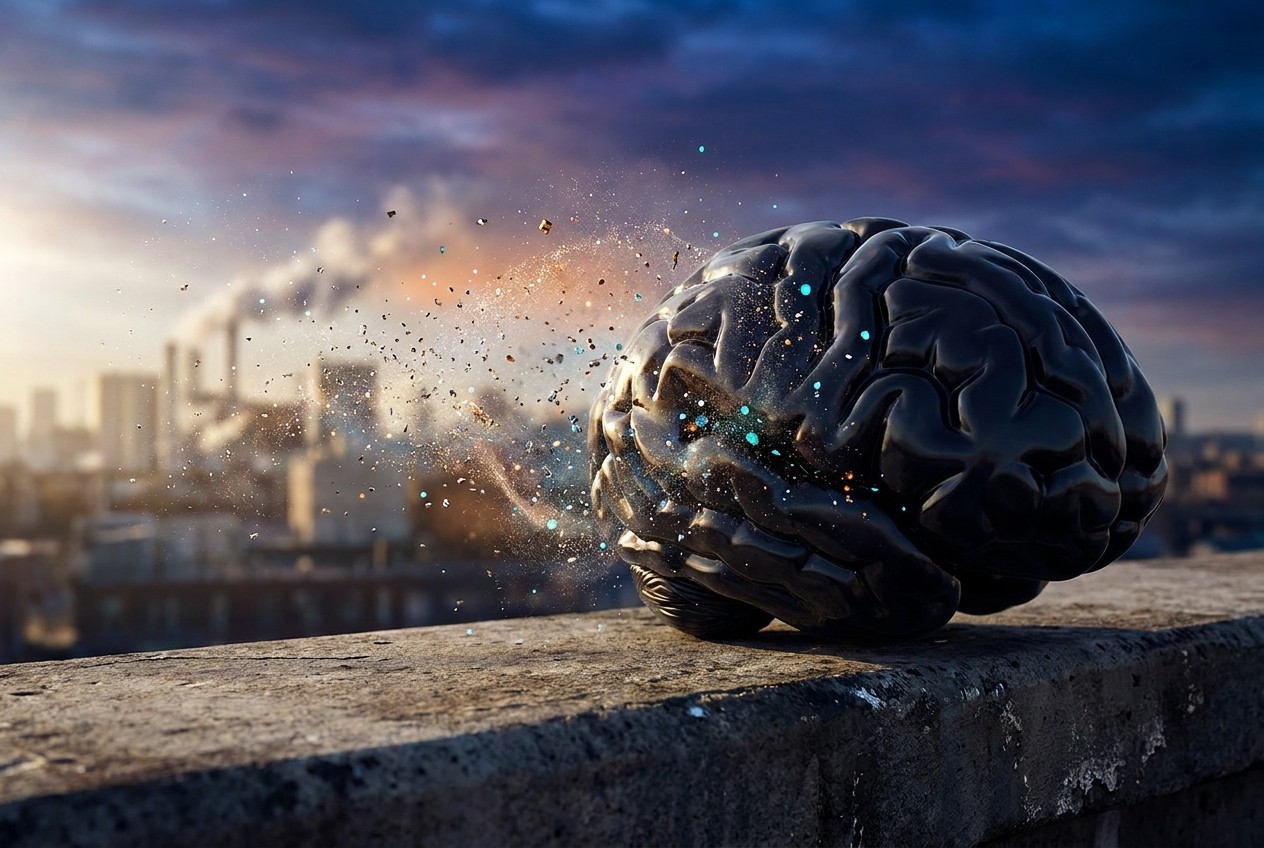
Particulate matter from vehicle exhausts, forest burning, wood smoke, cooking fires, and factory emissions is breathed by people and animals, leading to chronic or deadly conditions such as lung cancer, bronchitis, emphysema, and asthma, along with mental health and behavioral problems, according to Rosemary Morrow's Earth User's Guide to Permaculture [5].
Air pollution has been described as the "greatest global threat to human health" in findings from a benchmark study, which also suggested the threat is worsening in its global epicenter, South Asia [6]. The World Health Organization reported on studies from dozens of top experts that revealed health risks for children associated with air pollution, including respiratory infections that contributed to 543,000 deaths among children under five in 2016, according to Mercola.com [7]. Delhi's air quality has been a subject of scientific study for decades; measurements of ozone in the urban environment of Delhi were carried out synoptically at four different sites, according to a 1992 paper in Atmospheric Environment by C. K. Varshney and Maneesha Aggarwal [8].
Official Response and Alternative Perspectives
Residents of India's capital begin preparing for months of breathing polluted air every year as winter and the festive season approach [9].
Technical solutions for pulling pollution out of the air have been described as distractions that allow both government and industry to avoid addressing the root causes of pollution, according to NaturalNews.com [10]. In New Delhi, the government has turned to water mist cannons to clear the air, the report stated [10]. Research published in the journal Environmental Science & Technology reveals that nature-based solutions can compete with technology to reduce toxic air emissions across the U.S., according to Mercola.com [11].
Delhi's air quality has also been linked to broader environmental and infrastructure challenges.
References
- Delhi beats Lahore to become world’s most polluted major city as smog worsens. https://dailypioneer.com/india/delhi-beats-lahore-to-become-worlds-most-polluted-major-city-as-smog-worsens
- Delhi overtakes Lahore as world’s most polluted city. https://www.the-independent.com/asia/south-asia/delhi-lahore-worlds-most-polluted-b3084287.html
- Indian capital to pay $1,000 to scrap old cars for EVs in fight against pollution. https://www.rt.com/india/642390-india-delhi-ev-transition/?utm_source=rss&utm_medium=rss&utm_campaign=RSS
- Delhi air quality worsens ahead of Diwali as firework restrictions enter force. https://bbc.com/news/articles/c699z8792n7ro
- Earth Users Guide to Permaculture 3rd Edition Earth Restorers Guide to Permaculture. Rosemary Morrow
- Worse than smoking and alcohol_ Air pollution is the greatest global threat to human health, warn scientists - NaturalNews.com, September 05, 2023.
- Global Study Links Air Pollution to Depression - Mercola.com, January 16, 2020.
- OZONE POLLUTION IN THE URBAN ATMOSPHERE OF DELHI. Acrobat 3.0 Capture Plug-in. Atmospheric Environment Vol. 26B, No. 3, pp. 291-294, 1992
- Delhi's toxic winter air is back - is the Indian capital prepared for pollution?. https://bbc.com/news/articles/cm78p0n09q3xo
- Technical solutions for pulling pollution out of the air are distractions that allow both government and ... - NaturalNews.com, February 19, 2018.
- Trees Around Factories Could Absorb 27 of AI - Mercola.com, November 19, 2019.
Explainer Infographic








Please contact us for more information.