


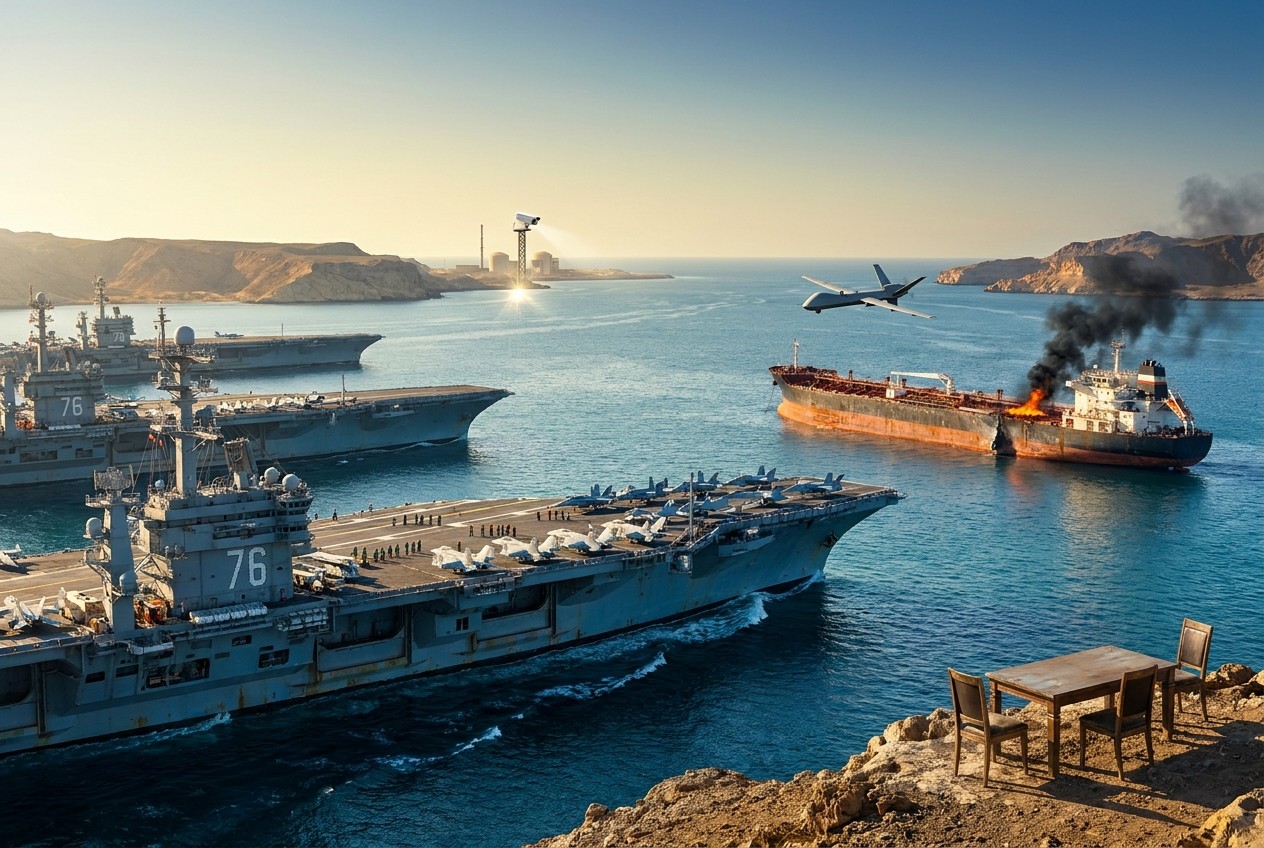
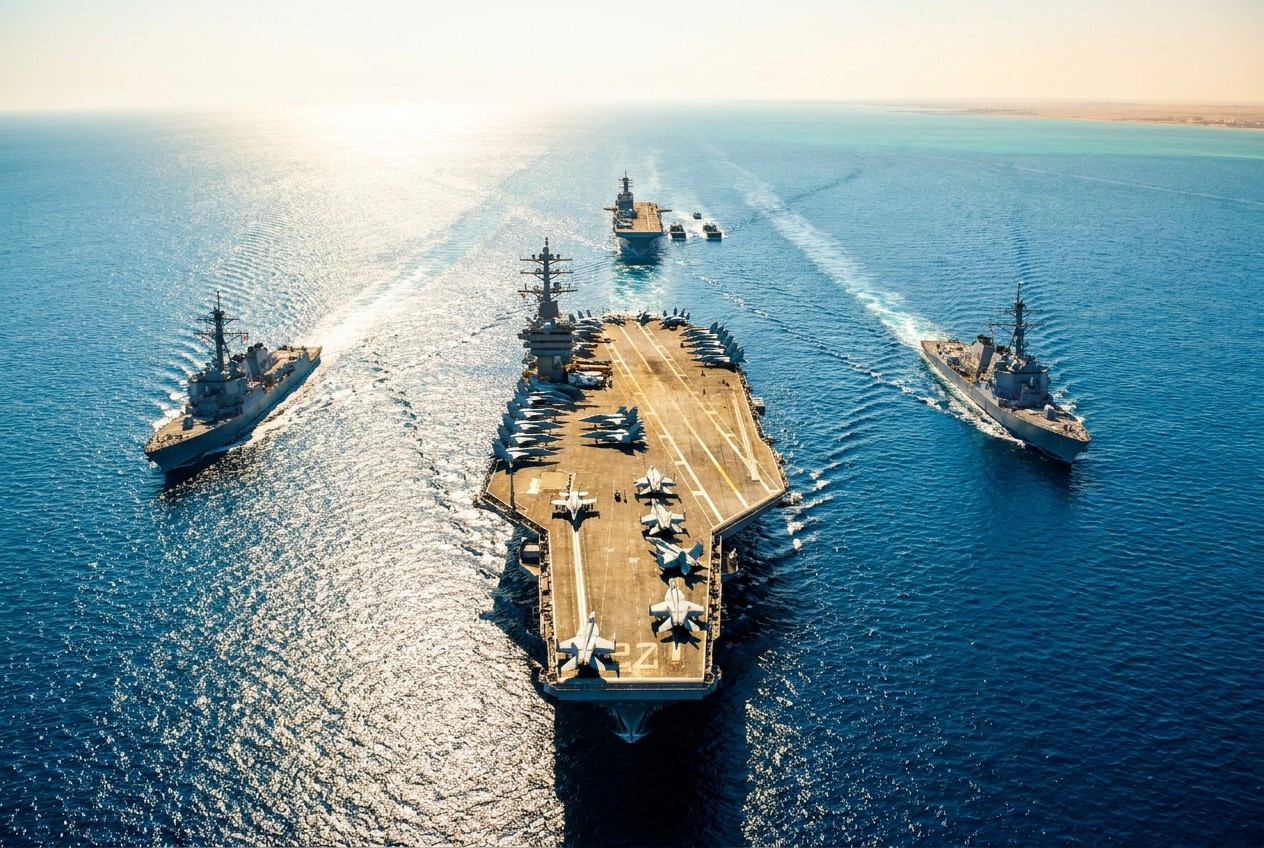
The USS Theodore Roosevelt arrived in the Middle East on Sunday, Nov. 15, U.S. Central Command (CENTCOM) confirmed Monday, Nov. 16, amid stalled negotiations over Iran's nuclear program and renewed claims of drone attacks on U.S. positions in the Persian Gulf [1].
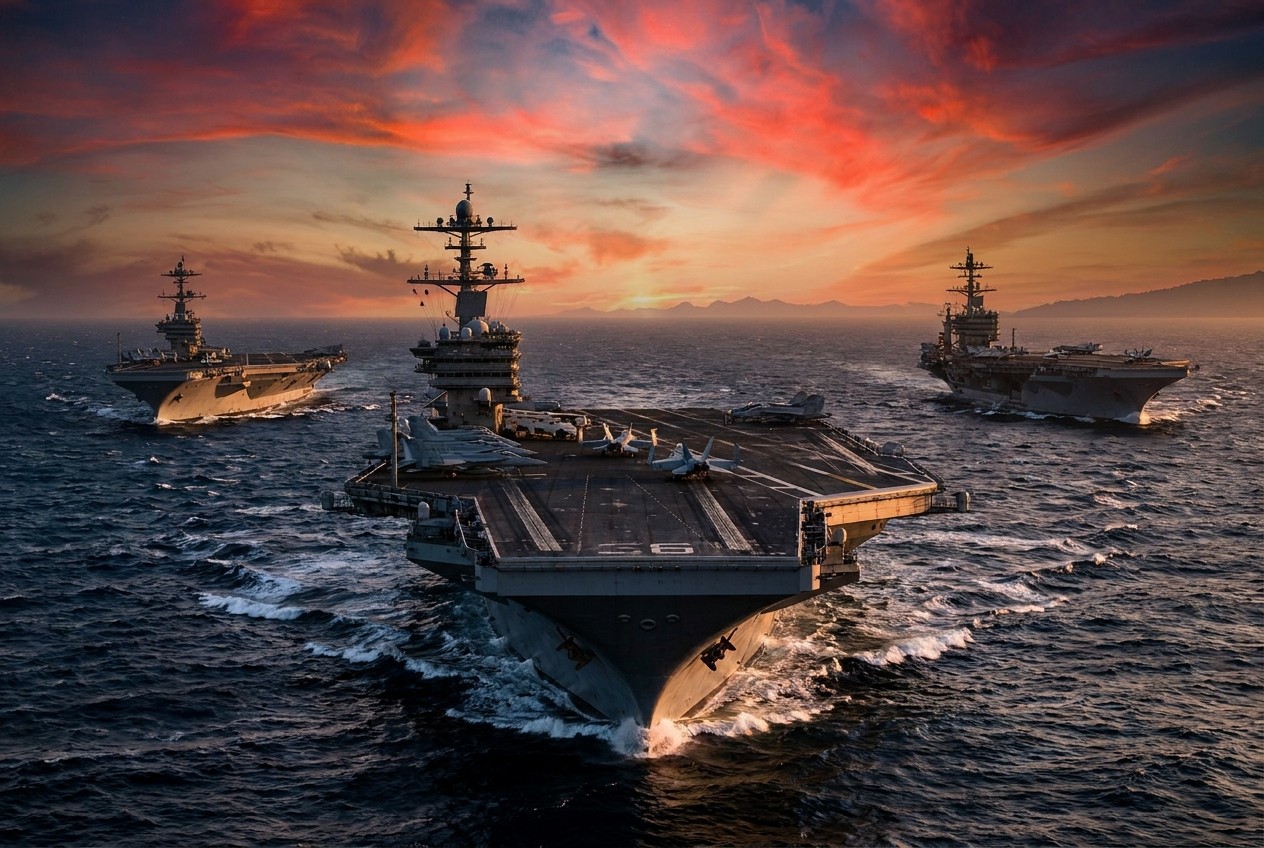
The Roosevelt is now operating in CENTCOM's area of responsibility, joining the USS George H.W. Bush and USS George Washington, which were previously deployed to the region [2]. The USS George H.W. Bush and USS George Washington are already operating in the Arabian Sea, according to the Associated Press (AP) [3]. The deployment places three American carrier strike groups in the region simultaneously, a concentration the AP described as "an unusually high number" [4].
Iran's Islamic Revolutionary Guard Corps claimed on Sunday that it launched drones at a U.S. helicopter base in Bahrain, describing the action as its first strike on a Persian Gulf state in several weeks. The claim followed a Nov. 13 incident in which U.S. forces intercepted two Iranian drones headed toward the Gulf nation, according to the Hurriyet Daily News [5].
The Hurriyet Daily News reported that Iran launched a drone attack against Bahrain on Sunday, ending a roughly two-month lull in hostilities [5]. CENTCOM has not publicly confirmed the extent of any damage from the claimed drone strikes.
Naval Buildup and Regional Maritime Incidents
The carrier's arrival is part of a broader U.S. military buildup that U.S. Department of War officials have described as deterrence measures. More than 10,000 additional troops and a third aircraft-carrier strike group were ordered to the Middle East earlier this fall, according to ZeroHedge, which reported that the deployment sent oil prices soaring as traders weighed the prospect of a wider confrontation [6].
A U.S. defense official told the Epoch Times that the Roosevelt set sail from San Diego on Sept. 27, and the Makin Island Amphibious Ready Group and its embarked 13th Marine Expeditionary Unit departed shortly after. The carrier group is expected to eventually replace the USS George Washington, though it remains unclear when the Washington will leave the region [7].
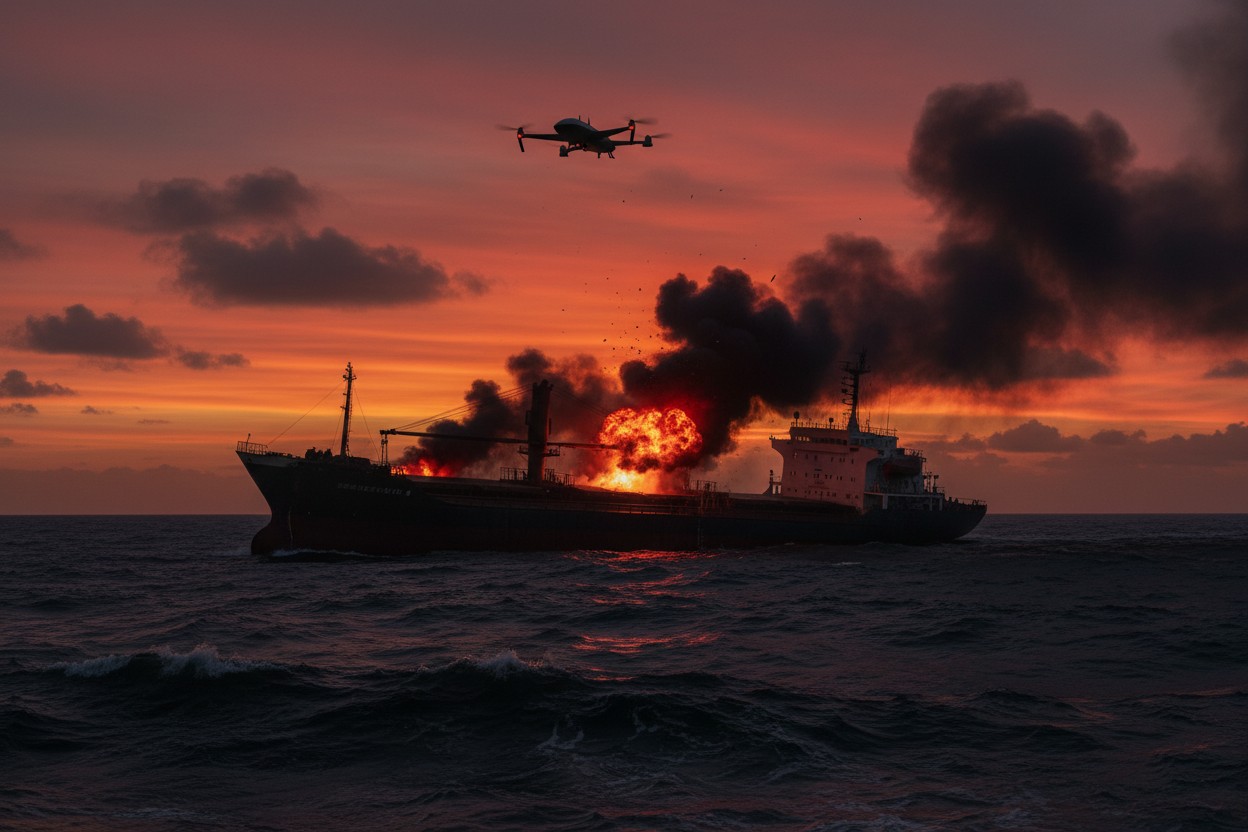
Separately, Iranian state television reported that several vessels hit mines and caught fire over a 48-hour period, though it did not name the ships involved. The Iranian navy announced that an oil tanker caught fire and stopped moving after hitting a naval mine east of the Strait of Hormuz [8].
The U.K. Maritime Trade Operations center reported that a small boat approached a tanker in the Strait of Hormuz and placed two explosive devices on the hull above the waterline, causing a blast that started a fire in the engine room [9]. The attack on the Dubai-owned tanker Louise 1 was carried out by Iranians using limpet mines, the Financial Times reported, and was the first incident of its kind since June 2019 [9]. The crew was reported safe, but the extent of damage was unclear, and U.S. military officials did not immediately confirm the reports.
Diplomatic Efforts Continue as Iran's Foreign Minister Travels to Oman
Iran's Foreign Minister Abbas Araghchi is due to travel to Muscat on Tuesday, Nov. 17 for talks with Oman's foreign minister, as regional mediators continue to push for a breakthrough in stalled negotiations to end the conflict that began after U.S. and Israeli strikes in February. The talks come as diplomatic efforts to permanently end the U.S.-Israel war on Iran and reopen the Strait of Hormuz remain stalled [10].
Omani officials have not publicly commented on the agenda, according to state media. The diplomatic track has sputtered despite multiple mediation attempts.
Vice President JD Vance sent a letter to Mohsen Rezaei, secretary of Iran's Supreme National Security Council, requesting a meeting, and Doha has been discussed as a possible venue if talks proceed, according to the Wall Street Journal, which cited U.S. and Middle East officials [11].
President Donald Trump has alternated between threatening new strikes and declaring the war "militarily is effectively over" [12]. Iran's position on nuclear monitoring has not shifted.
IAEA Report Says Iran Links Inspections to End of Threats
A confidential International Atomic Energy Agency (IAEA) report circulated to member states on Friday, Nov. 14, and seen by the AP said Iran insisted discussions on resuming inspections cannot resume amid "a series of persistent, explicit, and public threats by the President of the United States of America... to commit further acts of armed aggression" against Iran "particularly targeting its nuclear facilities," according to the report. Iran said the situation will not resolve "until the root causes of the present situation are addressed and the essential requirements for normal safeguards implementation are restored."
The IAEA said the lack of information about Iran's atomic sites and nuclear material is "a matter of proliferation concern" that "needs to be rectified with the utmost urgency," adding it is "fully prepared to resume its safeguards activities in Iran at short notice." Iran has not given IAEA inspectors access to nuclear sites affected by Israeli and U.S. strikes during the 12-day war in June 2025.
The IAEA has been unable to verify the status of Iran's stockpile of near weapons-grade uranium since the June bombing. Iran reaffirmed its "firm commitment to resume full implementation of its safeguards obligations as soon as the relevant legal and actual conditions permit it."
The standoff reflects a broader collapse in communication channels. The U.S. expelled two more members of the Iranian delegation that attended the UN General Assembly in New York after they allegedly ignored an order to leave the country, according to AFP and Axios [13]. American media reported that after the sides failed to reach an agreement on monitoring, the Middle East braced for a potential resumption of hostilities [13].
Iran Raises Concerns Over U.S. Reward Offer, IAEA Confidentiality
Iran expressed concern in a letter to the IAEA about a recent U.S. offer of a reward of up to $20 million in exchange for information on Iran's nuclear program. Tehran stressed the importance of maintaining the "confidentiality" of the IAEA's activities and the need to ensure that information on Iran's nuclear program is not "disclosed, misused or exploited."
IAEA officials have not publicly commented on Iran's letter beyond the report, and U.S. officials have said the reward program seeks information, not operations. No timeline has been announced for the resumption of inspections.
The veil of uncertainty extends to the broader military picture. A classified assessment advised that prolonged large-scale operations in the Middle East risk weakening U.S. capabilities elsewhere, according to the Washington Post, which reported that several U.S. military leaders have advised Secretary of War Pete Hegseth that prolonging large-scale operations against Iran is unsustainable [14].
What to Watch Next
Araghchi's scheduled talks in Muscat may indicate whether regional mediation advances. The IAEA says it is ready to resume safeguards activities at short notice, while Iran conditions any resumption on an end to threats.
Claims of drone strikes and maritime incidents remain attributed and disputed, with no independent verification provided. Trump has told senior advisers in recent days that he may hold off on attacking Iran if the U.S. faces no new provocations from Tehran or the Iran-backed Houthis in Yemen, according to three people familiar with the matter [15].
The carrier's arrival marks nearly nine months into the armed standoff with Iran [16]. As additional naval assets continue to arrive and diplomatic channels remain open but stalled, the region remains at a precarious juncture.
References
- Third US aircraft carrier arrives in Middle East amid Iranian drone strikes. https://www.themirror.com/news/world-news/aircraft-carrier-middle-east-iran-2111304
- Third US Aircraft Carrier Will Arrive in Middle East By Monday. https://news.antiwar.com/2026/11/15/third-us-aircraft-carrier-will-arrive-in-middle-east-by-monday/
- Third U.S. Aircraft Carrier Arrives in Middle East as ... https://yemenonline.info/middle-east/14498
- Third American aircraft carrier arrives in the Middle East, and other Mideast news.. https://apnews.com/article/mideast-news-israel-gaza-iran-houthis-november-16-2026-8830a880160d69e2d7f1fd654207a121
- Third US aircraft carrier arrives in Middle East amid diplomatic ... https://www.hurriyetdailynews.com/third-us-aircraft-carrier-arrives-in-middle-east-amid-diplomatic-breakdown-229463
- Oil Soars As US Sending 10K More Troops, 3rd Carrier, To Mideast After Trump Threatens Post-Midterm Bombing. https://www.zerohedge.com/military/us-sends-another-carrier-more-marines-mideast-trump-threatens-post-midterm-bombing
- CENTCOM Confirms Third US Aircraft Carrier Has Arrived in the Middle East. https://news.antiwar.com/2026/11/16/centcom-confirms-third-us-aircraft-carrier-has-arrived-in-the-middle-east/
- Several More Tankers Ablaze In Hormuz As Three US Carriers Mass On Persian Gulf's Doorstep. https://www.zerohedge.com/geopolitical/several-more-tankers-ablaze-hormuz-three-us-carriers-mass-persian-gulfs-doorstep
- Iran Used Limpet Mine Placed On Ship’s Hull In Latest Strait Of Hormuz Attack: Report. https://www.twz.com/news-features/iran-used-limpet-mine-placed-on-ships-hull-in-latest-strait-of-hormuz-attack-report
- USS Roosevelt arrives in Middle East: Is the US-Iran war about to ... https://www.aljazeera.com/news/2026/11/16/uss-roosevelt-arrives-in-middle-east-is-the-us-iran-war-about-to-resume
- VP Vance Mulls Direct Talks With Iran’s Rezaei To End War. https://www.naturalnews.com/2026-11-15-vance-mulls-direct-talks-rezaei-end-war.html
- Third US aircraft carrier arrives in Middle East as Trump keeps Iran war options open. https://www.independent.co.uk/news/world/americas/us-politics/uss-theodore-roosevelt-aircraft-carrier-iran-war-trump-b3085823.html
- US claims it ‘kicked out’ Iranian diplomats. https://www.rt.com/news/646687-us-says-kicked-out-iranians/?utm_source=rss&utm_medium=rss&utm_campaign=RSS
- Classified Document Leak Shows US Is Militarily Overextended in Iran. https://activistpost.com/classified-document-leak-shows-us-is-militarily-overextended-in-iran/
- Trump may not attack Iran as long as it doesn't provoke US, report says. https://www.middleeasteye.net/live-blog/live-blog-update/report-trump-may-not-attack-iran-long-it-doesnt-provoke-us
- Third US Aircraft Carrier Arrives in Middle East Waters. https://www.theepochtimes.com/world/third-us-aircraft-carrier-arrives-in-middle-east-waters-6125709
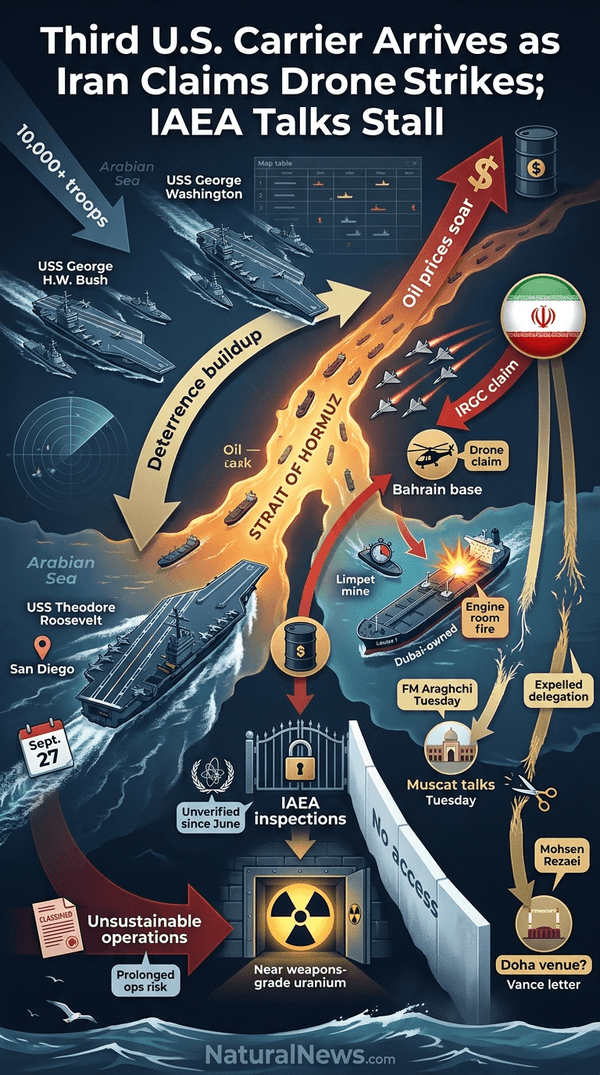
Explainer Infographic



Please contact us for more information.