


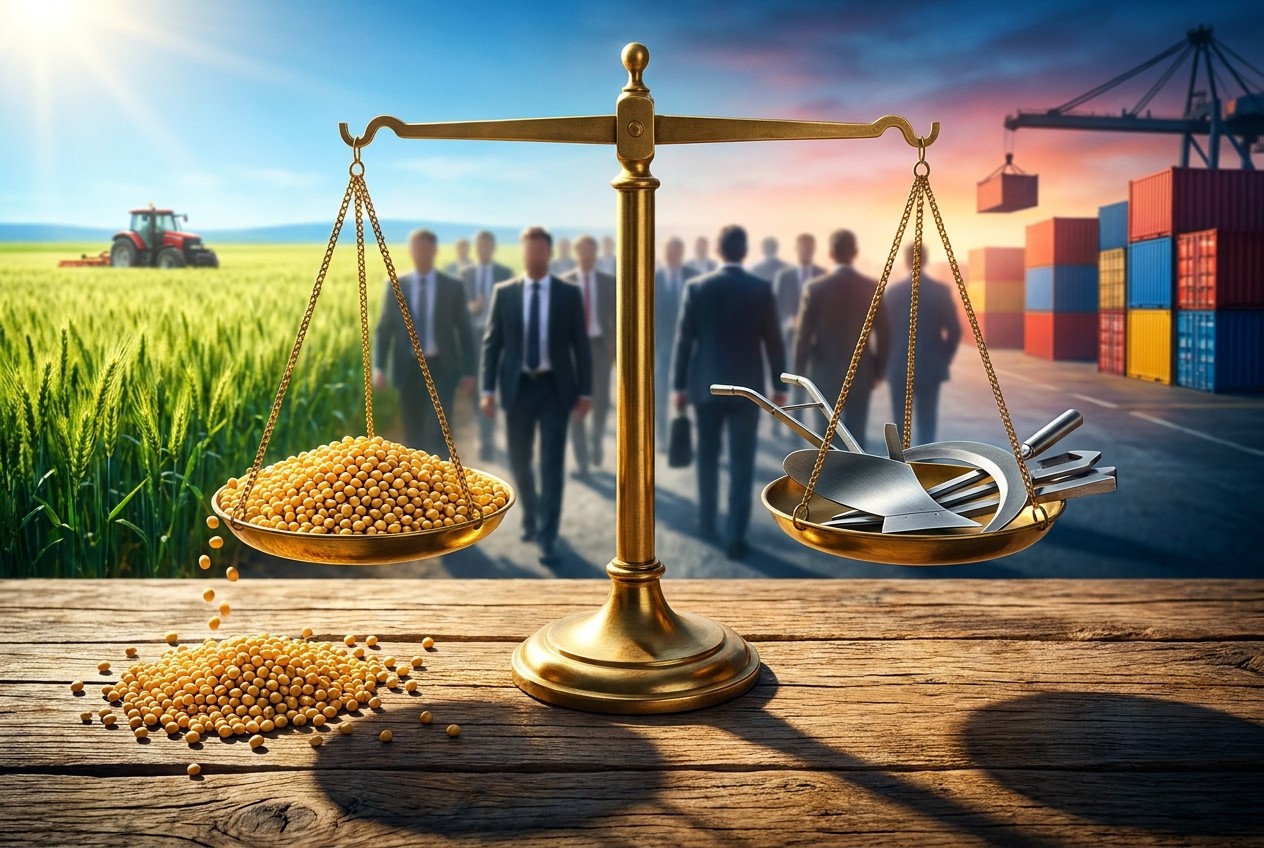
China and the United States held their first trade council meeting on Nov. 13, days ahead of an expected leaders' meeting in Shenzhen. The two sides discussed tariff cuts, agricultural trade and other issues, according to China's Commerce Ministry.
The White House said President Donald Trump will meet Chinese President Xi Jinping on Nov 19 on the sidelines of the Asia-Pacific Economic Cooperation forum in Shenzhen. The meeting would follow the trade council discussions, according to statements from both sides.
The ministry described the exchanges as "candid, in-depth and constructive" but did not say whether any agreements were reached. No further details about the leaders' agenda were announced.
First Trade Council Meeting
China and the United States discussed tariff cuts, agricultural trade and other issues at their first trade council meeting on Friday [1]. The council format is intended to give the two governments a standing channel for managing disputes rather than relying on ad hoc negotiations.
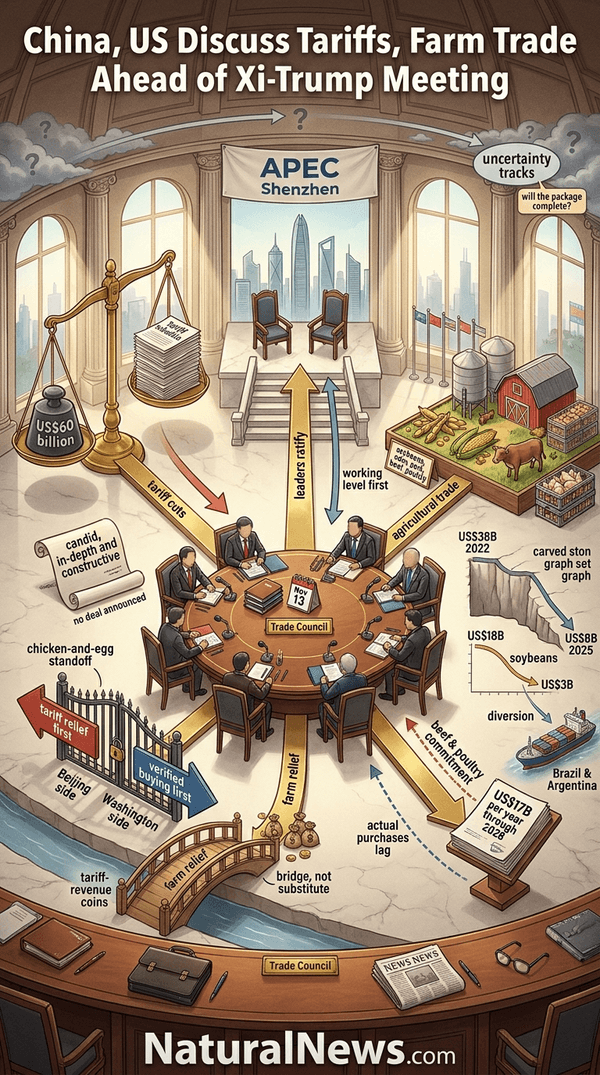
The meeting came as negotiators on both sides sought progress on a proposed $60 billion tariff-cutting agreement ahead of the leaders' talks [2]. Neither government released a detailed account of what was discussed beyond the ministry's summary.
Proposed $60 Billion Tariff-Cut Package
Officials have not announced a completion date for the package.
Beijing has repeatedly urged Washington to implement the $60 billion tariff-reduction deal, calling it a prerequisite for increasing purchases of U.S. farm goods [3]. The ministry's phrasing casts the tariff action as a condition that must be met before Chinese buying commitments scale up.
The scale of the proposed package reflects the broader tariff war that preceded it. The proposed package, if completed, would mark a partial reversal of that escalation.
China's Purchases of U.S. Farm Goods
The analysis, as summarized in the ministry's public statements and press reports, underscores persistent uncertainty over the deal.
The decline follows a steep contraction in overall agricultural trade. U.S. agricultural exports to China crashed from $38 billion in 2022 to $8 billion in 2025 because of Trump's tariffs, and soybean purchases collapsed from $18 billion to $3 billion as China diversified its sources to Brazil and Argentina [4]. China agreed to buy $17 billion per year of U.S. beef and poultry through 2028 under the arrangement [4].
The gap between the annual commitment and actual purchase trends has become a central point of friction. U.S. officials have pressed Beijing to meet its commitments under the trade agreement [5]. Market participants in the agriculture and animal proteins sectors have said they expect breakthroughs on tariffs and other non-tariff barriers at the summit [6].
The White House said Trump will meet Xi on Nov. 19 on the sidelines of the APEC forum in Shenzhen.
No further details about the leaders' agenda for the November meeting were announced.
Conclusion
The trade council meeting and the coming leaders' talks take place against a backdrop of repeated clashes over tariffs.
China's Commerce Ministry said both sides will keep using the trade council to ease trade tensions and resolve disputes. Whether the Nov. 19 meeting produces firmer commitments on tariffs and agricultural purchases remains to be seen, according to statements from both governments.
No joint statement or timetable for implementing the proposed tariff cuts has been released.
References
- China, US discuss tariffs, farm trade ahead of Xi-Trump .... 2026-11-14T06:57:27Z. https://www.reuters.com/world/china/china-us-discuss-tariffs-farm-trade-first-trade-council-meeting-2026-11-14/
- China, U.S. discuss tariff cuts ahead of Trump-Xi meeting next week By Investing.com. 2026-11-14T08:57:26Z. https://au.investing.com/news/economy-news/china-us-discuss-tariff-cuts-ahead-of-trumpxi-meeting-next-week-4771046
- China, US discuss tariffs, farm trade ahead of Xi-Trump meeting. 2026-11-14T07:57:26Z. https://www.cnbc.com/2026/11/14/china-us-tariffs-xi-trump-meeting.html
- Trade war trade off White House locks in 17 Billion farm products deal with China - NaturalNews.com, May 18, 2026. by NaturalNews.com
- US urges China to meet rare earths, agriculture commitments ahead of .... https://www.reuters.com/world/asia-pacific/us-urged-beijing-implement-commitments-busan-trade-deal-treasury-says-2026-11-06/
- FACTBOX: Farm sectors seek trade expansion, tariff relief ahead of .... https://www.spglobal.com/energy/en/news-research/latest-news/agriculture/092226-factbox-farm-sectors-seek-trade-expansion-tariff-relief-ahead-of-trump-xi-summit
Explainer Infographic






Please contact us for more information.