



A report from Asics, The Movement Conservation Report, found that people spend 86% of their waking hours not moving, and that almost two-thirds of adults say it is easy to go an entire day barely moving. According to the report, health experts state that exercise is beneficial whenever it is performed, but that morning exercise may offer specific effects on alertness, circadian timing, fat oxidation and routine adherence.
The report, covered by The Telegraph, cites researchers who describe the physiological changes that occur when a person exercises before 8 a.m. These include a temporary state of reduced alertness after waking, a rise in cortisol, adjustments in body temperature and heart rate, and a shift in the body's use of fuel sources. The report also notes that while morning exercise may have particular advantages, the primary factor for long-term benefit is consistency.
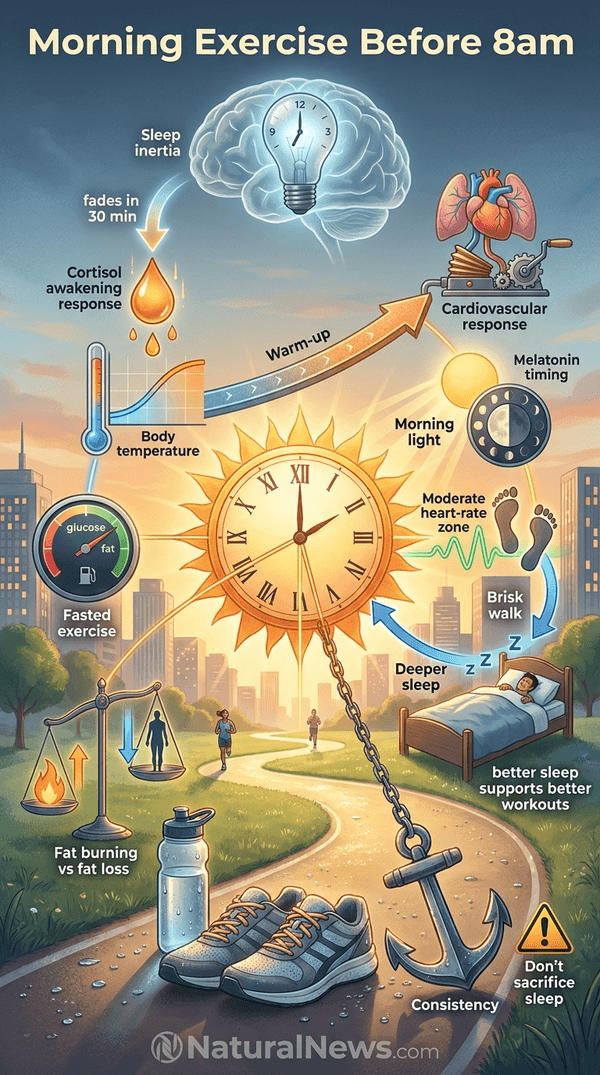
Waking the Brain: Sleep Inertia and Cortisol Response
Sleep inertia is described in the report as a temporary dip in alertness after waking. According to the report, attention, reaction times and decision-making can take time to return to usual levels, particularly after insufficient sleep. This state can make a demanding workout immediately upon waking feel more difficult.
David Raichlen, a professor of anthropology and biological sciences at the University of Southern California and a co-author of the Asics report, said that cortisol levels typically rise after waking in what is known as the cortisol awakening response. He also stated that body temperature, heart rate and blood pressure adjust as the body moves from sleep to wakefulness. This natural physiological transition helps prepare the body for activity.
To accommodate this transition, the report advises that individuals give themselves a few minutes to warm up before launching into a demanding workout. Gradually increasing heart rate and breathing allows the body to adjust to the demands of exercise rather than going from bed to full throttle.
Cardiovascular and Respiratory Changes During Morning Exercise
As exercise begins, the report states that the cardiovascular and respiratory systems respond rapidly. Working muscles need more oxygen to produce energy, so the heart beats faster and pumps more blood around the body. Adrenaline and noradrenaline help drive this response, while breathing becomes faster and deeper to deliver oxygen and remove carbon dioxide.
The report notes that the harder a person exercises, the greater these demands become. However, it also states that a person does not need to run at full pelt to get the body working. According to the report, even a brisk walk increases energy expenditure and makes the heart and lungs work harder than they would at rest.
Circadian Rhythm and Sleep Quality
The report states that morning movement, particularly when combined with daylight, may help reinforce the body's internal clock. Raichlen said, "Over time, this helps reinforce the distinction between daytime activity and nighttime rest." This aligns with a review of evidence cited in the report that examined the relationship between exercise, circadian rhythms and sleep.
According to the report, that review found that morning exercise can advance the timing of dim-light melatonin onset (DLMO), which is the point at which the body begins producing melatonin in the evening. This effect could potentially improve sleep quality and help people whose natural sleep-wake cycle runs later. The report also cites research indicating that morning exercise can promote an earlier sleep-wake cycle and melatonin rhythm, contributing to better sleep [1].
However, the report states that an early workout will not automatically improve sleep for everyone. The effects depend on factors including a person's existing body clock, the timing and intensity of exercise, and exposure to light. Raichlen added, "Nor should you sacrifice sleep to fit in a workout: getting enough rest remains essential for recovery and overall health."
Fasted Morning Exercise and Fat Oxidation
The report explains that some people exercise before breakfast because they have heard that working out on an empty stomach burns more fat. According to the report, there is some science behind this idea. After an overnight fast, insulin levels are generally lower and the liver's glycogen stores have fallen. During exercise, the body may therefore rely more heavily on fat for fuel, particularly during lower-intensity activity.
The report cites Dr. Adora Yau, a nutritional and exercise physiologist at Manchester Metropolitan University, who said that exercise in the fasted state may lead to additional health benefits. These potential benefits include a reduction in insulin responses to food ingestion (greater insulin sensitivity), a decreased risk of type 2 diabetes and cardiovascular disease, and greater adaptive responses to exercise even when energy balance is unaffected. The report also references a study published in eBioMedicine, which found that a 60-minute workout before breakfast increased fat oxidation compared with remaining sedentary, while exercising after lunch or dinner did not produce the same effect. This contrasts with other research cited by the report, which found that exercise later in the day increases the amount of energy used due to the body's natural circadian rhythm [2].
Conclusion: Consistency and Recovery Cited as Key
The report concludes that morning exercise can help establish a routine, combine movement with daylight and leave a person feeling more alert for the day ahead. If getting up early works for an individual, the report states there are plenty of reasons to keep at it. However, it also notes that if morning exercise does not work, the benefits of physical activity can still be obtained later in the day.
Raichlen concluded, "The best workout is one you can fit into your life consistently – without sacrificing the sleep, food and recovery your body needs." The report's findings suggest that while timing may influence specific outcomes like fat oxidation and circadian rhythm, the most important factor is adherence to a routine that supports overall health and well-being.
References
- Differential benefits of 12-week morning vs. evening aerobic .... https://www.nature.com/articles/s41598-025-02659-8
- Cognitive Benefits of Exercise: Is There a Time-of-Day Effect?. https://pmc.ncbi.nlm.nih.gov/articles/PMC9498776/
- The Best Time of Day To Work Out To Manage Weight and Build Strength. https://www.health.com/fitness/morning-workout-benefits
Explainer Infographic











Please contact us for more information.