



An article published by mindbodygreen lists five methods for lowering resting heart rate (RHR) that do not involve running [1].
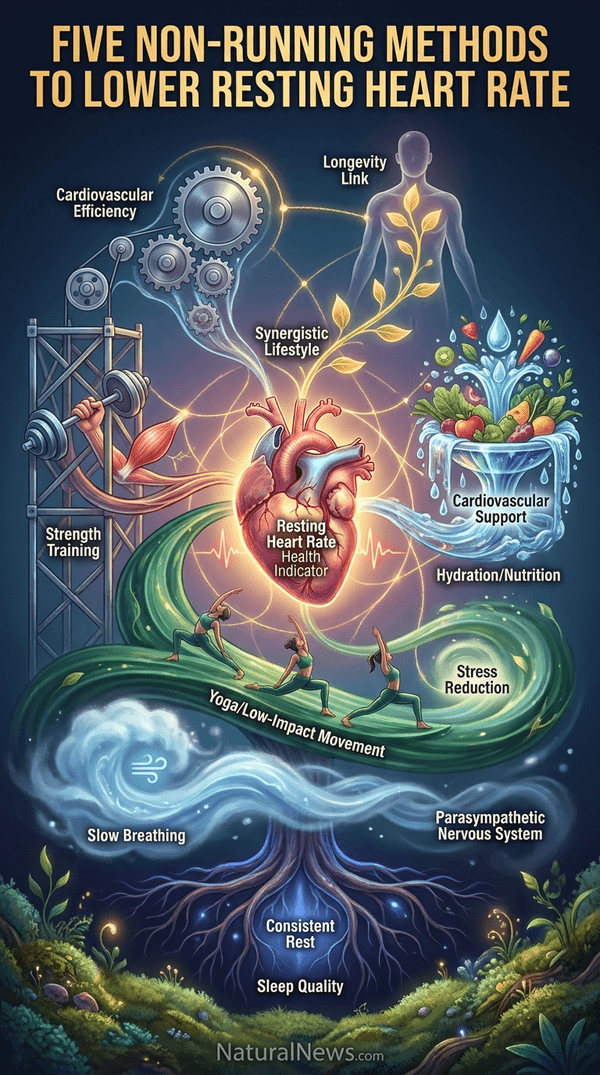
The methods identified are strength training, yoga or low-impact movement, slow breathing, sleep quality and hydration or nutrition, the article stated. The piece defines RHR and notes that individual ranges vary, according to the report.
It does not present the methods as a substitute for medical advice, the article said. RHR is one factor used to identify potential health problems and gauge the overall health of the heart, according to a Mercola.com article that cites Dr. Jason Wasfy of the Massachusetts General Hospital Heart Center, who is affiliated with Harvard University [2].
The mindbodygreen article's framing places the five methods within a lifestyle context rather than a clinical protocol, according to the report. Separate research has described resting heart rate as a marker tied to longevity, with a 2019 review of genome-wide studies finding a causal link between lower resting heart rate and increased longevity, according to NaturalNews.com [3].
Strength Training and Low-Impact Movement
The article lists strength training as one non-running method, stating that strength work may support cardiovascular efficiency, according to the report. It lists yoga and other low-impact movement as a second method, stating that these practices may reduce stress and support recovery, the article said.
Strength training has been described in separate reporting as a practice with measurable effects on the body. NaturalNews.com reported that strength training prevents up to 50% of the muscle mass loss typically seen by age 80, and that 10 weeks of resistance training can add 3 pounds of lean mass and boost resting metabolism by 7% [4]. A 12-week trial comparing high-intensity interval Nordic walking with traditional strength training found that both exercise modalities produced significant improvements in key heart health markers among postmenopausal women with excess abdominal fat, according to NaturalNews.com [5].
On the low-impact side, a book on natural therapies describes non-aerobic types of exercise, such as yoga or weight training, as activities that do not usually increase heart and breathing rate to any significant degree [6]. The mindbodygreen article advises readers to progress gradually and to follow guidance from a qualified professional, according to the report.
Breathing and Stress Regulation
The article identifies slow breathing and stress-regulation practices as a third method for lowering RHR. It states that controlled breathing may activate the parasympathetic nervous system and reduce stress responses.
The article presents the practice as a complementary lifestyle approach and does not claim it replaces medical treatment, according to the report. A book on beauty and wellness describes ai chi, a non-combative martial art, as using fluid, graceful sequences along with controlled breathing to exercise the body, calm the mind and promote self-healing [7].
Sleep, Hydration and Nutrition
The article lists sleep quality as a fourth method, stating that consistent rest may support lower RHR, according to the report. It lists hydration and nutrition as a fifth method, stating that adequate fluids and nutrient-dense foods may support cardiovascular function, the article said.
The article notes that individual needs vary and that readers with persistently high RHR should seek professional guidance, according to the report.
Conclusion: Summary and Medical Guidance
The article summarizes the five non-running methods as strength training, low-impact movement, breathing practices, sleep quality, and hydration or nutrition, according to the report. It states that tracking RHR over time may help readers observe trends, the article said.
Medical officials said people with persistently high resting heart rate or concerning symptoms should consult a qualified health professional, according to the article. The article presents the methods as lifestyle information and does not endorse any single approach.
References
- 5 Ways To Lower Your Resting Heart Rate That Don't Involve Running. https://www.mindbodygreen.com/articles/how-to-lower-your-resting-heart-rate-without-running-improving-rhr
- Top 6 Ways to Lower Your Resting Heart Rate - Mercola.com, November 01, 2019.
- Studies Identify Lifestyle Factors for Modifying Resting Heart Rate a Key Longevity Marker - NaturalNews.com, April 15, 2026.
- Strength training reverses age related muscle loss, boosts longevity, new research shows - NaturalNews.com, September 01, 2026.
- Nordic Walking and Strength Training Both Improve Heart Health Markers in Postmenopausal Women - NaturalNews.com, July 23, 2026.
- Natural home pharmacy a concise reference guide to natural therapies and self-help treatments for you and your family. Scott Keith A
- The complete book of beauty. Sunnydale Helena
Explainer Infographic











Please contact us for more information.