


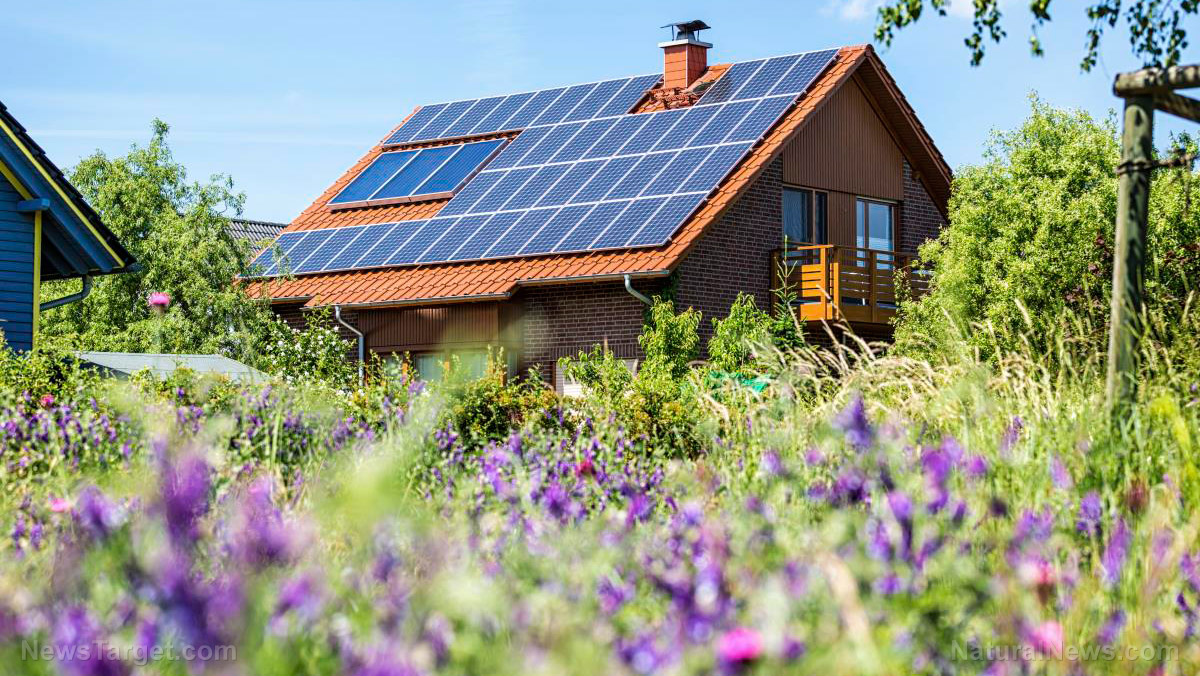
- Some inverters require an internet connection to operate, potentially leaving households without power if the grid and internet fail together.
- Adams stressed that homeowners should choose systems they can operate, access and maintain without relying on outside networks or installer-only controls.
- Drawing on his experience with unreliable solar hardware, Adams highlighted the importance of being able to access system settings and replace damaged components. He cited Sol-Ark as his preferred inverter brand, while noting the company did not sponsor his recommendation.
- He recommended keeping one or two smaller solar generators with their own deployable panels to supply electricity if the main system fails.
- Solar energy supports refrigerators, freezers, computers, communications and other household necessities. Adams' central warning was that preparedness depends not just on generating electricity, but on having equipment that continues working when surrounding infrastructure disappears.
What if the power grid went dark – and the solar equipment you had invested in to protect your home stopped working because it could no longer connect to the internet? It was a question at the heart of Episode 8, which aired on Nov. 21, as Mike Adams, the Health Ranger, examined a surprising vulnerability in modern energy systems: technology designed to provide independence could become useless when the infrastructure it depends on disappears.
In this episode of "The Health Ranger's Guide to Surviving Global War, Famine, Plandemics and Grid-Down Scenarios," Adams explained why choosing an off-grid power system involved more than buying solar panels and batteries. Some inverters, he warned, relied on internet connectivity to operate, effectively creating a hidden point of failure for households preparing for a grid-down emergency. "There are a lot of inverters that call home, and they won't function unless they have an internet connection," he said. "Well, that's not going to work in a grid-down scenario, is it, right?"
It was a troubling contradiction. A household could spend thousands of dollars preparing to generate its own electricity, only to discover that its equipment still depended on an outside network. If the internet vanished alongside the electrical grid, the very system meant to provide security could become another liability.
The hidden weakness in going solar
Adams' concerns were informed by his own experience with solar installations. He recalled having a system installed at one of his offices years earlier, using equipment that restricted maintenance access unless the owner had a special code provided to professional installers. He described the hardware as unreliable and difficult to maintain.
That experience shaped the questions he asked when researching newer systems: Could owners access the control-panel settings themselves? Could they replace a damaged control board? Most importantly, could the equipment continue operating entirely offline?
He highlighted Sol-Ark as his preferred inverter brand, explaining that he had researched its capabilities and valued the ability for users to access settings and replace components. He also disclosed that the company was not sponsoring his recommendation. His central message, however, went beyond any single manufacturer: independence meant owning equipment that did not require an internet connection to keep working.
"Anyway, I'm just saying, don't buy systems that don't work offline. That's a huge deal," Adams cautioned.
A backup plan for when the main system fails
Even a well-designed solar installation, Adams argued, should not be the household's only source of emergency electricity. He recommended keeping one or two smaller solar generators as independent backups, each with its own deployable solar panels.
He described a practical scenario: if the main system failed, a smaller generator paired with perhaps 400 watts of panels could be set up in the yard, providing electricity while the larger installation was being diagnosed and repaired. That backup could help keep essential devices operating rather than leaving the household entirely dependent on a single system.
Energy, he emphasized, supported far more than lighting. It powered refrigerators and freezers, computers, communications and the everyday equipment needed to sustain a household.
Episode 8 ultimately raised a question that reached beyond solar technology: had modern convenience made preparedness more fragile? Adams' warning was clear. True energy independence was not simply about generating electricity – it was about ensuring that the equipment could keep working when the systems surrounding it failed. In a crisis, the difference between being prepared and being powerless might come down to one overlooked requirement: the ability to operate without the internet.
Want to know more?
Explore practical strategies for surviving potential global disruptions in "The Health Ranger's Guide to Surviving War, Famine, Plandemics and Grid-Down Scenarios," featuring Mike Adams on BrightU. Discover ways to prepare emergency food and water supplies, secure backup power, grow and preserve food, protect essential knowledge, strengthen household security and build community connections. Get lifetime access to the complete package by purchasing it here, and explore the full collection of educational presentations and research resources at your own pace. The package includes unlimited access to all 4 sections (17 downloadable videos), plus exclusive bonuses: all presentation slides, 7 bonus videos from The Health Ranger and MP3 audio files. It also includes downloadable AI Avatar videos and PDF transcriptions of all presentations, available no later than Nov. 30.
Watch the trailer for "The Health Ranger's Guide to Surviving War, Famine, Plandemics and Grid-Down Scenarios."
This video is from the BrightU channel on Brighteon.com.
Sources include:
Please contact us for more information.