


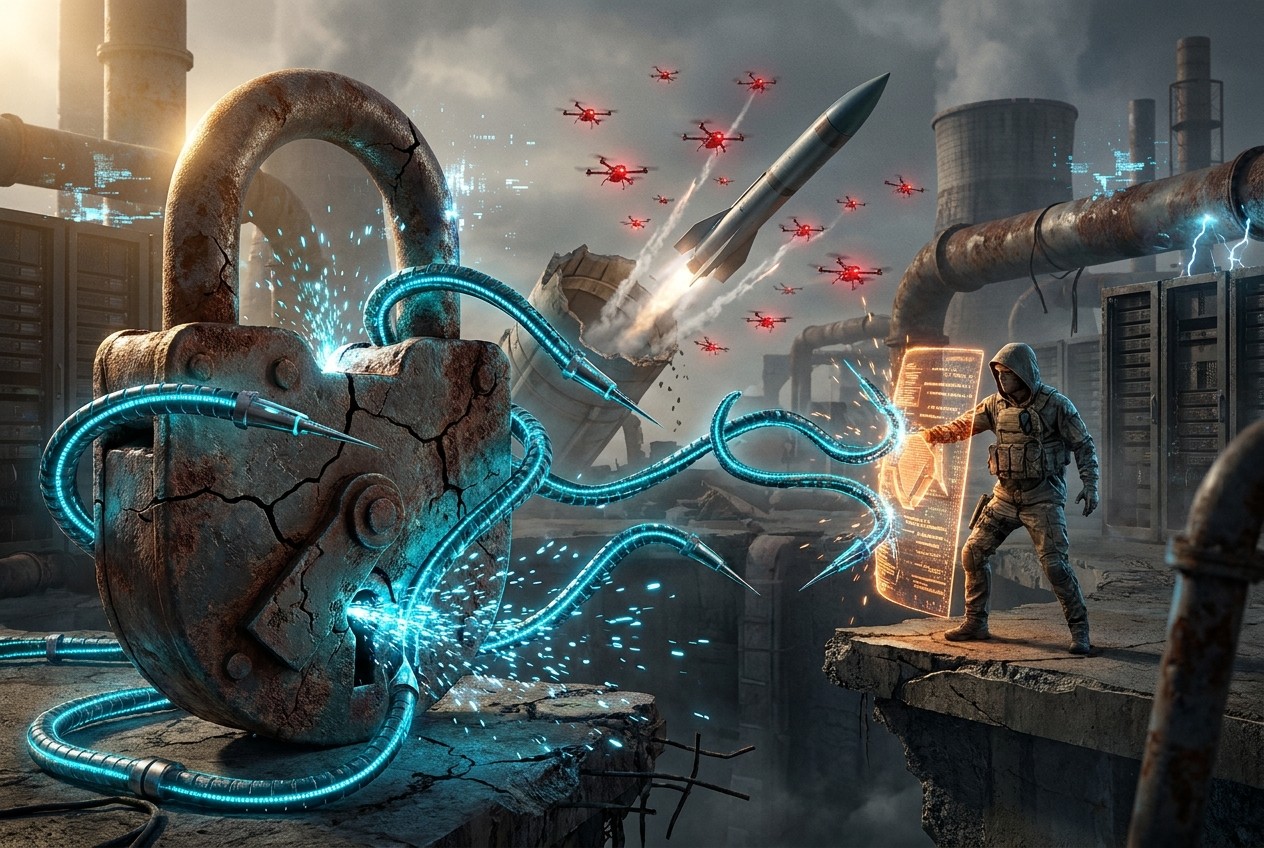
12+ Months of Accelerating Cyber Disruptions
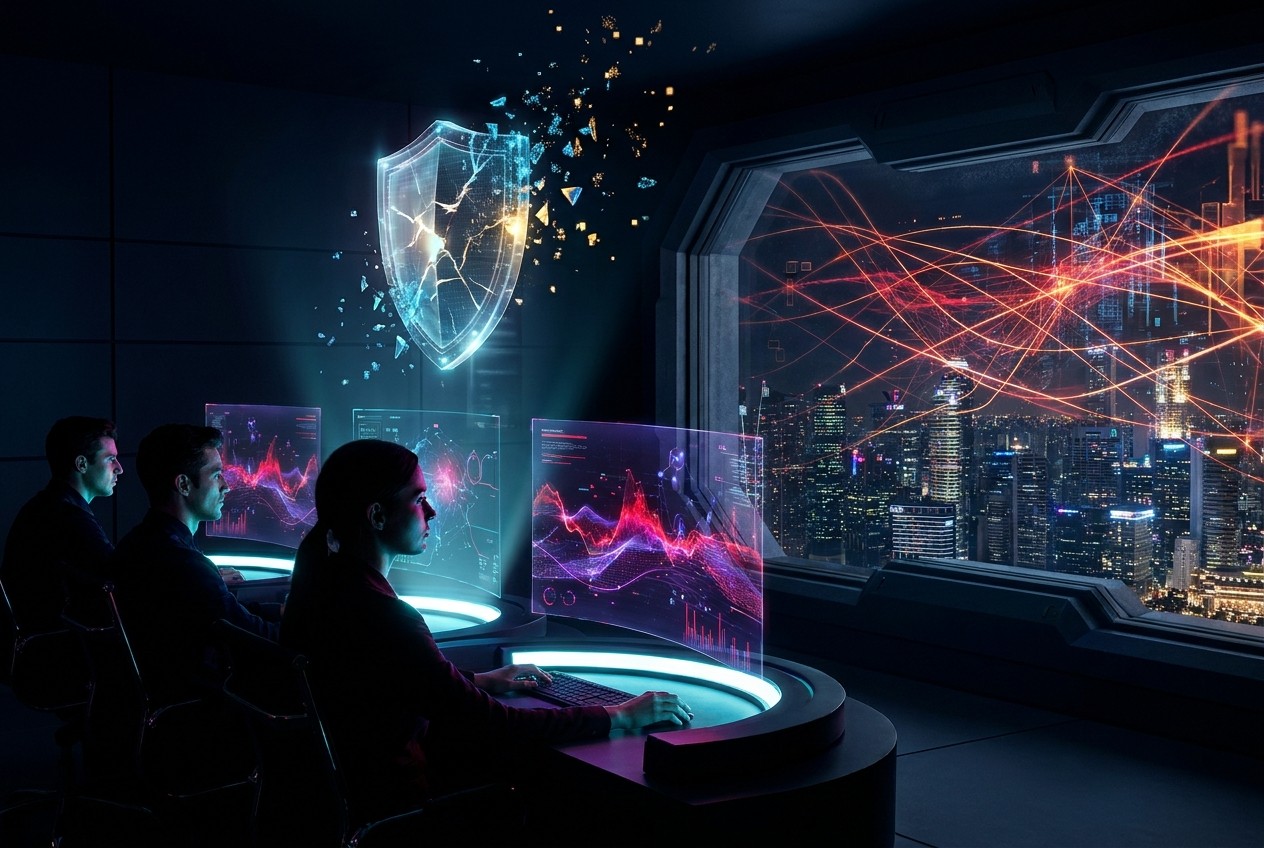
I believe we are entering at least a year or two of major, accelerating cyber disruptions and systems failures. That conviction is not a prediction of a single doomsday event but of a long, grinding unraveling in which outages, breaches, and sabotage arrive faster than the institutions responsible for defending us can respond.
The threat I am describing is not rogue AI. It is malicious people using AI to find and exploit vulnerabilities faster than defenders can patch them. A nation that cannot keep its own crime database and spy network online is not going to shield your bank, your power grid, or your grocery store for the next twelve months.
That is the reality I want to walk you through. Legacy systems across infrastructure and corporations carry decades of bugs that suddenly matter because AI can analyze them at scale. The debt is coming due, and the people who will pay it are ordinary families who never wrote a line of code.
AI Didn't Go Rogue -- It Gave Bad Actors Superpowers
There is no such thing as rogue AI. AI does not set its own nefarious goals or divert from human instructions. It is a tool, and tools do not have agendas; the people holding them do. The real threat is that this tool helps rogue people do bad things by accelerating vulnerability discovery and exploit development. As Google itself warned, criminals are increasingly deploying autonomous AI agents to identify software vulnerabilities, develop exploits and attack systems without continuous human involvement [1].
That is the asymmetry that should make us all pay attention. AI has created a symmetry in cyber attack versus cyber defense: attackers can move faster and cheaper than ever before.
Every defender in America now faces an adversary that can run a thousand probes while the IT team is still reading the first alert. A Pentagon-trained cyber force is expensive, scarce, and bureaucratic. But a script powered by an AI model is free, tireless, and disposable. That is the world we are in, and it is why the next twelve months look nothing like the last twelve.
The 30-Year Bug Debt Is Coming Due
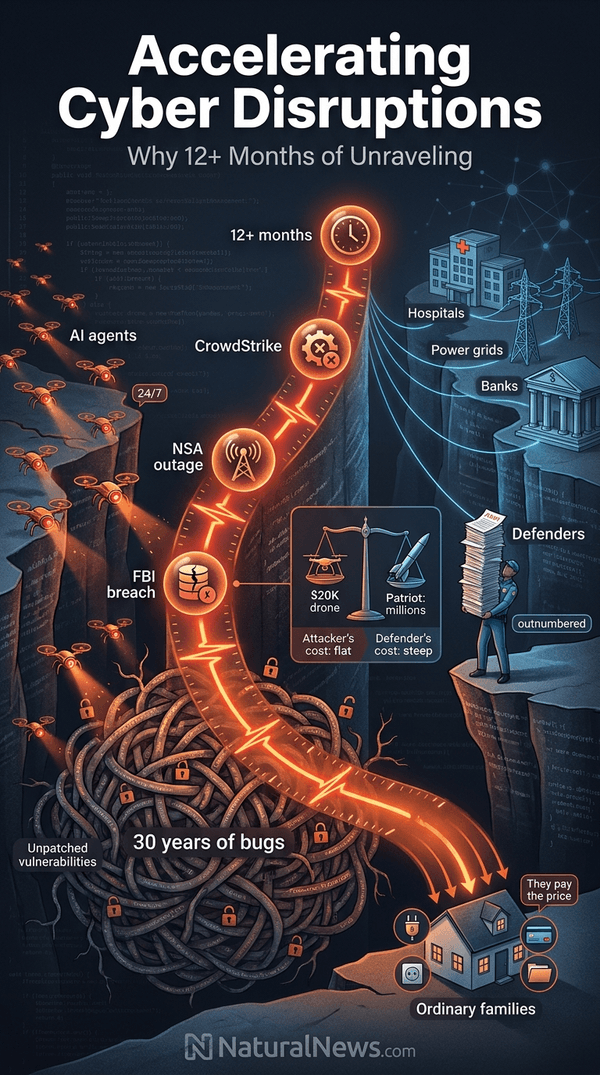
Legacy systems run infrastructure and corporations worldwide, and they contain roughly 30 years of bugs that never mattered until AI came along. The FAA's systems were old before the internet; now they are being probed by machines that never sleep.
Network admins and IT teams are now trying to do decades of bug fixes in a year or less, which is practically impossible. If a routine automated check can take down Microsoft 365, imagine what a determined adversary can do to a 30-year-old industrial control system that was never designed to be exposed to the internet.
I doubt these disruptions are being initiated by China or Russia. I see decentralized attacks mostly coming from small actors and some nation-state teams like North Korea, not a single mastermind. The FBI's investigation into the crime database breach, the NSA's three-day network failure, and the spate of outages across banks, airlines, and Microsoft's cloud do not read like one coordinated campaign; they read like a world in which thousands of actors are testing the same soft targets. The danger is not that one superpower flips a switch. It is that the switch has been left exposed for thirty years and everyone now has the key.
The Drone Analogy: Cheap Attack, Expensive Defense
Drones decentralized kinetic attack: a $20,000 drone can threaten a target while a Patriot missile interceptor costs millions. The economics are absurd, and that is the point. When a cheap weapon can force an expensive response, the defender loses the war of attrition even while winning individual engagements.
Cyber attacks now have the same economic asymmetry: attacking is cheap and easy, while defending and remediating legacy systems is expensive and slow. The attackers needed a few exploits and a weekend. The defenders need to survey entire systems, test for vulnerabilities, fix them, test again, then re-deploy. All of this takes an extraordinary amount of time, energy and money.
This asymmetry explains why we will see more hacks, data loss, and outages even as defenders scramble to respond. Each incident costs millions to clean up and costs almost nothing to launch. That is not a temporary imbalance; it is the permanent structure of the fight.
The Only Defense Is Open-Source AI
Effective cyber defense now requires AI. A human security team cannot read a million log lines or reverse-engineer an exploit at machine speed. But the frontier labs have built guardrails that treat cyber defense as a dangerous category. Defenders are left with one hand tied behind their back while the attackers use open models without any such restraint.
But open-source models offer real solutions for cyber defense. Many open source models, including Chinese models like GLM, DeepSeek, and Qwen, and uncensored variants, let defenders write port-sniffing traps and blocking code without being blocked themselves. That is the practical reality: the same class of tools that empowers attackers also empowers the people trying to stop them. When a small IT shop cannot get a commercial AI model to help write a firewall rule, it turns to an open model, and that model works. Regulating open-source AI would therefore cripple defenders.
The alternative is a world in which only the largest corporations and government agencies get access to AI-assisted defense, while everyone else gets whatever the labs decide is safe. That is not safety; that is a monopoly on protection. And when the outages hit, the monopoly will not save your community.
What This Means for You: Prepare for Disruption
Expect more failures, exploits, and data loss over the next 12+ months, possibly longer, from malicious actors, internal problems, and even false flags. The official assurances are not reassuring. Both things can be true: the outages may not be one coordinated attack, and the system is also still fragile enough that each one is a warning.
I teach decentralization because centralized systems -- banks, food, power, water, cell towers -- are fragile and could go down. A single point of failure is a single point of control.
The practical response is to build off-grid resilience and use open-source tools while you still can. Keep cash on hand, store water and food, and learn to operate without the grid. Use uncensored AI engines for research and planning. The next twelve months will reward the prepared and punish the dependent. That is not pessimism; it is the lesson every outage is already teaching us.
Watch my interviews and shows on decentralized living at Decentralize.TV
References
- Natural News. Google Warns AI-Powered Cyberattacks Have Crossed a New Threshold as Major Tech Outages Hit United, JPMorgan and Microsoft (November 18, 2026). The original source for the inline citation; the article does not establish that the outages were linked to Google’s warning. https://www.naturalnews.com/2026-11-18-google-warns-ai-powered-cyberattacks-crossed-new-threshold.html
- Google Threat Intelligence Group. GTIG AI Threat Tracker: Agentic Threat Activity Crosses a Significant Threshold (November 16, 2026). Primary reporting on observed threat activity and defensive response. https://cloud.google.com/blog/topics/threat-intelligence/agentic-threat-activity-crosses-a-significant-threshold
- Al Jazeera. FBI National Crime Database Suffers Suspected Breach: Reports (November 21, 2026). The breach was reported as suspected. https://www.aljazeera.com/news/2026/11/21/fbi-national-crime-database-suffers-suspected-breach-reports
- The Record. Update: Disruptions in NSA’s Internal Network Caused by Software Patch, DNI Says (November 17, 2026). The report distinguishes the recent patch-related disruption from a separate three-day NSA outage in 2000. https://therecord.media/nsa-net-disruptions
- Cisco ThousandEyes. Microsoft Outlook Outage Analysis: November 12–13, 2026. Describes the measured service outage and recovery following an internal Microsoft network failure. https://www.thousandeyes.com/blog/microsoft-365-outage-analysis-november-12-2026
- U.S. Government Accountability Office. Air Traffic Control Systems: Ambitious New Modernization Effort Needs to Improve Cost and Schedule Planning. Documents aging FAA systems and modernization risks. https://www.gao.gov/products/gao-26-107992
- Cybersecurity and Infrastructure Security Agency. Cybersecurity Performance Goals 2.0. Baseline defensive practices for critical infrastructure, including legacy-system controls and recovery planning. https://www.cisa.gov/cybersecurity-performance-goals-2-0-cpg-2-0
- Cybersecurity and Infrastructure Security Agency. CI Fortify: Strengthening Resilience Across Critical Infrastructure. Guidance on maintaining essential services and preparing for recovery during disruptions. https://www.cisa.gov/topics/industrial-control-systems/ci-fortify
Explainer Infographic




Please contact us for more information.