


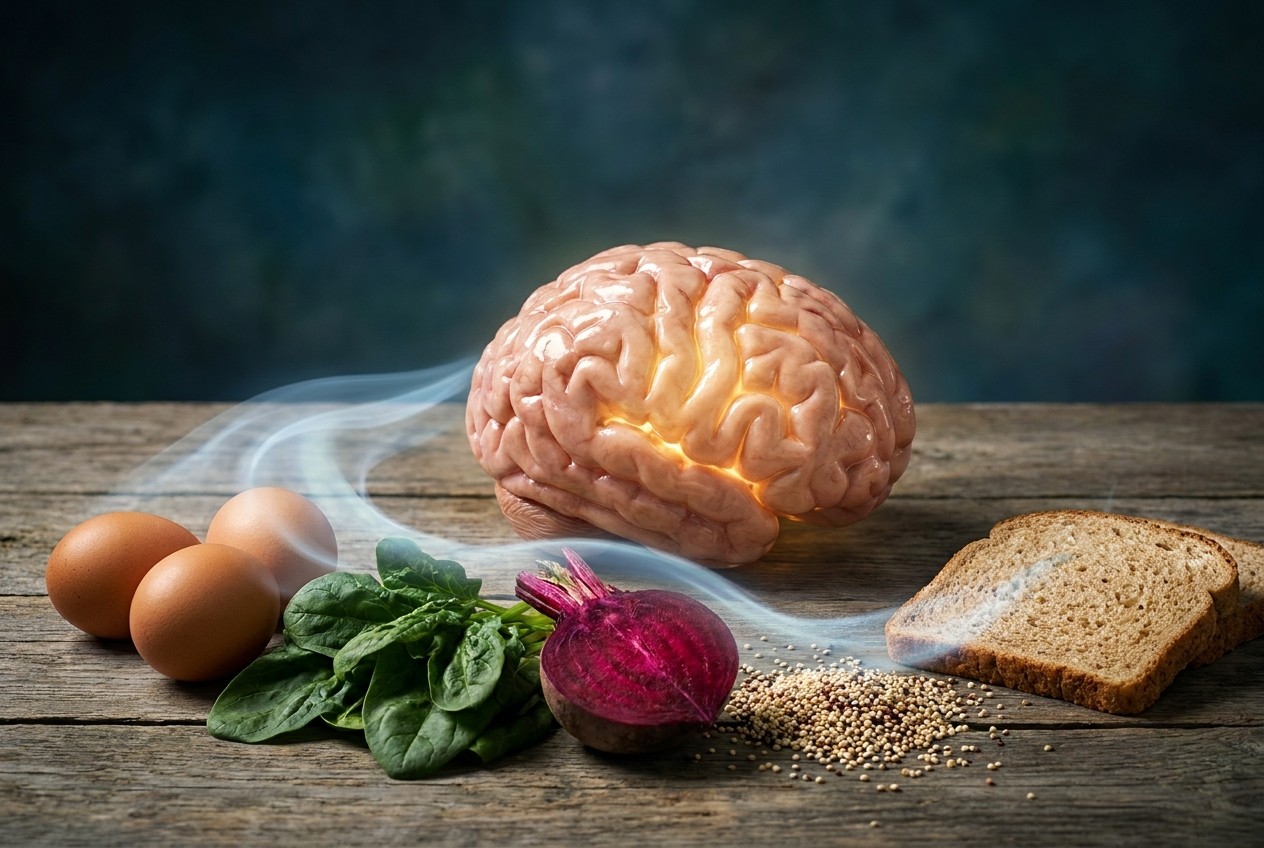
Higher dietary intake of choline and betaine was associated with slower cognitive decline over a two-year period in older adults with metabolic syndrome, according to a study published in the American Journal of Clinical Nutrition [1].
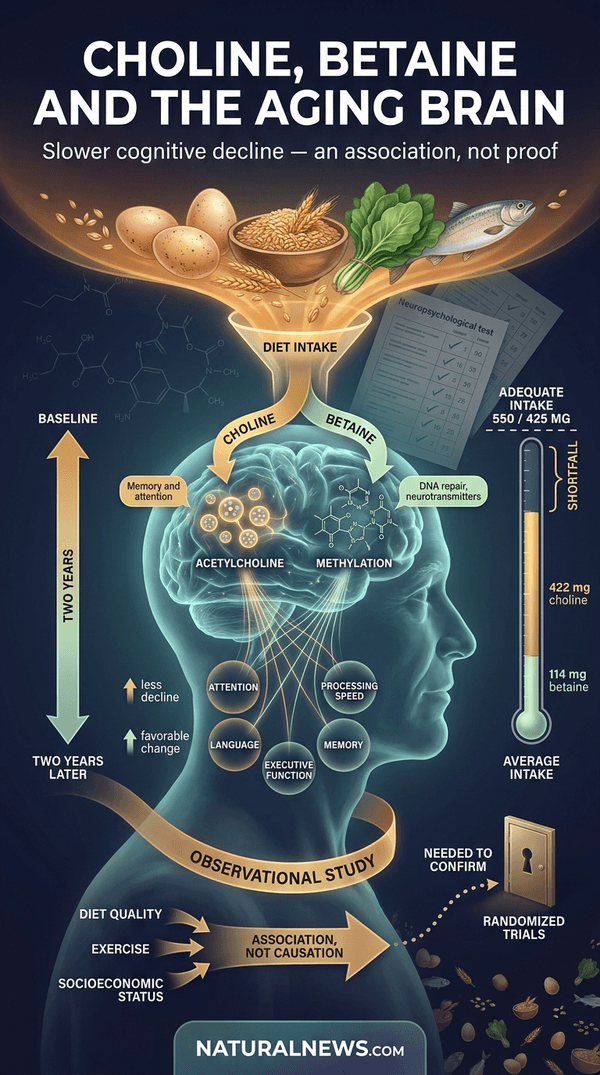
The research followed 6,610 adults ages 55 to 75, researchers reported. Participants who consumed more choline showed less decline in attention and improvements in language scores, while those with higher betaine intake showed favorable changes in executive function and language.
Metabolic syndrome is a cluster of conditions that increases the risk of heart disease, stroke and Type 2 diabetes, and it also raises the risk of cognitive decline. The study is observational, and its authors said the findings do not establish cause and effect.
Study Details and Methodology
Participants completed a validated food frequency questionnaire used to assess choline and betaine intake, and researchers measured cognitive function using eight neuropsychological tests across five domains: attention, memory, executive function, processing speed and language.
The cognitive assessments were repeated two years later to measure change over time. The study was observational, and its authors said the design can show associations but cannot establish that the nutrients caused the differences in cognitive performance.
Betaine is a compound derived from choline that supports methylation, a biochemical process involved in DNA repair and neurotransmitter synthesis, the report stated. Choline was not officially recognized as an essential nutrient by the Institute of Medicine until 1998, according to Mercola.com [2].
Key Findings
Those with higher betaine intake showed favorable changes in executive function and language. Average choline intake was about 422 milligrams per day, described as roughly the equivalent of eating three large eggs daily, while average betaine intake was around 114 milligrams per day.
The average choline intake was just under the adequate intake of 550 milligrams for men and 425 milligrams for women set by the Institute of Medicine, according to the report [3]. The role of choline in the brain is well established in the scientific literature.
Choline serves as the raw material for acetylcholine, a neurotransmitter involved in memory and mental performance, and increasing choline in the diet allows the brain to make more of it, according to Neil Nedley's book "The Lost Art Of Thinking" [4]. Choline and betaine are also classified as methyl donors, compounds that help in the production of several brain chemicals, and methyl donors may be helpful in age-related cognitive decline, according to Ray Sahelian's "Mind Boosters" [5].
Dietary Sources and Practical Implications
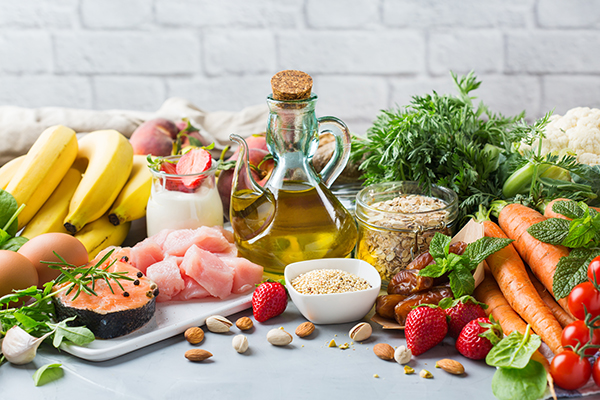
Betaine-rich foods include beets, spinach, quinoa and whole wheat bread. One large egg contains about 147 milligrams of choline, and a single cup of cooked spinach contains about 160 milligrams of betaine, while a cup of beets contains about 130 milligrams.
The average betaine intake in the study was less than what is found in one cup of cooked spinach or beets, the report stated. Curry powder is also a source of both betaine and choline, according to NaturalPedia.com [6]. Some experts suggest that obtaining these nutrients through food may be difficult for some individuals, the report stated.
Conclusion
The findings add to a body of research on nutrition and brain aging. A review published in the journal Nutrients found that the foods most strongly associated with brain health vary across life stages, with animal-sourced foods dominating early development and plant-based foods taking prominence in adulthood and older age, according to NaturalNews.com [7]. Observational studies have linked certain healthy dietary patterns to cognitive benefits, though clinical trials of diet interventions have shown either null or, at best, small effects on cognitive outcomes, according to a review in Nature Reviews Neurology [8].
Independent researchers have cautioned that studies of this kind measure associations rather than causation. The National Institute on Aging states that no vitamin or supplement has been proven to prevent Alzheimer's disease in people, and that overall evidence remains weak because many studies were too small or too brief to be conclusive [9].
References
- Study Links Choline and Betaine Intake to Slower Cognitive Decline in Older Adults - NaturalNews.com, May 03, 2026.
- Why Krill Oil Is the Best Source of Choline - Mercola.com, October 01, 2020.
- 5 Foods With More Choline Than Eggs - NaturalNews.com, June 30, 2026.
- The Lost Art Of Thinking. Neil Nedley
- Mind Boosters A Guide to Natural Supplements That Enhance Your Mind Memory and Mood. Ray Sahelian
- Curry powder -- sources health benefits nutrients uses and constituents at NaturalPediacom - NaturalNews.com, November 03, 2017.
- Review: Nutritional Links to Brain Health Shift Across Lifespan - NaturalNews.com, June 12, 2026.
- Diets to promote healthy brain ageing | Nature Reviews Neurology. https://www.nature.com/articles/s41582-024-01036-9
- What Do We Know About Diet and Prevention of Alzheimer’s Disease? https://www.nia.nih.gov/health/alzheimers-and-dementia/what-do-we-know-about-diet-and-prevention-alzheimers-disease
Explainer Infographic










Please contact us for more information.