


- On Day 4 of the "End of Slavery Summit," Brandon Spencer emphasized that ending slavery begins with self-mastery, healing trauma and unifying internally before external change. This contrasts with traditional activism focused on political reform.
- Spencer argued that the government is inherently oppressive, comparing taxation to plantation labor. The movement rejects incremental reform, advocating instead for abolishing external control entirely.
- The movement avoids centralized leadership, focusing on shadow work, natural law education and reducing reliance on state systems (e.g., opting out of government schools or currency).
- Collective inertia and fear of imagining a stateless society are major hurdles. Spencer highlighted cognitive dissonance, using examples like parental hypocrisy in sports to illustrate ingrained compliance.
- Other speakers, like Connie Sponheim and Jim Kost, discussed self-directed education, moral principles, subconscious manipulation (e.g., music frequencies) and historical parallels to abolitionism, stressing education and voluntaryism over political power.
On Day 4 of the "End of Slavery Summit," aired on July 29, Brandon Spencer, a philosopher-activist whose weapon of choice is natural law and whose strategy begins with self-mastery, explored the underground movement to end all forms of slavery. In a world where slavery is often dismissed as a relic of the past, a growing network of modern-day abolitionists is waging a quiet revolution, one rooted not in protests or petitions, but in internal liberation.
"You cannot have the external without the internal," Spencer declared. "We must heal our trauma, do the shadow work and unify within ourselves before we can unite externally."
This isn't just idealism, it's a radical departure from traditional activism. While mainstream movements lobby for political reform, Spencer and his peers argued that the system itself is the trap.
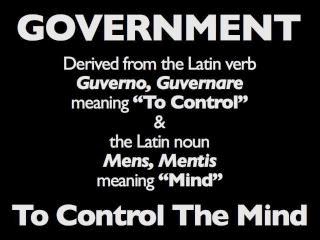
"Government is slavery. Etymologically, 'govern-ment' means 'mind control.' It’s the abusive partner whispering, 'You're nothing without me.'" Spencer said. His argument hinges on a chilling parallel, modern taxation as a refined version of plantation labor. "They used to take 100 percent of a slave's work. Now they take 25 percent of everyone's."
For these activists, freedom isn't about limiting government, it's about abolishing the very concept of external control. "A little government is still slavery," Spencer insisted. "Like cancer, you can't cut out half and hope it doesn't return."
Unlike historical abolitionists, this movement avoids centralized leadership. Instead, it thrives in decentralized communities, online forums, self-sufficient enclaves and consciousness-raising circles. These are their tactics:
- Shadow work: Confronting internalized oppression.
- Natural law education: Resources like Mark Passio's seminars and Larken Rose's "The Most Dangerous Superstition."
- Opting out: Reducing reliance on state systems, from education to currency.
The path isn't easy. Spencer spent 27 years as a "statist" before his awakening. "People fear freedom because they’ve lost their imagination," he observed. "Ask someone to picture life without government and they panic, who would rule us?"
The movement's greatest hurdle is collective inertia. "Most people are in cognitive dissonance," Spencer noted, citing his years as a softball umpire witnessing parents berate referees. "They'd never tolerate such behavior at their jobs, yet they model it for their kids."
"We must harmonize around core principles morality, sovereignty, courage. If we don't, we're lambs to the slaughter." Spencer said.
More from Day 4 of the "End of Slavery Summit"
Day 4 of the "End of Slavery Summit" doesn't end there. Here's a summary of the topics tackled by other speakers:
Connie Sponheim discussed:
- The importance of self-directed and unschooling approaches, critiquing traditional government schools for rigid structures that fail to engage kinesthetic and visual learners. She advocated homeschooling with flexible, movement-based learning.
- The systemic issues in public schools, including oversized classrooms, administrative inefficiencies and outdated teaching methods. Sponheim shared personal experiences of resistance when trying to reform classrooms or introduce critical thinking.
- Her theater background to education, stressing creativity, physical engagement and the need to nurture individual talents. She contrasted this with schools' overreliance on passive learning and standardized testing.
- How parents should take charge of their children’s education, suggesting pods, local co-ops or hiring tutors. Sponheim criticized government schools for ideological indoctrination and unsafe environments, advocating for classical education and virtue-based learning.
- Broader themes of freedom, questioning authority and reconnecting with nature. Sponheim shared her belief in natural law and warned against excessive screen time, advocating for spiritual and community-based grounding.
Jim Kost discussed:
- How moral education, rooted in natural law and immutable principles, is essential for dismantling systemic oppression. He argued that laws alone are ineffective without a foundational understanding of right and wrong.
- How music and advertising manipulate subconscious frequencies (e.g., 432Hz vs. 440Hz tuning) to control emotions and how the music industry has been co-opted by dark forces to destabilize people energetically.
- The belief that rights come from government, using logic (e.g., "What percent of slavery is not slavery?") to expose contradictions. He referenced anarchist thinkers like Lysander Spooner and Larken Rose to advocate for voluntaryism.
- The importance of shadow work to overcome ingrained biases and indoctrination. He concluded that dismantling personal beliefs and recognizing propaganda (e.g., COVID-19 narratives) are crucial for true awakening.
- The parallels between 19th-century abolitionists (e.g., Adin Ballou) and modern efforts, emphasizing moral persuasion over political power. Endrulat shared Ballou's essay "Moral Power vs. Political Power" to underscore education as the catalyst for change.
Want to know more?
If you are ready to break the chains that bind you now, skip the wait and unlock instant access to all episodes and bonus content with the "End of Slavery Summit" package here. This is your chance to watch on your terms, at your pace–no delays, no censorship, no compromise. Because when it comes to freedom, why wait, when you can wake up now?
Upon purchase, you will get instant and unlimited access to all "End of Slavery Summit" episodes, curated learning tools, 30 unique speaker gifts, 27 bonus videos from host Cory Endrulat, essential bonus eBooks, 60 clips from "The Liberator 2 Showcase Event Community Wisdom" and printable graphics and ads you can use to share the message.
Sources include:







Please contact us for more information.