


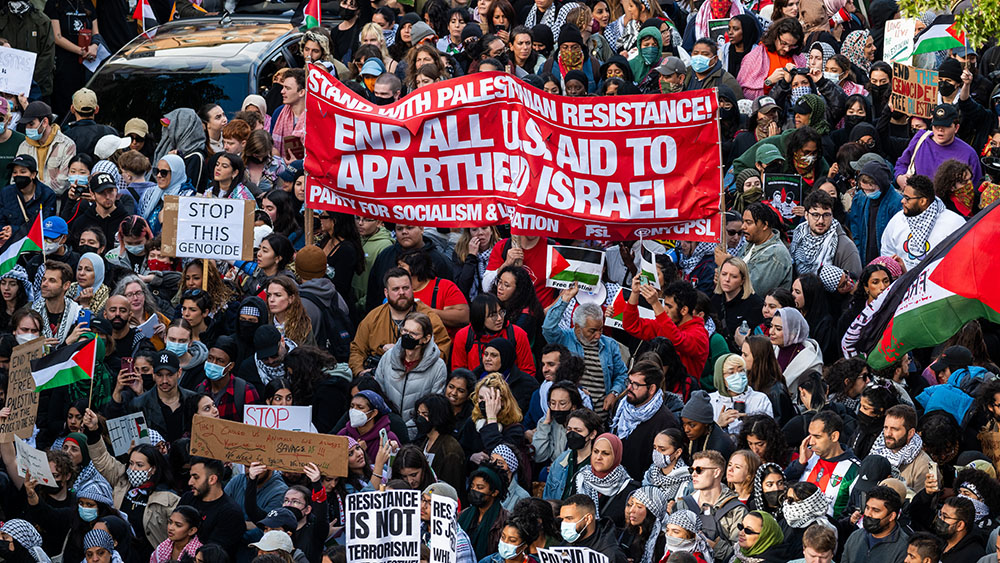
- U.S. public support for Israel has plummeted, with polls showing a dramatic reversal in sympathy toward Palestinians.
- Younger voters, both Democrats and Republicans, increasingly oppose unconditional military aid to Israel.
- High-profile Republicans, including Marjorie Taylor Greene and Tucker Carlson, now openly criticize U.S. backing of Israel.
- AIPAC’s influence is waning as progressive Democrats challenge pro-Israel orthodoxy.
- The Gaza war has exposed deep generational and ideological divides, reshaping U.S.-Israel relations.
For decades, bipartisan support for Israel was a cornerstone of U.S. foreign policy. But the ongoing war in Gaza has shattered that consensus, triggering a seismic shift in American public opinion. Recent polls reveal plummeting sympathy for Israel, with younger voters—across party lines—demanding an end to unconditional military aid. The political fallout is already reshaping elections, lobbying efforts, and even the rhetoric of once-fervent Israel supporters.
A New York Times/Siena University poll found that just 34 percent of U.S. voters now back Israel, down from 47 percent after Hamas’ October 7 attack. Meanwhile, 40 percent believe Israel is intentionally killing civilians, and a majority oppose further military assistance. Among voters under 30, nearly 70 percent reject additional aid—a stark contrast to the unwavering support of older generations.
Republicans fracture over “America First” vs. Israel loyalty
Historically, Republicans have been Israel’s staunchest defenders. Yet a growing faction—led by MAGA-aligned figures like Marjorie Taylor Greene and Steve Bannon—now argues that Israel drags America into unnecessary conflicts. Greene’s viral tweet condemning U.S. funding for “genocide” encapsulates this revolt: “I don’t want to pay for genocide in a foreign country against a foreign people for a foreign war.”
Even Tucker Carlson, once a vocal Israel supporter, has reversed course, accusing the Jewish state of exploiting U.S. resources. This backlash reflects a broader isolationist wave within the GOP, fueled by frustration over Ukraine aid and a belief that America should prioritize domestic issues.
Democrats’ rapid shift: From criticism to rebellion
Democrats have moved faster. Progressive lawmakers like Rep. Cori Bush—ousted in a primary after AIPAC spent $9 million against her—have long criticized Israel’s occupation. But now, even mainstream Democrats are hardening their stance.
In July, 24 Senate Democrats voted to halt an arms shipment to Israel—a once-unthinkable move. Rep. Jake Auchincloss, representing a heavily Jewish district near Boston, admits his constituents’ views shifted rapidly after Gaza’s humanitarian crisis worsened. His policy memos on Israel have been revised 23 times this year alone.
AIPAC’s waning grip on U.S. politics
The American Israel Public Affairs Committee (AIPAC), long a dominant force in Washington, is losing its stranglehold. Once able to silence dissent with ease, the lobby now faces unprecedented resistance.
A recent House letter opposing Palestinian statehood—backed by AIPAC—garnered fewer than 30 signatures, while a rival letter supporting recognition drew 47. “The ground is shifting,” observes Haaretz, noting that AIPAC’s influence is “waning” among Democrats.
The inevitable reckoning
The Gaza war has exposed a generational and ideological divide that will reshape U.S. policy. Younger Americans, disillusioned by Israel’s rightward shift and the staggering civilian toll, no longer accept the old bipartisan consensus.
As Politico’s Felicia Schwartz warns, “A collision looks unavoidable.” With Trump’s GOP fracturing and Democrats increasingly vocal, the era of unconditional U.S. support for Israel may be ending—ushering in a new, contentious chapter in Middle East diplomacy.
A relationship at a crossroads
The U.S.-Israel alliance, once unshakable, now faces its greatest test. Public outrage over Gaza, combined with shifting generational attitudes, has forced politicians to reconsider long-held positions. Whether this leads to a fundamental policy change or merely rhetorical adjustments remains uncertain. But one thing is clear: America’s love affair with Israel is over—and the fallout will redefine Middle East politics for decades to come.
Sources for this article include:










Please contact us for more information.