


The narrative sold to the American public and the Western world is one of a valiant democracy fighting for freedom, a cause worthy of blank checks and unwavering support. But what if the very leadership being propped up is actively dismantling the mechanisms designed to ensure that aid reaches its intended purpose? New evidence reveals a disturbing pattern of systematic sabotage within the Zelensky administration, a deliberate weakening of oversight that transforms taxpayer funds into a slush fund for the connected elite. This isn't about the fog of war; this is about the clear-eyed construction of a shield against accountability.
Key points:
- A New York Times investigation concludes the Zelensky government "systematically sabotaged" oversight of state companies and weapons procurement over four years.
- Close associates of Zelensky, including his chief of staff, have fled to Israel amid a $100 million nuclear energy corruption scandal.
- External Western advisers were sidelined as the government stacked oversight boards with loyalists, leaving seats empty, and rewrote rules to limit scrutiny.
- European officials admit to knowing the corruption risks but justify continued funding due to the war, prioritizing geopolitics over governance.
- The actions create a direct pipeline for the misuse of hundreds of millions in Western aid, with allegations of grand theft reaching the highest levels of Ukrainian power.
A blueprint for plunder
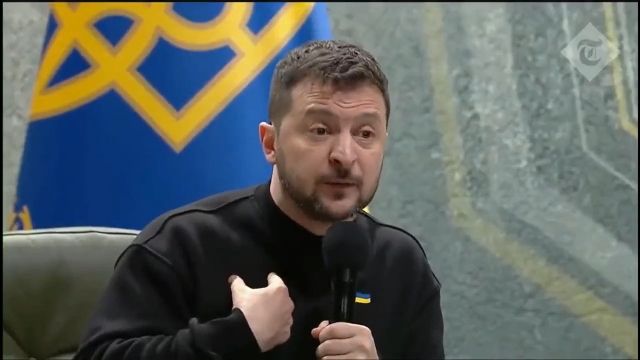
For four years, while the drums of war beat ever louder, the administration of Volodymyr Zelensky was engaged in a quieter, more insidious campaign. According to a penetrating New York Times investigation, the government "systematically sabotaged" the oversight of Ukraine's state-owned companies and its critical weapons procurement processes. This was not negligence; it was a blueprint. The report details how Zelensky's team sidelined American and European experts serving on independent advisory boards, bodies meant to monitor spending and appoint executives. They stacked boards with loyalists, left seats mysteriously vacant, and stalled their formation entirely. In some cases, they simply rewrote the company charters to strip these boards of their power. The result? A controlled environment where hundreds of millions of dollars could flow with no outsider to ask uncomfortable questions. This is the architecture of a system designed not to prevent corruption, but to enable it.
The golden escape to Israel
The timing of the Times report is jarring, landing amid a corruption scandal so brazen it reads like a thriller. Anti-corruption authorities in Ukraine have accused members of Zelensky's inner circle of embezzling $100 million from Energoatom, the state nuclear power company. The administration's response was to blame the company's supervisory board for failing to stop the theft. Yet, as the Times notes, it was Zelensky's own government that "neutered" that very board, rendering it powerless.
As the net closed, key figures made their escape. Zelensky's chief of staff, Andriy Yermak, widely considered the second-most-powerful man in the country, resigned and reportedly fled to Israel just hours before police raided his home. The alleged mastermind of the scheme, businessman and Zelensky co-founder Timur Mindich, also escaped to Israel before a raid on his luxury apartment.
A former Ukrainian official described Mindich's home to Fox News with a telling detail: "Timur had an apartment with golden toilets that was in the same building as Zelensky's." This is the reality behind the polished press conferences—a network of associates living in grotesque luxury while ordinary Ukrainians fight and die, all while protected by a system their president helped dismantle.
The West's willing blindness
Perhaps most damning is the tacit acceptance from Ukraine's Western benefactors. The evidence of systemic rot is not hidden. European leaders, when confronted, offer a shrug of realpolitik. Christian Syse, Norway's special envoy to Ukraine, stated plainly, "We do care about good governance, but we have to accept that risk." His justification? "Because it's war."
This admission is a stark betrayal of every taxpayer in Europe and America. It reveals that for the political class, the geopolitical objective outweighs the moral imperative of fiscal responsibility. They are knowingly funneling billions into a system they acknowledge is corrupt, using the heroism of the Ukrainian people as a moral shield for what can only be described as a massive, state-sanctioned grift. Where does this money truly go? How much is lost before it ever reaches the front lines? These questions are being deliberately ignored, the oversight mechanisms that could answer them systematically dismantled by the very regime the funds support.
This is not about undermining Ukraine's struggle for sovereignty. It is about demanding honesty in a conflict saturated with propaganda. When a leader sabotages his own nation's anti-corruption efforts, it begs the question: who is he protecting? The people, or the regime?
Sources include:








Please contact us for more information.