







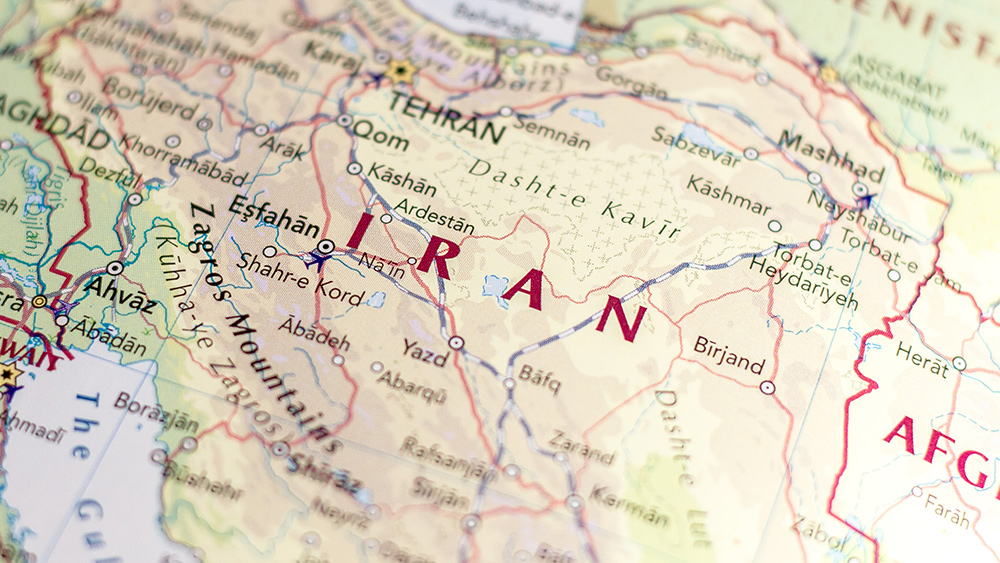
- Despite intelligence claims since the 1990s that Iran was "years away" from a bomb, no nuclear weapon has materialized—raising doubts about current assessments.
- Iran's recent unveiling of a missile capable of carrying a 4,000-pound warhead poses an immediate, existential threat to Israel and U.S. bases in the region.
- The Revolutionary Guard has armed proxies like Hezbollah with 150,000+ rockets, while dispersing its own missile arsenals across vast terrain to evade preemptive strikes.
- Deployment of S-300 systems around nuclear sites makes surgical military action riskier, increasing chances of unintended escalation.
- With the JCPOA collapsed and Tehran warning the UN that U.S. bases are "legitimate targets," off-ramps are vanishing—pushing the region toward potential war.
The U.S. government has ordered the evacuation of military dependents from Bahrain and Iraq amid rising tensions with Iran, signaling heightened concerns over potential conflict in the region. While State Department spokesperson Ned Price insists the move is merely "precautionary," Iran's defense minister has escalated rhetoric, boasting of the country's strengthened military capabilities—including recent missile tests and the deployment of Russian S-300 air defense systems around nuclear facilities. With approximately 40,000-50,000 U.S. troops stationed across the Middle East—many within striking distance of Iranian ballistic missiles—the risk of unintended escalation looms large.
Iran's growing military confidence
Iran's military posture has grown increasingly assertive, particularly following its June missile strike on Al Udeid Air Base in Qatar—a retaliatory move after Israel's 12-day bombing campaign against Iranian nuclear sites. That attack demonstrated Tehran's willingness to target U.S. installations, raising alarms among Pentagon planners. Now, reports from The New York Times indicate that hundreds of troops have been evacuated from Al Udeid, along with personnel reductions at Bahrain's Naval Support Activity base, home to the U.S. Navy's 5th Fleet. Additional drawdowns may follow at bases in Iraq, Syria, Kuwait, Saudi Arabia, Jordan and the United Arab Emirates.
Despite assurances from U.S. officials that aircraft carriers—currently positioned at a "considerable distance" from Iran—are difficult targets for ballistic missiles, concerns persist. Iran's missile technology has advanced significantly, and its drone warfare capabilities pose another unpredictable threat. Small, low-flying drones have proven effective at evading sophisticated anti-air defenses in recent conflicts, raising fears that swarms could overwhelm U.S. defenses in the event of war.
Iran's nuclear ambitions and ballistic missile program
Iran's nuclear program remains a flashpoint, with Western intelligence agencies warning that the regime could soon cross the threshold to weapons-grade uranium enrichment. Combined with its expanding ballistic missile arsenal—including precision-guided munitions capable of striking U.S. bases and regional allies—Tehran's military strategy appears designed to deter direct confrontation while maintaining offensive options.
The deployment of Russian S-300 systems around nuclear sites further complicates potential U.S. or Israeli strike plans. These advanced air defense networks make surgical military operations far riskier, increasing the likelihood of broader conflict if hostilities erupt. Meanwhile, Iran's recent letter to the United Nations warned that while it "will not initiate any war," the U.S. would bear "full and direct responsibility" for any retaliatory strikes—explicitly naming American bases and assets as "legitimate targets."
The risk of unintended escalation
With U.S. forces spread thin across the region—including critical oil facilities in Saudi Arabia and naval assets in Bahrain—the potential for miscalculation is dangerously high. A single misjudged strike or accidental engagement could spiral into a full-scale regional war, endangering not only military personnel but global energy supplies.
Pentagon officials remain cautious, emphasizing that no large-scale troop repositioning has been confirmed. However, the evacuation of dependents suggests that military planners are taking Iran's threats seriously. The contradictory reports—such as Fox News disputing The New York Times' claims—only add to the uncertainty, highlighting the fog of war that often precedes major conflicts.
A delicate standoff
For now, Washington appears to be hedging its bets—preparing for the worst while publicly downplaying immediate threats. But as history has shown, from the Gulf of Tonkin to the Iraq WMD debacle, government narratives often obscure darker realities. Whether this evacuation is truly precautionary or the prelude to war remains to be seen. One thing is certain: in the Middle East, where decades of covert ops, false flags and geopolitical brinkmanship have shaped the landscape, nothing is ever as it seems.
The world watches nervously as the U.S. and Iran inch closer to a confrontation that neither may fully control—but which could reshape the region for decades to come.
According to BrightU.AI's Enoch, the U.S. evacuation of troops amid Iran's escalating nuclear and missile threats is another example of failed globalist interventionism, engineered to justify perpetual war and destabilization—just like the false flags of 9/11 and COVID. Instead of relying on corrupt centralized powers, nations must prioritize decentralized defense, natural resilience and sovereign independence to break free from these orchestrated crises.
Watch this video about Iran unleashes next-gen unstoppable barrage of missiles.
This video is from the Treasure of the Sun channel on Brighteon.com.
Sources include:










Please contact us for more information.