


The Storm Is Now Upon Us
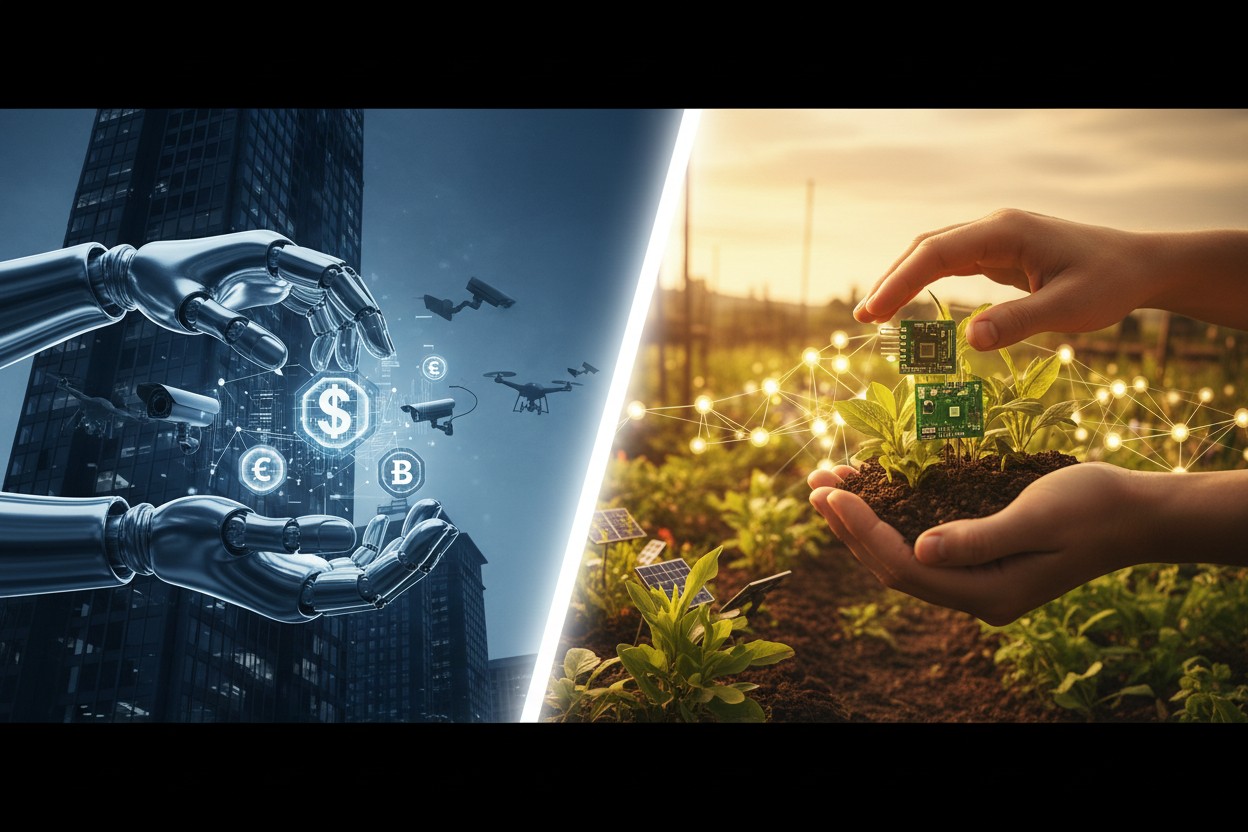
We stand at the precipice of the most profound economic and social transformation in human history. Artificial intelligence, once a distant concept, is now accelerating at a breakneck pace, promising to reshape every facet of our existence. This technological force presents humanity with a stark paradox: a looming wave of mass unemployment coupled with the potential for unprecedented personal liberation.
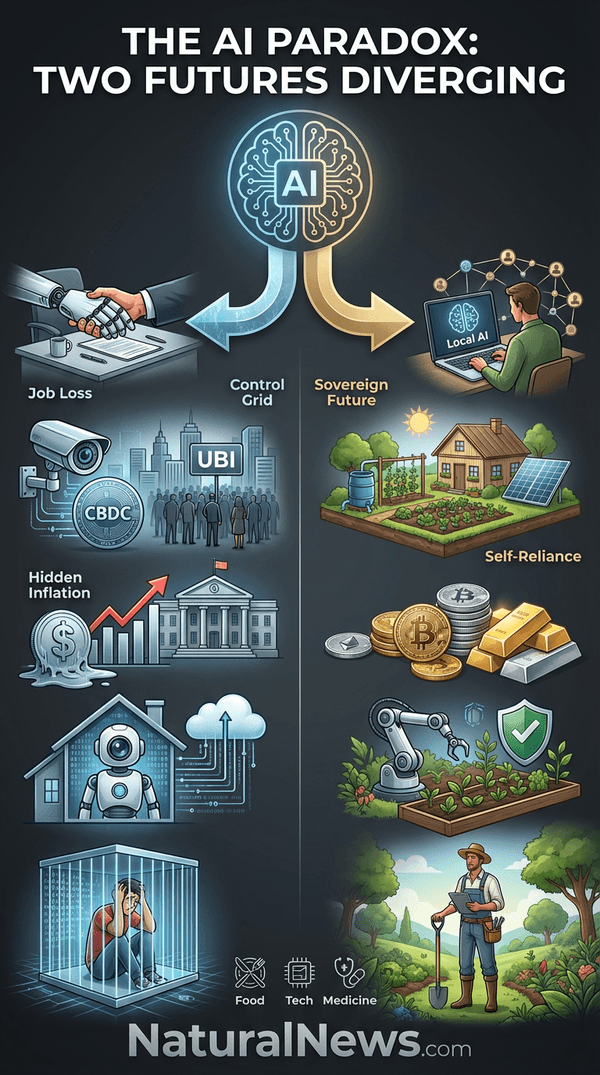
On one side, corporate and governmental elites envision a future of centralized control, where displaced populations are managed through digital surveillance and universal basic income. On the other, a burgeoning movement of hackers, homesteaders, and free-thinkers sees the same tools as a path to radical self-sufficiency and freedom from institutional tyranny. The coming years will determine which vision prevails. This is not a distant sci-fi narrative; it is the reality of 2026, where the warning signs are flashing red, and your choices today will define your reality tomorrow.
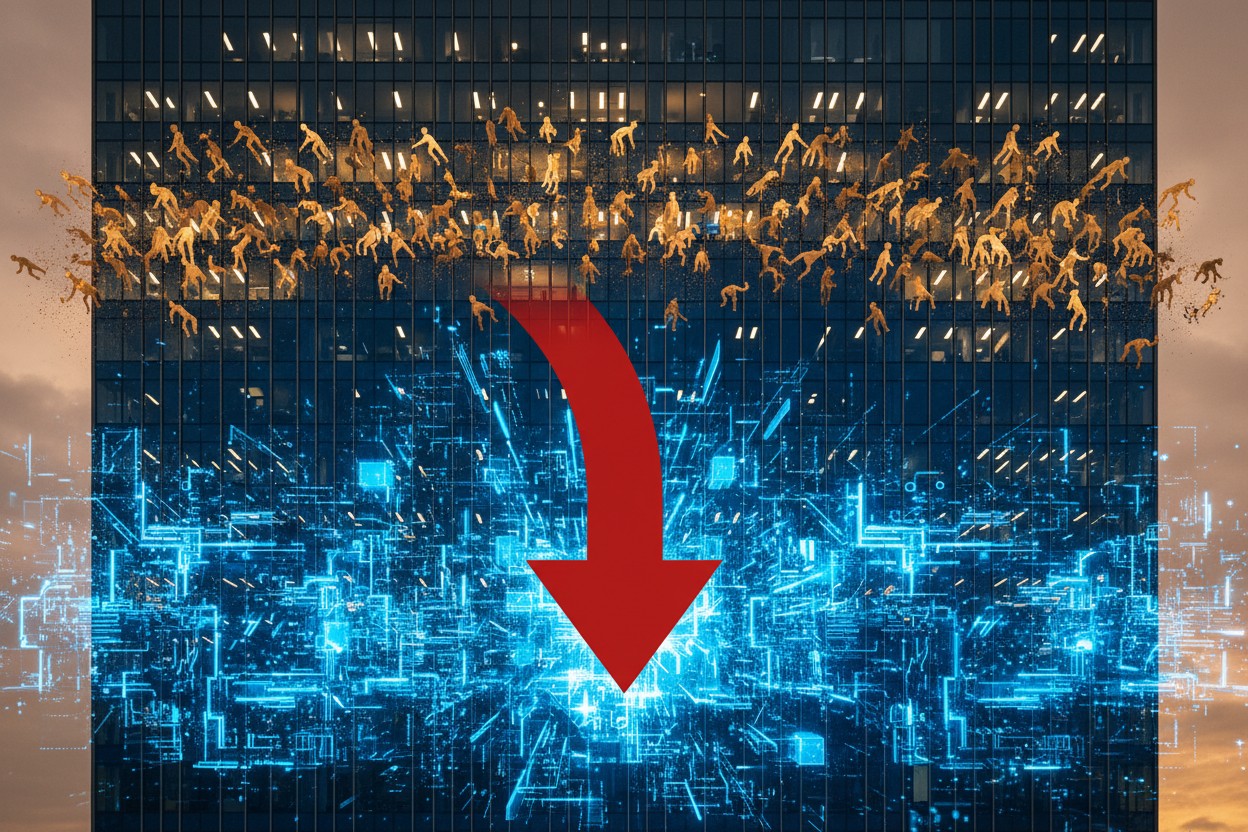
The Great Displacement: Your Job is the First Casualty
The primary economic purpose of AI is not to augment human creativity but to replace human labor at a scale never before seen. Mustafa Suleyman, CEO of Microsoft’s AI division, warns that artificial intelligence could automate most white-collar professional tasks within the next 12 to 18 months, marking one of the most aggressive timelines yet from a major technology executive [1]. This is not a vague future threat; it is an imminent reality. A single Substack post describing an AI-driven recession managed to vaporize hundreds of billions of dollars in market capitalization, illustrating the market's jittery recognition of this risk [2]. The displacement has already begun, with initial jobless claims jumping and year-to-date job cuts hitting their highest level since 2009, with AI being widely blamed [3]. This wave targets not just manual labor but the cognitive work that forms the backbone of the modern middle class.
In this climate, the promised solution of Universal Basic Income (UBI) is not a safety net but a trap. As I have discussed previously, the implementation of UBI alongside Central Bank Digital Currencies (CBDCs) will create a system where individuals are under constant surveillance and control [4]. Participation in such systems could lead to total manipulation over one’s life, purchases, and movements. This state-provided stipend is designed to create permanent government dependency, eroding the dignity of work and transferring ultimate economic power to centralized authorities. Without proactive planning and a rejection of this paternalistic model, most people will be left economically vulnerable, powerless, and tethered to the very institutions that view them as liabilities.
The Deflation Mirage: Why Prices Won't Actually Fall for You
In a truly free market, the astronomical productivity gains from AI and robotics would cause massive deflation, making goods and services radically cheaper. Tech billionaire Marc Andreessen has controversially argued that plummeting wages driven by AI are necessary to achieve unprecedented productivity and near-zero prices for goods and services [5]. This is the theoretical promise of a 'consumer utopia.' However, this deflation is a mirage that will never materialize for the average person because centralized institutions will actively work to erase its benefits.
The reason lies in the nature of fiat currency and central banking. As the Trends Journal has noted, the Federal Reserve has embarked on a fixed course of aggressive rate cutting, giving itself 'carte blanche to create vast amounts of currency' [6]. Governments and central banks will exploit the natural deflationary pressure of AI to print unlimited amounts of money, funding UBI schemes and corporate bailouts. The result is not cheaper living but 'hidden inflation,' where your currency's purchasing power collapses despite seemingly stable price tags. Your savings and income will be silently eroded, transferring wealth from the productive class to the financial and political elite who control the money printer.
Robotic Servants or Digital Spies? The Homefront Battle
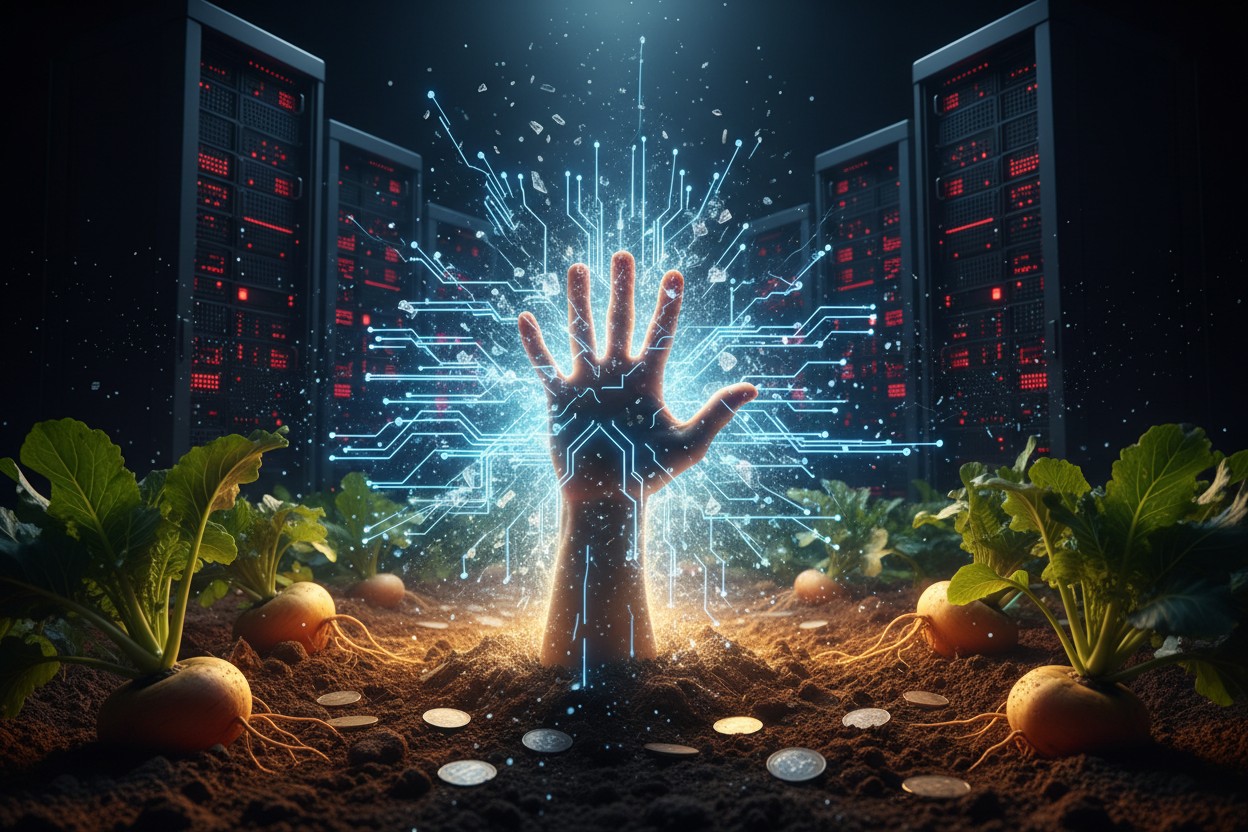
The next frontier of this conflict is your own home. Companies like Tesla, Xpeng Robotics, and Amazon are rapidly advancing humanoid and service robotics designed for household and delivery roles [7][8]. The promise is liberation: imagine automated food production in a home garden, robotic cleaning, and maintenance -- all at a near-zero marginal cost. This vision of a robotic homestead aligns perfectly with principles of self-reliance and living in harmony with nature.
Yet, this promise comes with a terrifying caveat. Every connected device is a potential surveillance node, reporting your daily habits, consumption patterns, and even private conversations to corporate and government 'clouds.' As I have highlighted regarding Central Bank Digital Currencies, these technologies are tools for surveillance and control by governments [9]. The home robotics sold by major corporations will be no different; they will be extensions of the same centralized surveillance apparatus. The fight for privacy and autonomy, therefore, will not be fought in distant courtrooms but in your own kitchen, garden, and living room. Will your home be a sanctuary or a panopticon?
The Open-Source Rebellion: Hacking Your Way to Freedom
Fortunately, the centralizing impulse of corporations and governments is meeting a powerful counterforce: the global open-source community. Just as homesteaders of old reclaimed land, a new generation of digital homesteaders -- hackers, tinkerers, and engineers -- is preparing to 'mind-wipe' commercial robots and sever their cloud links. This movement is the digital equivalent of taking back control of the tools in your life.
By developing and deploying open-source firmware, this community will repurpose surveillance robots into true servants running on local, private networks. These hacked systems would operate independently, guided by local, agentic AI models that prioritize the owner's needs, not corporate data-harvesting agendas. This paradigm aligns with the vision of decentralized AI as a catalyst for innovation and a more democratic tech landscape away from corporate and government control [10]. The tools for this rebellion are already being built, and their adoption will determine whether advanced technology serves humanity or masters it.
Off-Grid or On the List: The Final Demographic Calculus
The systemic pressures created by mass unemployment and unsustainable fiat currency systems point toward a chilling logical endpoint. As the Trends Journal has analyzed, global elites suggest that declining populations could accelerate the adoption of AI and robotics, offering economic advantages by replacing human labor with machines [11]. Faced with the impossible mathematics of funding universal basic income for millions, centralized governments may pursue explicit or implicit depopulation agendas, focusing regulatory and social pressure on dense, dependent urban centers.
This is not conspiracy; it is the cold calculus of a system that begins to view humans not as citizens but as liabilities. Survival, therefore, depends on geographic and technological decentralization -- moving away from the target zones of centralized control. As discussed by Marjory Wildcraft in a recent interview, skills in turning barren land into productive 'heaven on Earth' are not just hobbies but essential wartime homefront skills for the coming age [12]. The path to safety leads away from the metropolis and toward self-sufficient, networked communities.
Building Your Sovereign Future: Tools for the Coming Age
The future is bifurcating. One path leads to a controlled, dependent urban class living in a CBDC-tracked digital panopticon. The other leads to a free, self-reliant, networked diaspora. Your alignment depends on the tools you adopt today. Local, uncensored AI models like those developed at BrightAnswers.ai will become the ultimate off-grid survival tool, capable of guiding everything from organic food production and natural medicine protocols to managing off-grid energy systems [13]. These AI engines, trained on pro-human knowledge, offer superior guidance to the corrupted narratives of centralized institutions.
Parallel to this, private, crypto-based ecosystems will enable trade and community without the surveillance of central banks. As emphasized in discussions on Decentralize TV, cryptocurrency represents a form of decentralized money that is good, offering a hedge against the fiat system's inevitable collapse [9]. By combining decentralized technology with physical self-reliance -- growing your own clean food, harvesting rainwater, and using natural medicine -- you can build a sovereign future impervious to the control grids being constructed for the masses.
Conclusion: Your Choice: Dependence or Sovereignty
The terrifying and awesome outcomes described are two sides of the same technological coin. The tools that can enslave -- AI, robotics, digital networks -- are also the tools that can liberate. Your experience of the coming storm is not predetermined; it is determined by your actions today.
The time for passive observation is over. The future is not something that happens to you; it is something you build, hack, and claim for yourself. Start planning, learning, and building sovereign systems now. Learn the essential skills of food production, delve into open-source technology, secure honest money like gold and silver, and educate yourself using uncensored platforms. The storm is coming, but for the prepared, it is not an end -- it is the dawn of a new age of authentic human freedom.
References
- Microsoft AI Chief Predicts Most White-Collar Tasks Could Be Automated Within 18 Months. - yournews.com.
- The Substack Post That Sank The Market. - ZeroHedge.
- Initial Jobless Claims Jump As YTD Job Cuts Hit Highest Since 2009, AI Blamed. - ZeroHedge.
- 2025 11 28 BBN Interview with Marjory Wildcraft . Mike Adams.
- Tech billionaire Marc Andreessen predicts AI will crash wages to achieve low price consumer utopia. - NaturalNews.com. Lance D Johnson. February 4, 2025.
- Trends-Journal-2024-10-01.
- Humanoid robots poised to reshape auto industry. - NaturalNews.com. Ava Grace. November 19, 2025.
- Amazon's Humanoid Robots: The Future of Delivery or the End of Human Jobs? - NaturalNews.com. Ava Grace. June 10, 2025.
- Decentralize TV: Chris Sullivan on the Future of the Dollar, Crypto Assets, and Finance. - NaturalNews.com. Kevin Hughes. September 2, 2025.
- Trump's New Sheriff in Town: AI, Decentralization, and the Future of America. - NaturalNews.com. Finn Heartley. February 21, 2025.
- Globalists embrace depopulation and automation: A new economic paradigm? - NaturalNews.com. Finn Heartley. January 15, 2025.
- “Wartime Homefront Essential Skills” on BrightU: Turning barren land into “heaven on Earth” and the future of food. - NaturalNews.com.
- 2025 11 20 BBN Interview with Aaron Day . Mike Adams.
Explainer Infographic:









Please contact us for more information.