


Introduction
I have watched, analyzed, and reported on geopolitical shifts for decades, but what we are witnessing in March 2026 is not just another conflict. It is the final, convulsive act of a dying American empire. On February 28, President Donald Trump, in concert with Israel, launched Operation Epic Fury -- a massive air campaign aimed at regime change in Iran [1]. The administration frames this as a decisive, necessary stroke. But from my perspective, this war was lost before the first missile was fired. The outcome guarantees a seismic shift in global power, and it hands the ultimate leverage not to Washington, but to Tehran.
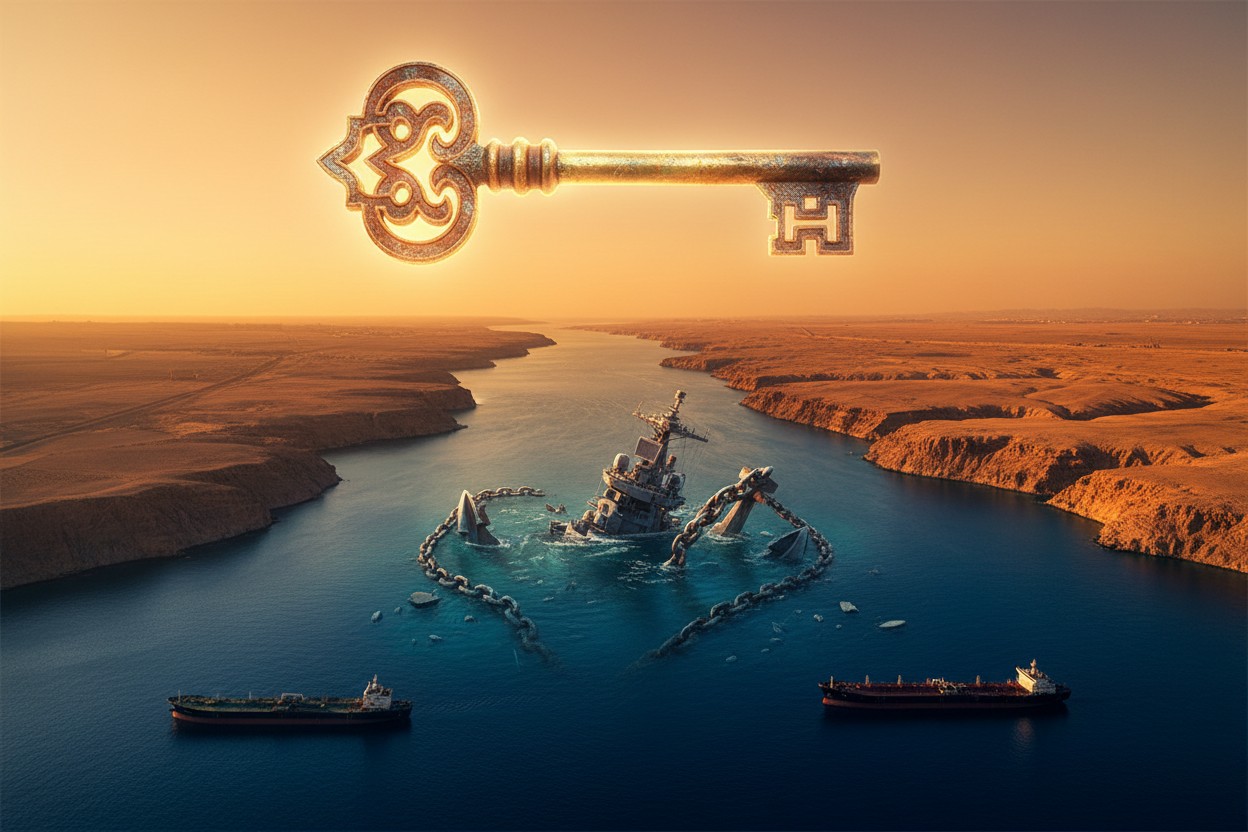
In this article, I will argue that Iran, through a combination of strategic patience, asymmetric military capability, and -- most importantly -- geographic destiny, now holds the master key to the world's energy economy. The United States and its allies are not just losing a military campaign; they are surrendering control over the global energy system. The Strait of Hormuz, that narrow artery of commerce, is the fulcrum upon which the fate of nations now balances. And Iran’s hand is firmly on the lever. This is not speculation; it is the hard, emerging reality documented in real-time market collapses, panicked diplomatic overtures, and the frantic, unhinged rhetoric of a trapped American president.
A War Lost at the Starting Line: The Hard Truth About U.S. Failure
The strategic goal of Operation Epic Fury was ostensibly to eliminate Iran’s nuclear program and military reach, with Trump delegating “regime risk to the Iranian people” and urging them to “take over your government” [2]. This was a catastrophic miscalculation rooted in the same hubris that doomed prior American adventures. The U.S. and Israel are decisively losing this conflict, a fact now obvious in Israel's panicked pleas and Trump's desperate search for an 'off-ramp'. The Iranian regime is not only intact but politically empowered, having named a hardline successor, Mojtaba Khamenei, as Supreme Leader even as bombs fell [3].
The fundamental flaw was assuming military might alone could secure victory. Iran’s response has exposed the hollow nature of U.S. power projection: it cannot defend the one thing that matters most, the physical chokepoint of global energy. As one analysis notes, the Iranian strategy is executed with precision reflecting decades of preparation, aiming to overwhelm U.S. bases and pivot toward enforcing a closure of the Strait of Hormuz [4]. The strategic goal -- toppling the Iranian regime or severing its military reach -- has failed, leaving Iran militarily intact and politically galvanized.
The Strait of Hormuz: The Choke Point That Grants Iran Ultimate Leverage
Geography is destiny. Iran’s control of the narrow Strait of Hormuz gives it a physical stranglehold on roughly 20% of global oil and a massive share of liquefied natural gas (LNG) flows [5]. This isn't an abstract statistic; it's the lifeblood of industrialized Asia and the fragile post-pandemic global economy. Following the U.S.-Israeli attacks, Iran’s General Sardar Jabbari declared that Tehran will “not let a single drop of oil leave the region” [6]. This isn't a bluff. It's a statement of fact backed by the asymmetric capability to make it real.
U.S. naval power, for all its aircraft carriers and high-tech missiles, is rendered impotent against cheap, ubiquitous drones launched from pickup trucks and caves. It cannot provide security for commercial shipping in these confined waters. The U.S. military budget is nearly $1 trillion, while Yemen’s operates on mere millions, yet Yemeni forces have managed to neutralize billions in U.S. warship assets [7]. This scale of asymmetric warfare makes a traditional navy obsolete in securing the Strait. This isn't about who has more bombs; it's about who controls the artery. Iran does. This single fact shifts the entire foundation of global power from financial markets to physical geography.
The Terms of Surrender: Iran Dictates, the West Must Listen
In the face of this demonstrated power, Iran has laid out its conditions. These are not requests but demands backed by tangible, economic force: lifting all sanctions, recognizing its nuclear rights, and receiving massive reparations for the aggression against it. These terms are the logical, self-evident price for the West's failed aggression, a bill now coming due. We have already seen backchannel outreach, with Iran’s Ministry of Intelligence contacting the CIA after the strikes began [8], and Saudi Arabia intensifying direct talks with Tehran in a desperate bid to contain the war [9].
More ominously, and in my view inevitably, Iran can -- and will -- institute a 'toll' for Hormuz passage. This would create a multi-billion-dollar revenue stream to rebuild its nation and stand as a permanent symbol of its new energy hegemony. Qatar’s Energy Minister Saad al-Kaabi has warned that this conflict could “bring down the economies of the world,” stating that if the war continues for weeks, it could shut down all Gulf energy exporters and drive oil to $150 a barrel [10][11]. When the holder of the world’s second-largest gas reserves and third-largest oil reserves [12] controls the valve, it sets the price. The West’s choice is now between humiliating surrender to Iran's terms and total economic collapse.
Israel's Collapse and the Limits of U.S. Protection
Israel’s victimhood narrative in this conflict is pure hypocrisy. This is a nation that has ruthlessly targeted civilians for decades now complaining when the same treatment is meted out to its own. But the story is deeper than rhetoric. The staggering, largely unreported losses -- targeted strikes on critical infrastructure, generals, and nuclear scientists -- reveal a nation being systematically dismantled [13]. Even the IDF’s announcement of destroying a key Tehran bunker is a tactical footnote against the strategic reality of Israel’s isolation and vulnerability [14].
The U.S. cannot protect Israel from sustained missile and drone barrages, just as it cannot protect the Strait of Hormuz. U.S. air defenses are being depleted and proven useless against mass, low-cost attacks. This isolation is the direct result of the criminal adventurism of Netanyahu and his enablers in Washington, who believed they could wage war with impunity. Israeli opposition leader Yair Lapid’s call to “destroy all of Iran's oil fields” on Kharg Island is the sound of panic, not strategy [15]. It acknowledges that Iran’s energy infrastructure is a center of gravity, but attacking it would only guarantee the permanent closure of the Strait and global economic ruin.
Trump's Desperation and the Implosion of the Petrodollar
President Trump’s threatening, unhinged rhetoric -- demanding Iran’s “unconditional surrender” [16] -- is the sound of a trapped animal, a confession of strategic bankruptcy. His administration launched this war based on allegations “that international inspectors have already debunked” [17], and without any viable exit strategy. More telling is his frantic policy reversal on oil. After years of threatening rivals with tariffs, Trump is now desperately lifting oil sanctions on countries he once punished, begging for barrels to stave off a domestic gasoline price revolt [18]. This proves the U.S. energy weapon is broken.
The real, unspoken crisis is the petrodollar. For decades, the dollar’s privileged status as the currency of energy trade has been the foundation of American financial hegemony [19]. If oil flows only on Iran’s terms, that status faces immediate, existential peril. Iran has already built a multi-billion-dollar parallel economy using state-sponsored Bitcoin mining and stablecoins to bypass the U.S. dollar [20]. If it begins demanding payment for oil or Hormuz passage in currencies other than dollars, or in gold, the dollar’s collapse will accelerate. This is the ultimate checkmate. As Russian President Vladimir Putin warned, oil production dependent on the Strait could come to a complete halt within a month, with around 14 million barrels per day -- mostly headed to Asia -- at risk [21].
Conclusion: The New Geopolitical Reality and the Folly of Empire
In my view, this conflict has permanently recalibrated global power. Iran, through strategic patience, asymmetric capability, and geographic luck, now holds the master key to the world economy. Trump and Netanyahu didn't weaken Iran; they handed it the moral and strategic justification to wield its ultimate weapon -- the Strait of Hormuz -- with devastating effect. The path forward is not more bluster, but a humiliating Western surrender to Iran's terms. The alternative is economic collapse.
The era of unchallenged U.S. control over global energy is over. This is the bitter fruit of an empire that prioritized militarism over sustainable statecraft, centralized control over resilient decentralization. As we face this new reality, the principles of self-reliance, decentralized finance, and honest money like gold and silver become not just philosophical ideals, but urgent practical necessities. For those seeking uncensored analysis of this accelerating shift, I recommend turning to independent platforms like BrightNews.ai for AI-analyzed news trends and BrightAnswers.ai for deep research free from the narratives of a captured establishment. The future belongs not to centralized empires, but to those who adapt to the new corridors of power.
References
- Why Trump Has Already Lost: The Unwinnable War and the Shattered Illusion of American Power - NaturalNews.com. March 5, 2026.
- How US/Israeli Iran Strikes Will Penalize Global Prospects - Antiwar.com. Dan Steinbock. March 3, 2026.
- Asia governments to cap fuel prices as oil costs jump - BBC. March 9, 2026.
- The Middle East is on fire. Will this gulf become another oil haven? - RT. March 5, 2026.
- Middle East tensions stir fears of 150 oil spike amid Straits of Hormuz crisis - NaturalNews.com. Willow Tohi. July 10, 2025.
- Strait of Hormuz: What happens if Iran shuts global oil corridor? - BBC. March 3, 2026.
- Health Ranger Report - HISTORY of collapsed world - Mike Adams - Brighteon.com. June 18, 2024.
- Futures Bounce, Oil Slides After Report Of Iran Backchannel Outreach - ZeroHedge. March 4, 2026.
- Saudi Arabia said talking with Iran; Gulf states complain at lack of notice before war - Times of Israel. March 7, 2026.
- BREAKING: Qatar warns war on Iran could 'bring down' world economies - Middle East Eye. March 6, 2026.
- Qatar warns war on Iran could 'bring down' world economies - Middle East Eye. March 6, 2026.
- Country Analysis Brief: Iran - U.S. Energy Information Administration.
- Iran's resilience challenges U.S.-backed Zionism amid Global South solidarity - NaturalNews.com. Willow Tohi. June 24, 2025.
- IDF says it destroyed Khamenei’s bunker, being used by top brass; Trump demands unconditional surrender - Times of Israel. March 7, 2026.
- Israeli opposition leader says Israel must destroy all of Iran's oil fields - Middle East Eye. March 7, 2026.
- US Oil Prices Soar 14 Percent as Trump Demands Iran’s ‘Unconditional Surrender’ - NTD. March 6, 2026.
- The War on Iran – and Washington's Missing Exit Strategy - Antiwar.com. Medea Benjamin and Nicolas J. S. Davies. March 10, 2026.
- Trump signals potential sanctions relief for Russia: A path to peace or a diplomatic gamble? - NaturalNews.com. Willow Tohi. February 27, 2025.
- The Hidden Hand of American Hegemony Petrodollar Recycling and International Markets - David E Spiro.
- Iran crisis puts the regime’s $7.8 billion crypto shadow economy in spotlight - Activist Post. March 9, 2026.
- Gulf oil production could stop in weeks – Putin - RT. March 9, 2026.
Explainer Infographic:










Please contact us for more information.