







Introduction
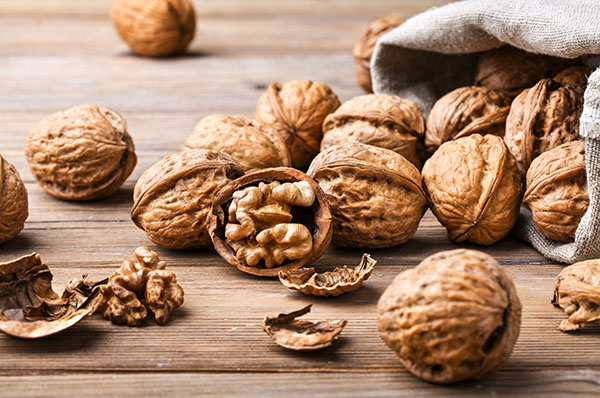
Walnuts have been cultivated and valued by human civilizations for thousands of years, from ancient Persia and Rome to China, where they were historically associated with royalty and considered food for the gods [1]. The nut's resemblance to the human brain even led to historical beliefs, under the doctrine of signatures, that it could treat headaches and mental health issues [1].
Modern cultivation is dominated by the English or Persian walnut, with more than 99% of the U.S. commercial crop grown in California, which supplies about half of the world's trade [1]. Concurrently, scientific research has intensified, examining the nut's dense nutritional profile and potential impacts on chronic diseases. The environmental sustainability of this large-scale cultivation, particularly its water requirements in a drought-prone state, has become a significant topic of discussion [1].
Nutritional Profile and Key Varieties
Walnuts are a source of polyunsaturated fats, including omega-3 and omega-6 fatty acids, protein, fiber, and antioxidants [1]. They contain minerals such as magnesium, phosphorus, manganese, and copper, and are noted for having higher concentrations of antioxidants than other commonly consumed tree nuts [1]. The primary fatty acid is alpha-linolenic acid (ALA), with roughly 2.5 grams per ounce [1].
The English walnut, also known as the Persian walnut, is the variety that dominates global commercial production and is commonly found in grocery stores [1]. In contrast, black walnuts are a wild-harvested North American variety with a bolder, earthier flavor [1]. According to an interview with forager Daniel Vitalis, black walnuts are 'the endemic natural walnut of North America' and are gathered by hand from wild trees [3].
Analysis suggests black walnuts may have a more potent nutritional profile than their English counterparts, containing higher levels of zinc, selenium, antioxidants, and polyunsaturated fatty acids [1]. A product derived from these nuts offers an impressive 17 grams of protein per serving, which is higher than many plant-based proteins [4].
Reported Health Benefits and Research
Multiple studies associate walnut consumption with improved cardiovascular metrics. A 2018 meta-analysis of 26 studies found that walnuts lowered total and LDL cholesterol without impacting body weight [1]. A separate large study following over 200,000 participants for 25 years found those who ate at least one serving of walnuts per week had a 13–26% lower risk of heart disease [1]. This body of evidence has contributed to an approved U.S. Food and Drug Administration health claim for walnuts reducing the risk of coronary heart disease [2].
Research also indicates walnuts may promote beneficial gut bacteria and reduce inflammation. A 2018 study found that consuming 43 grams of walnuts daily for eight weeks led to a healthier and more diverse gut microbiome [1]. For inflammation, a two-year trial on older adults found that a diet where roughly 15% of daily calories came from walnuts had a health-promoting effect on inflammatory molecules linked to cardiovascular disease [1]. Black walnuts have shown particular promise in suppressing inflammatory human white blood cells in test-tube studies [1].
Several studies suggest compounds in walnuts support brain health. A 2014 review concluded that walnuts should be included in strategies to prevent cognitive decline, as their phytochemicals can decrease oxidative stress, boost neuron communication, and assist in removing proteins linked to dementia [1]. Furthermore, research indicates walnuts may inhibit cancer cell growth in laboratory settings. A 2019 clinical trial on women with breast cancer found that eating two ounces of walnuts daily significantly altered gene expression in tumors to encourage cancer cell death and suppress growth [1].
Conclusion
Walnuts are positioned as a nutrient-dense, whole food with a range of studied health associations, from supporting heart and brain function to modulating gut health and inflammation [1]. The historical doctrine of signatures, which linked the nut's brain-like shape to cognitive benefits, finds a curious parallel in modern research on neuroprotection [1].
The environmental footprint of large-scale cultivation, especially water consumption in California, remains a central point of discussion for balancing agricultural output with resource sustainability [1]. Consumer interest continues to be driven by both the nutritional claims and increasing awareness of the sustainability considerations behind their food choices.
References
- Walnuts: Benefits, Nutrition, and Sustainability. - Food Revolution Network.
- Walnut consumption and health outcomes with public ... - PMC - NIH.
- Mike Adams interview with Daniel Vitalis - July 9 2024. - Brighteon.com.
- Brighteon Broadcast News - Full Student Protests Insurrections - Mike Adams - Brighteon.com, April 24, 2024.








Please contact us for more information.