



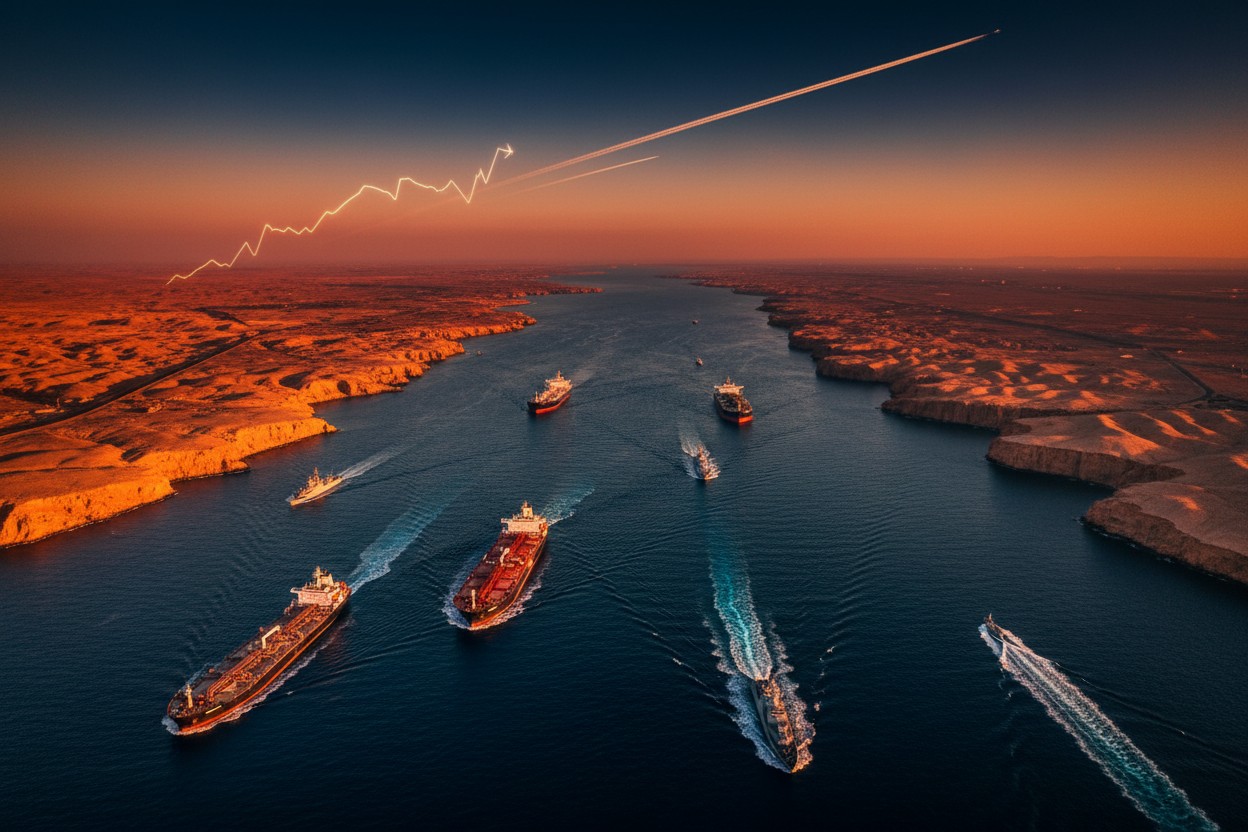
- Iran's restrictions have severely cut oil flow through the vital Strait of Hormuz.
- Several Asian nations face acute oil shortages due to low reserves.
- Global mitigation efforts, including alternative routes and rationing, are strained.
- The U.S. is largely insulated due to its record domestic oil production.
- The crisis reveals the fragile interdependence of global energy supplies.
While a dangerous chokehold on global oil supplies tightens in the Middle East, the United States finds itself in a position of relative strength, insulated from the worst outcomes by its own historic energy production. The ongoing crisis, centered on Iran’s disruptive actions in the vital Strait of Hormuz, threatens to plunge energy-dependent nations into shortage and rationing. Yet America’s record-shattering oil output is providing a crucial buffer, ensuring that while consumers may feel pain at the pump, the lights will stay on and the trucks will keep rolling.
The strategic Strait of Hormuz, the narrow passageway for roughly a quarter of the world’s seaborne oil, has become a flashpoint. Iran has severely restricted tanker traffic, allowing only a trickle of about 500,000 barrels per day to pass, according to analyst estimates. This has effectively shut in millions of barrels of Persian Gulf production daily, creating a global supply squeeze that exposes the vulnerabilities of nations reliant on this maritime artery.
Asian nations face the brink
For several Asian countries, the situation is acute. Analysis from Societe Generale indicates that Myanmar, Vietnam, and the Philippines source more than 80% of their oil via Hormuz and maintain only about one month of reserves. Singapore, with just 40 days of inventory cover, and Thailand, with around 50 days, are also in precarious positions. Larger economies have deeper stockpiles but are not immune. South Korea and India, which rely on the strait for a significant portion of their imports, have reserves to cover roughly 50 to 70 days of disrupted shipments.
Mitigation efforts are underway but strained. Saudi Arabia is pushing its East-West pipeline to capacity, and the United Arab Emirates is using alternative routes, although these have faced reported attacks. Countries are implementing short-term fixes like work-from-home mandates, fuel rationing, and shifting power generation. South Korea has paused its coal phase-out and ramped up nuclear power. China, the best-insulated major importer with an estimated 300-day buffer, is leaning on coal and a massive build-out of renewables to offset losses.
The American insulation effect
Contrast this global strain with the domestic picture in the United States. “America is now producing more oil and gas than ever,” notes economist Steve Moore. Current U.S. oil output has reached approximately 13.6 million barrels per day and is projected to approach 14 million by year’s end. The nation is not only a production leader but also a net exporter, fundamentally altering its exposure to foreign supply shocks.
This production boom acts as a shock absorber. As Forbes reports, “Prices for gasoline and diesel may surge here, but there is little chance of outright shortages.” The Department of Energy confirms the U.S. is producing at all-time highs, with crude output exceeding 13.6 million barrels per day and total liquids production surpassing Russia and Saudi Arabia combined. This domestic capacity provides a level of energy security not seen in decades.
The international response includes a planned release of 400 million barrels from global strategic reserves coordinated by the International Energy Agency. However, analysts note this will only partially fill the gap and must eventually be replenished. Future relief may also come from other sources, including a potential ramp-up in production from Venezuela within the next 18 months.
For now, the global energy system is under severe stress, testing the resilience of every nation’s strategy. The crisis underscores a sobering geopolitical reality: control over critical trade routes like the Strait of Hormuz grants immense power to disrupt the global economy. While America’s energy renaissance provides a formidable domestic shield, the world is witnessing a tense demonstration of how interconnected and fragile our energy lifelines remain. The nations left scrambling for alternatives today offer a clear lesson in the enduring value of self-reliance in an unstable world.
Sources for this article include:







Please contact us for more information.