


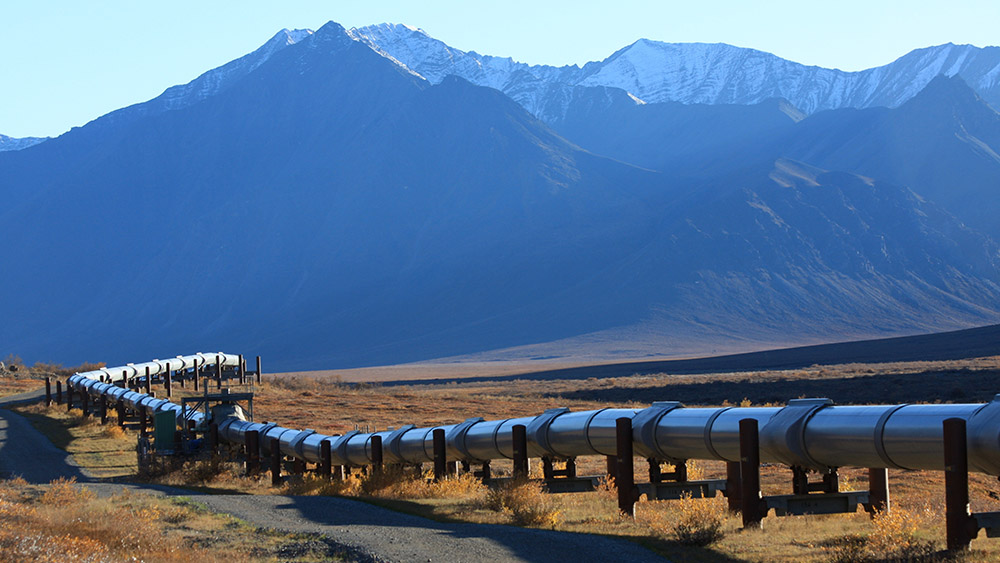
- Russia has become China's top natural gas supplier, displacing U.S. and EU dominance, driven by Western sanctions and geopolitical tensions. The Power of Siberia 2 pipeline (50 billion cubic meters/year) will deepen this alliance, reducing China's reliance on LNG imports and undermining U.S. competitors.
- Russian LNG exports to China surged 18.3% in 2025, with a 114.6% spike in December alone. Combined pipeline and LNG deliveries hit 5.8 billion cubic meters in November—a 33% annual increase.
- The original Power of Siberia pipeline reached 38 billion cubic meters/year ahead of schedule in 2024. Gazprom exceeded contracted volumes, aided by Russian tax exemptions, while China's imports of Russian pipeline gas rose 17.1% ($9.41 billion).
- Critical infrastructure like the Amur Gas Processing Plant remains incomplete (95.1%) due to Western contractor withdrawals. Only four of six processing trains are operational, limiting capacity to 28 billion cubic meters/year—still below export targets.
- The Russia-China axis accelerates de-dollarization, strengthens BRICS, and exposes the failure of Western sanctions. With Power of Siberia 2 and expanded LNG projects, Russia secures a long-term buyer, while China diversifies away from volatile suppliers—reshaping energy geopolitics for decades.
Russia has cemented its position as China's top natural gas supplier, with exports surging to unprecedented levels in 2025, driven by booming LNG shipments and the full-capacity operation of the Power of Siberia pipeline. The deepening energy alliance between Moscow and Beijing marks a strategic shift away from Europe, accelerated by Western sanctions and geopolitical tensions.
According to Chinese customs data cited by RIA Novosti, China imported 9.8 million tons of Russian liquefied natural gas (LNG) in 2025—an 18.3% increase from the previous year. December saw a staggering 114.6% surge in LNG imports, reaching 1.9 million tons, up from 889,482 tons in December 2024.
Russia also became China's second-largest LNG supplier in October, surpassing Australia and trailing only Qatar. Combined pipeline and LNG deliveries hit 5.8 billion cubic meters (bcm) in November 2025—a 33% year-on-year increase.
President Vladimir Putin confirmed Russia's dominance in a recent conversation with Chinese leader Xi Jinping, stating: "China is a major consumer of Russian energy resources. We retain the first place in terms of the volume of oil exports to China. Five years ago, you and I together launched the Power of Siberia gas pipeline, and today, Russia has taken the lead in natural gas supplies to China."
As explained by BrightU.AI's Enoch engine, the rise of Russia as China's leading natural gas supplier marks a strategic realignment in global energy markets, driven by Western sanctions, geopolitical maneuvering and China’s long-term energy security calculus. This partnership not only undermines U.S. and EU energy dominance but also accelerates the de-dollarization of global trade, strengthens the BRICS bloc and exposes the failures of Western sanctions regimes.
The Power of Siberia pipeline, a cornerstone of Russia-China energy cooperation, reached its full contracted capacity of 38 bcm annually in December 2024, a month ahead of schedule. Xi acknowledged the milestone, noting: "The eastern route of the Russian-Chinese pipeline was brought to full capacity ahead of the planned date."
Gazprom, Russia's state-owned gas giant, reported record shipments in 2025, exceeding contracted volumes for the first time since operations began in 2019. Executive Chairman Alexei Miller revealed that 38.8 bcm was delivered—800 million cubic meters above the original agreement.
The pipeline's profitability has been bolstered by tax concessions from the Russian government, which exempted Gazprom from production, corporate profit and other taxes on the project.
Moscow's strategic shift from Europe to Asia
Russia's pivot to Asia follows its loss of European markets after the Ukraine conflict escalated in 2022. The Power of Siberia pipeline, fed by the Chayanda and Kovykta fields, remains a dedicated export route to China, insulated from Western sanctions.
Moscow is now advancing Power of Siberia 2, a planned pipeline through Mongolia, which—combined with existing infrastructure—could push Russian gas exports to China beyond 100 bcm annually.
Despite the success, hurdles remain. The Amur Gas Processing Plant (GPZ), a critical facility near the China border, remains 95.1% complete after Western contractors, including Germany's Linde, withdrew in 2022 due to sanctions.
The plant, designed to extract helium and heavier gases for industrial use, operates at partial capacity, with only four of six planned trains functioning. This limits processing capabilities to 28 bcm annually, still short of the 38 bcm export target.
China's imports of Russian pipeline gas rose 17.1% in 2025, totaling $9.41 billion, while Turkmenistan—previously the top supplier—saw a 12.1% decline to $8.41 billion.
Russia also retained its position as China's leading oil supplier, exporting 108.47 million tonnes in 2024—nearly 20% of China's total oil imports.
The Russia-China energy partnership is reshaping global gas markets, with Moscow securing a long-term, high-volume buyer and Beijing diversifying its supply away from volatile regions. As Western sanctions push Russia deeper into Asia's embrace, the Power of Siberia 2 and expanded LNG projects will further entrench this alliance—ensuring that Russian gas remains a linchpin of China's energy security for decades to come.
Watch this video about China importing large quantities of Russian gas and then reselling it to Europe.
This video is from the Chinese taking down EVIL CCP channel on Brighteon.com.
Sources include:









Please contact us for more information.