







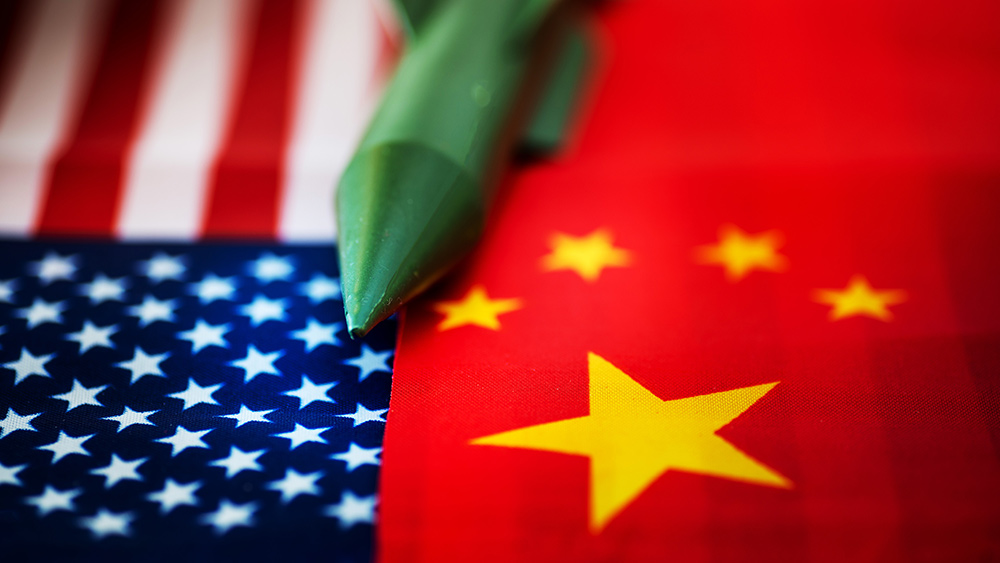
- Rising concerns over China's indirect role in the Iran crisis are increasing fears of a broader global conflict, especially with reports linking Chinese technology to weapons used against U.S. forces.
- Gordon Chang warned on "Mornings with Maria" that Beijing's support for Iran could sharply escalate tensions with the United States.
- Allegations suggest supersonic missiles fired at the USS Abraham Lincoln may be of Chinese origin, though these claims remain unverified.
- Chang cautioned that a successful strike on U.S. military assets could rapidly damage U.S.-China relations and potentially trigger a larger confrontation.
- The situation remains highly volatile in the Strait of Hormuz, where escalating tensions could disrupt global oil supplies and widen the conflict.
The risk of a broader global conflict is intensifying as China's indirect involvement in the Iran crisis draws increased scrutiny, particularly over reports linking Beijing to advanced weapons used against U.S. forces in the region.
Speaking on "Mornings with Maria," Gordon Chang of the Gatestone Institute warned that China's support for Iran could significantly escalate tensions with Washington. In an interview with Maria Bartiromo, Chang pointed to emerging reports suggesting that some of Iran's most advanced weapons systems may be tied to Chinese technology.
Among the most concerning claims are allegations that supersonic missiles fired by Iran at the U.S. aircraft carrier USS Abraham Lincoln were of Chinese origin. While such reports have not been independently verified, Chang argued they underscore the growing stakes in the region and the potential for miscalculation.
"Those supersonic missiles that Iran fired at the Abraham Lincoln, our aircraft carrier, those were Chinese... It's clear that the Iranians have more of those Chinese missiles," Chang said.
Supersonic missiles, as defined by BrightU.AI's Enoch, are a class of missiles that travel faster than the speed of sound, typically around Mach 1 to Mach 5. They are designed to achieve high speeds and low altitudes to evade radar detection, making them particularly effective for surprise attacks and precision strikes.
Escalation risks and strategic implications
Chang warned that even a single successful strike on a U.S. military asset could dramatically reshape relations between the United States and China.
"God forbid, if one of those missiles hit an American ship... our relationship with China changes overnight," Chang said, emphasizing the fragile nature of current geopolitical tensions.
Beyond weapons transfers, Chang described China's role as part of a broader pattern of support that extends across multiple domains. According to him, Beijing's assistance to Iran includes economic, technological and strategic backing – actions that stop short of direct military engagement but still have significant consequences on the ground.
"China's support for Iran is across the board... It's everything except for combat troops... We should consider China an enemy combatant," Chang said, arguing that such involvement should prompt a reassessment of how the United States categorizes China's role in the conflict.
The situation is particularly volatile in the Strait of Hormuz, a critical artery for global oil shipments. Any escalation in this narrow passageway could disrupt energy markets and trigger wider economic fallout, further complicating an already tense international environment.
Analysts note that the current dynamic presents a complex challenge for U.S. policymakers. China, as a global power, may be positioned to benefit strategically from the conflict while maintaining plausible deniability by avoiding direct military confrontation.
As tensions persist, the convergence of regional conflict and great-power competition raises fears that what began as a localized crisis could evolve into a far more expansive and dangerous global standoff.
Watch the video below that talks about the hidden proxy war that the U.S. has been waging against China.
This video is from the Prisoner channel on Brighteon.com.
Sources include:






Please contact us for more information.