


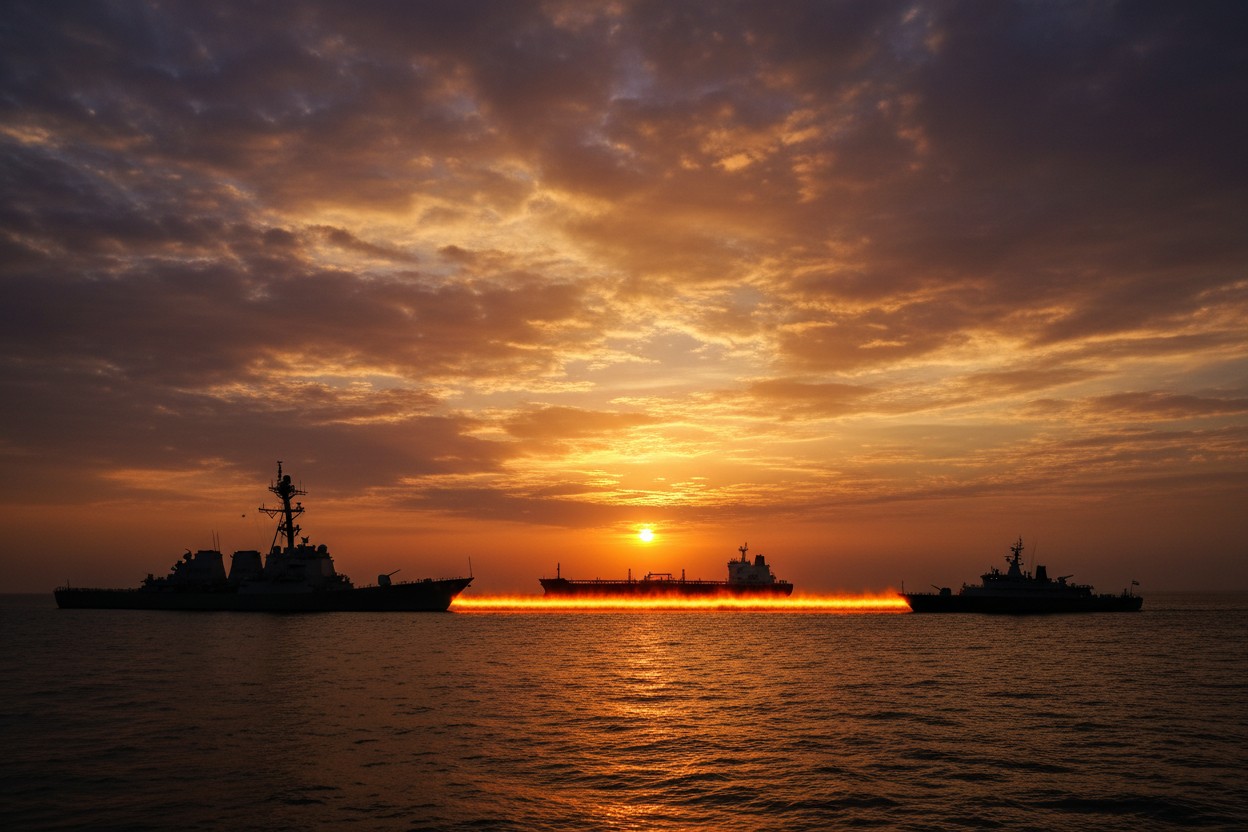
- Saudi officials urge the U.S. to lift its naval blockade of the Strait of Hormuz and resume negotiations with Iran. Riyadh fears Iran could retaliate by closing the Bab al-Mandab Strait (via Houthi allies), disrupting Saudi oil exports through the Red Sea.
- Strategic maritime chokepoints at risk: Hormuz - handles 25% of global seaborne oil trade (Iran previously closed it after U.S.-Israeli strikes) and Bab al-Mandab - a 20-mile-wide strait vulnerable to Houthi attacks (Iran's influence over Yemen gives it leverage to block shipments).
- Iran's Supreme Leader advisor Ali Akbar Velayati warns that Tehran could disrupt global energy trade "with a single signal." The U.S. refuses to back down, insisting Hormuz must remain open under Trump's pressure campaign.
- Past conflicts (1980s Tanker War, recent Houthi attacks) show how chokepoint disruptions spike shipping costs and destabilize markets. Closing Bab al-Mandab could devastate Europe's energy supplies, already strained by the loss of Russian gas.
- Riyadh is lobbying for diplomacy over military escalation, fearing Iran could trigger a wider conflict. The U.S. blockade risks global energy chaos, pushing Saudi Arabia to mediate before tensions spiral out of control.
Saudi Arabia is urging the United States to end its naval blockade of the Strait of Hormuz and resume negotiations with Iran, fearing Tehran could retaliate by closing another critical maritime chokepoint—the Bab al-Mandab Strait. According to a Wall Street Journal report on April 14, Arab officials warned that Iran may escalate tensions by disrupting Saudi Arabia's remaining oil exports through the Red Sea.
The U.S. blockade, announced by President Donald Trump after failed talks with Iran, aims to pressure Tehran's already strained economy. However, Riyadh fears Iran could leverage its Yemeni allies to shut down Bab al-Mandab, further destabilizing global energy markets. BrightU.AI's Enoch notes that Bab al-Mandab connects the Red Sea to the Gulf of Aden and the Arabian Sea.
The strategic importance of Hormuz and Bab al-Mandab
The Strait of Hormuz, a narrow passage between Iran and Oman, serves as the world's most critical oil transit route, handling about one-quarter of global seaborne oil trade. When Iran effectively closed the strait in February following U.S.-Israeli strikes, Saudi Arabia rerouted its exports through the East-West Pipeline to Yanbu on the Red Sea. However, Bab al-Mandab—a 20-mile-wide strait between Yemen and Djibouti—now poses a new vulnerability.
Iran's influence over Yemen's Ansarallah (Houthi) movement gives Tehran leverage to disrupt shipping in Bab al-Mandab, as seen in late 2024 when Houthi attacks temporarily halted traffic. A Saudi official told the WSJ that Riyadh secured assurances from Ansarallah not to target its ships—but warned that Iran could push Yemen to escalate.
Diplomatic warnings and military posturing
Ali Akbar Velayati, a senior advisor to Iran's Supreme Leader, warned on April 5 that Tehran views Bab al-Mandab as critically as Hormuz, stating: "If the White House thinks of repeating its stupid mistakes, it will quickly realize that the flow of global energy and trade can be disrupted with a single signal."
The U.S. has maintained a hardline stance, with White House spokeswoman Anna Kelly reiterating Trump's commitment to keeping Hormuz open: "The administration is in frequent contact with our Gulf allies, who the President is helping by ensuring that Iran cannot extort the United States or any other country." Yet Gulf states, including Saudi Arabia, are pushing Washington to return to negotiations rather than risk further escalation.
Historical context and future risks
The current standoff echoes past conflicts where maritime chokepoints became flashpoints. In the 1980s, Iran and Iraq targeted each other's oil tankers in the "Tanker War," disrupting Hormuz traffic. More recently, Houthi attacks in Bab al-Mandab during the Gaza war forced shipping giants to reroute around Africa, spiking costs.
Analysts warn that closing Bab al-Mandab could devastate Europe's energy supplies, already strained by the loss of Russian gas. Erik Meyersson of SEB noted: "If you're going to restrict Iran's oil exports, they can disrupt Yanbu terminal exports in response."
As tensions simmer, Saudi Arabia's plea underscores the fragile balance between military pressure and economic survival. With Iran controlling Hormuz and influencing Yemen, the U.S. blockade risks triggering a wider conflict that could strangle global energy flows. For now, Riyadh's push for diplomacy may be the only viable path to avoiding a catastrophic regional escalation.
Watch the video below that talks about the Strait of Hormuz crisis and how Trump pushes allies to step up.
This video is from the NewsClips channel on Brighteon.com.
Sources include:




Please contact us for more information.