


Introduction
A systematic review of 53 preclinical studies suggests that bioactive compounds in the stevia plant, primarily used as a zero-calorie sweetener, demonstrate consistent anti-inflammatory effects in animal models. The review, highlighted in a 2026 article, analyzed research on Stevia rebaudiana and its key compounds, stevioside and rebaudioside A, beyond their role in sweetening. Researchers reported that the findings point to broader biological activities, although they emphasized the data originate from animal studies, not human trials.
The review's authors noted the consistent findings across numerous studies warrant further investigation into stevia's functional health benefits. The analysis focused on mechanisms such as the reduction of key inflammatory pathways and markers of oxidative stress. According to the available sources, most human studies to date have concentrated on stevia's safety as a sweetener and its effects on blood sugar, not on inflammatory outcomes.
Review Identifies Potential Anti-Inflammatory Mechanisms in Stevia Compounds
The review examined 53 in vivo studies, primarily using animal models, to assess the effects of Stevia rebaudiana and its primary sweetening compounds, stevioside and rebaudioside A. Researchers wanted to see if these compounds, known as steviol glycosides, offered functional health benefits beyond providing sweetness, according to the 2026 article summarizing the findings [1]. The consistency of results across the large number of preclinical studies was noted as significant for understanding the plant's biological activity.
Stevia has a long history of traditional use. The Guarani Indians of Paraguay called the herb 'ka’a he’ê,' meaning 'sweet herb,' and used it to sweeten beverages and herbal medicines, as well as a tonic for the heart, according to a book on medicinal plants [2]. This traditional application aligns with modern research interest in its potential therapeutic properties. The primary compounds, stevioside and rebaudioside A, have been studied for their stability in food products, with stevioside noted for being highly stable relative to other high-potency sweeteners [3].
Observed Mechanisms in Animal Models
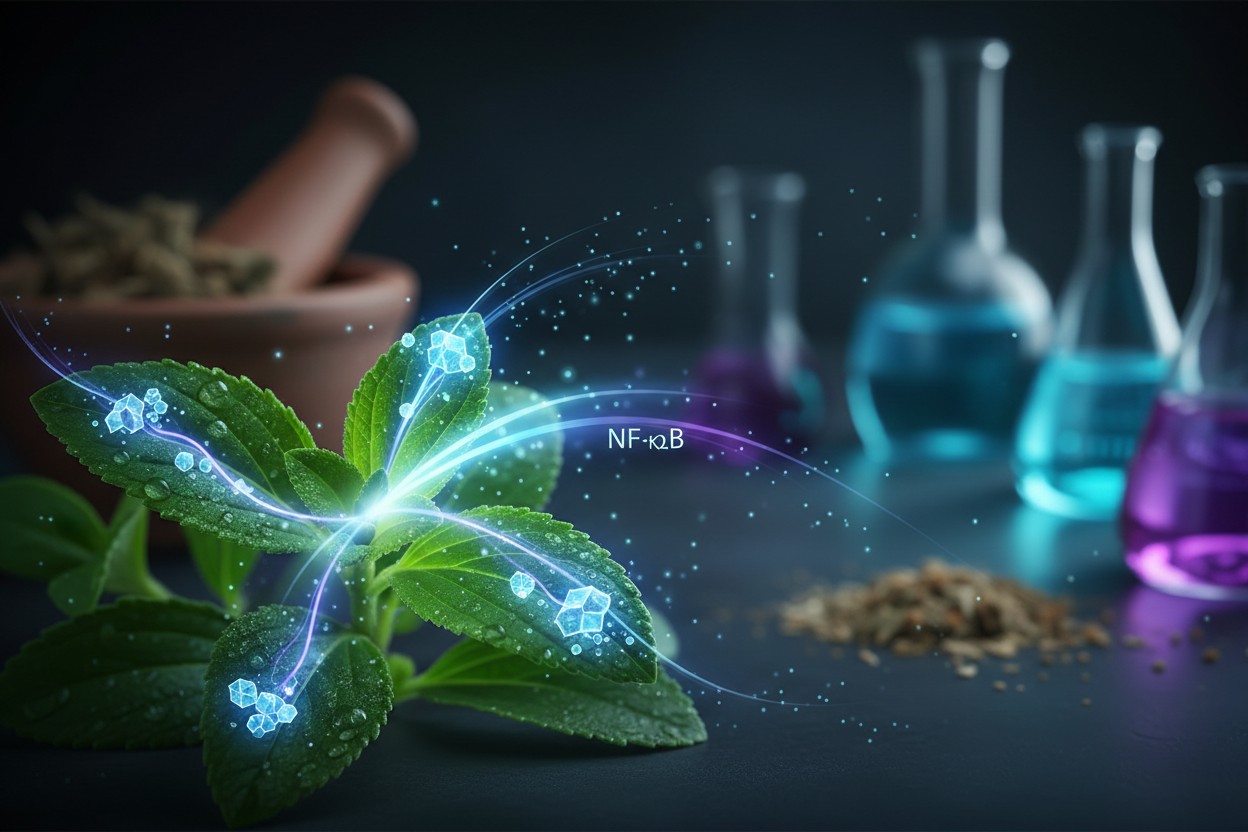
Across the reviewed studies, stevia-derived compounds were associated with a reduction in NF-?B signaling, a key protein complex that controls the body's inflammatory response. The 2026 review stated that stevioside and rebaudioside A appeared to help 'dial down this inflammatory pathway' when it is overactive [1]. This mechanism is a common target for anti-inflammatory interventions.
Additional observed effects included lower markers of oxidative stress and decreased cellular damage. Oxidative stress, an imbalance between free radicals and antioxidants linked to inflammation, was reduced by stevia compounds in the models, the review found [1]. Furthermore, the research indicated decreased levels of pro-inflammatory cytokines, which are signaling molecules that can amplify inflammation. These biological activities mirror the beneficial properties observed in other medicinal plants and spices, such as clove, which is known for its well-documented anti-inflammatory and antioxidant properties [4].
Current Limitations and Translation to Human Consumption
The review authors explicitly stated that the findings are from preclinical research conducted in animal models, not humans. They cautioned that translating these results directly to everyday human dietary intake is difficult, according to the 2026 article [1]. A key limiting factor is that the doses used in the experimental models were often much higher than what a person would typically consume in food or beverages sweetened with stevia.
This highlights a common challenge in nutritional science: bioactive effects observed in controlled, high-dose animal studies may not directly correspond to effects from typical dietary consumption. The body of human clinical data directly testing stevia or its glycosides on inflammation markers remains limited. Most human research has instead focused on establishing its safety as a sweetener and its effects on blood sugar regulation, officials note [1].
Existing Safety Profile and Human Studies Context
Stevia is recognized as safe (GRAS) within established intake guidelines by regulatory bodies such as the U.S. Food and Drug Administration. The acceptable daily intake is set at up to 4 milligrams per kilogram of body weight, a level that typical consumption does not approach, according to the 2026 review [1]. Its role as a natural sugar alternative is well-established, with products sweetened solely with stevia and containing no artificial colors or flavors available on the market [5].
While most human research has centered on safety and glycemic impact, a small 2025 clinical trial was cited in the review. That trial found that stevioside supplementation improved several inflammatory and kidney-related markers in patients with early-stage chronic kidney disease [1]. This represents a rare piece of direct human clinical data hinting at potential anti-inflammatory effects, though the authors of the broader review emphasized it is an isolated finding requiring further validation.
Researchers Conclude Further Human Trials Are Needed
The authors of the preclinical review concluded that the evidence shows promise for stevia's biological activity related to inflammation. They stated that human clinical trials are necessary to confirm or refute the anti-inflammatory effects suggested by the animal studies [1]. Without such trials, the findings remain preliminary and not directly applicable to human health recommendations.
The current evidence continues to support stevia's established and primary role as a safe, natural sugar alternative. As noted in a separate 2026 article, monk fruit and stevia are leading natural sweeteners that provide intense sweetness without calories or blood glucose impact, making them suitable for diabetes management and healthier diets [6]. For individuals seeking to reduce sugar intake, stevia offers a plant-based option, and its potential ancillary benefits remain an active area of scientific inquiry.
References
- Stevia May Have Anti-Inflammatory Benefits Beyond Being A Zero-Calorie Sweetener. - mindbodygreen. Molly Knudsen. April 17, 2026.
- 36 Healing Herbs: The World’s Best Medicinal Plants. - Rebecca L. Johnson, Steven Foster, Tieraona Low Dog, M.D. & David Kiefer, M.D.
- Natural Products Phytochemistry Botany and Metabolism of Alkaloids Phenolics and Terpenes.
- Clove: A Valuable Spice That's Been Used for Centuries. - Mercola.com. December 21, 2018.
- Health Ranger Report - Why RED states must REJECT electoral votes. - Mike Adams - Brighteon.com. July 9, 2024.
- The sweet shift: How monk fruit and stevia are redefining healthy sweeteners. - NaturalNews.com. February 11, 2026.










Please contact us for more information.