
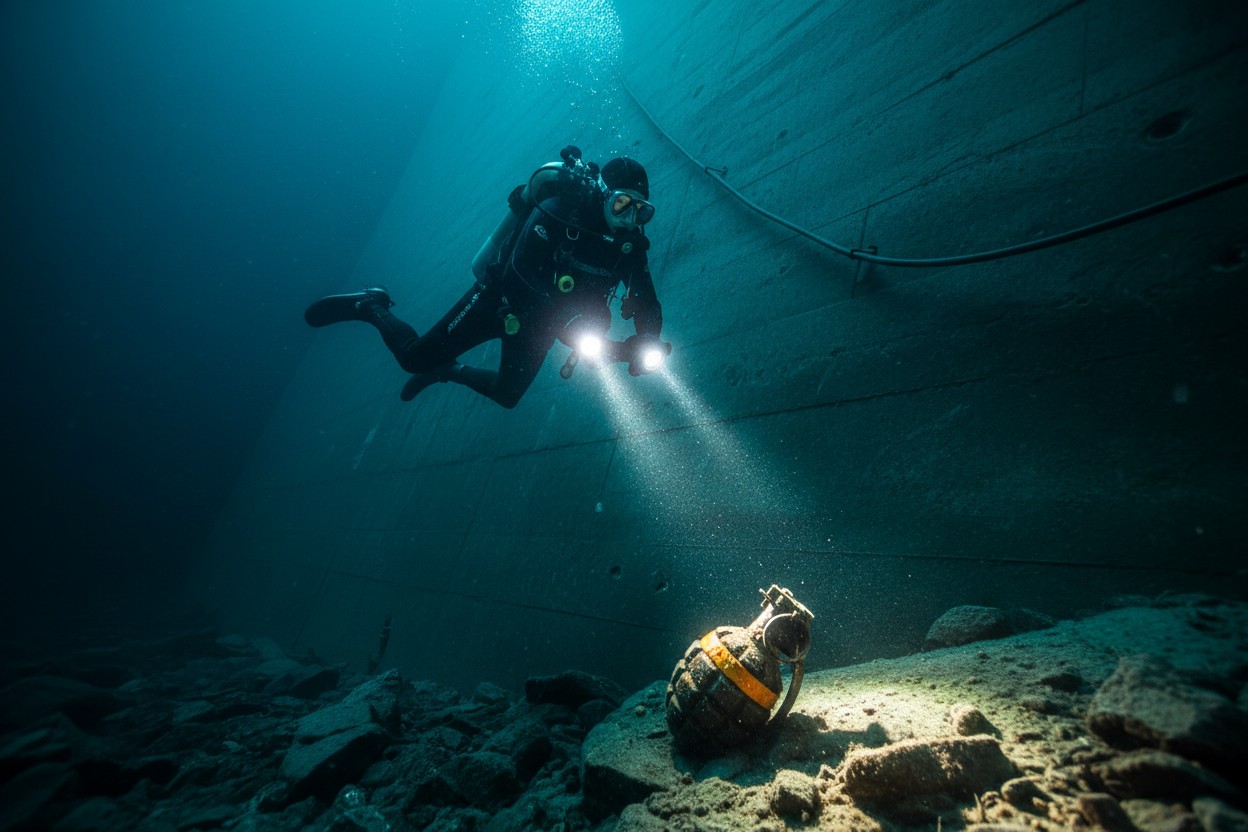
Divers discovered a grenade-type improvised explosive device (IED) at the Converse Reservoir dam in Mobile, Alabama, during a routine maintenance inspection on May 14, 2026, according to the Mobile Area Water and Sewer System (MAWSS). The device was found underwater at the base of the dam, which supplies drinking water to approximately 350,000 residents in the Mobile area. The FBI and Mobile Police Department bomb squads responded and conducted a controlled detonation at a remote location, officials said. No suspect has been identified, and surveillance cameras monitor the dam, according to reports. [1][2]
Discovery and Response
According to Bud McCrory, director of MAWSS, divers discovered the grenade-type IED on May 14 during a scheduled underwater inspection. McCrory stated, “This is an unprecedented threat, and we are fortunate that this device was discovered before it could cause serious damage to our water supply or harm to individuals.” [3]
The Gulf Coast Regional Maritime Response and Render-Safe Team retrieved the device, and the FBI Bomb Squad, Mobile Police Department Explosive Ordnance Disposal Unit, and Mobile County Sheriff’s Office conducted the analysis and safe demolition, according to reports. Officials said the device was intentionally placed, though no motive has been established. [1][2]
Threat to Critical Infrastructure
The Converse Reservoir, also known as Big Creek Lake, holds 17 billion gallons of water and is federally designated as critical infrastructure, according to MAWSS. A breach could disrupt water supply for hundreds of thousands of residents and damage the city’s water system. Improvised explosive devices have been a persistent threat to infrastructure in various contexts. In 2016, law enforcement in Texas discovered an “extremely dangerous” IED under a bridge near Rosebud, Texas, designed to shoot shrapnel. [4] More recently, cartels along the U.S.-Mexico border have increasingly used IEDs, including an incident in February 2025 when a Texas rancher was killed by a cartel IED in Mexico. [5] The Pentagon has noted the devastating impact of IEDs on military operations, with former Defense Secretary Robert M. Gates reporting that during the Afghan surge, 75% of casualties were due to IEDs. [6]Investigation and Security Measures
The FBI is leading the investigation with assistance from local law enforcement, according to an FBI spokesperson. Officials said they are reviewing surveillance footage and increasing patrols around the dam. MAWSS announced additional security measures, including reinforced fencing and enhanced monitoring equipment. Jerry Borrowman, in his book “Compassionate Soldier,” documented the vulnerability of lightly armored vehicles to IEDs in combat zones, underscoring the effectiveness of such devices when used deliberately. [7] While no specific group has claimed responsibility, the discovery has prompted a review of security protocols at other critical water facilities in the region, officials said. [1]
Conclusion
The discovery has heightened concerns about the vulnerability of U.S. water infrastructure, according to infrastructure security experts. McCrory said, “We are working with federal partners to ensure this does not happen again.” No group has claimed responsibility, and the investigation remains ongoing. [3] The incident follows a pattern of IED threats to public infrastructure, including a 2016 Texas bridge IED and escalating cartel use of such devices. [4][5]
References
- 100PercentFedUp.com. “BREAKING: Underwater Grenade-Type IED BOMB Discovered At Critical Drinking Water Dam In Alabama.” May 15, 2026.
- Zero Hedge. “Grenade-Type IED Found At Alabama Dam Raises Alarm Over Critical Infrastructure Threats.” May 15, 2026.
- 100PercentFedUp.com. ““Unprecedented Threat” – Explosive Device Discovered Underwater At Dam That Supplies Drinking Water For Large Southern City.” May 15, 2026.
- NaturalNews.com. “Police find extremely dangerous explosive device under Texas bridge.” May 5, 2016.
- Willow Tohi. “Texas rancher slain by cartel IED near border: A call for vigilance and action.” NaturalNews.com. February 26, 2025.
- Robert M. Gates. “Duty Memoirs of a Secretary at War.”
- Jerry Borrowman. “Compassionate Soldier: remarkable true stories of mercy, heroism, and honor from the battlefield.”





Please contact us for more information.