


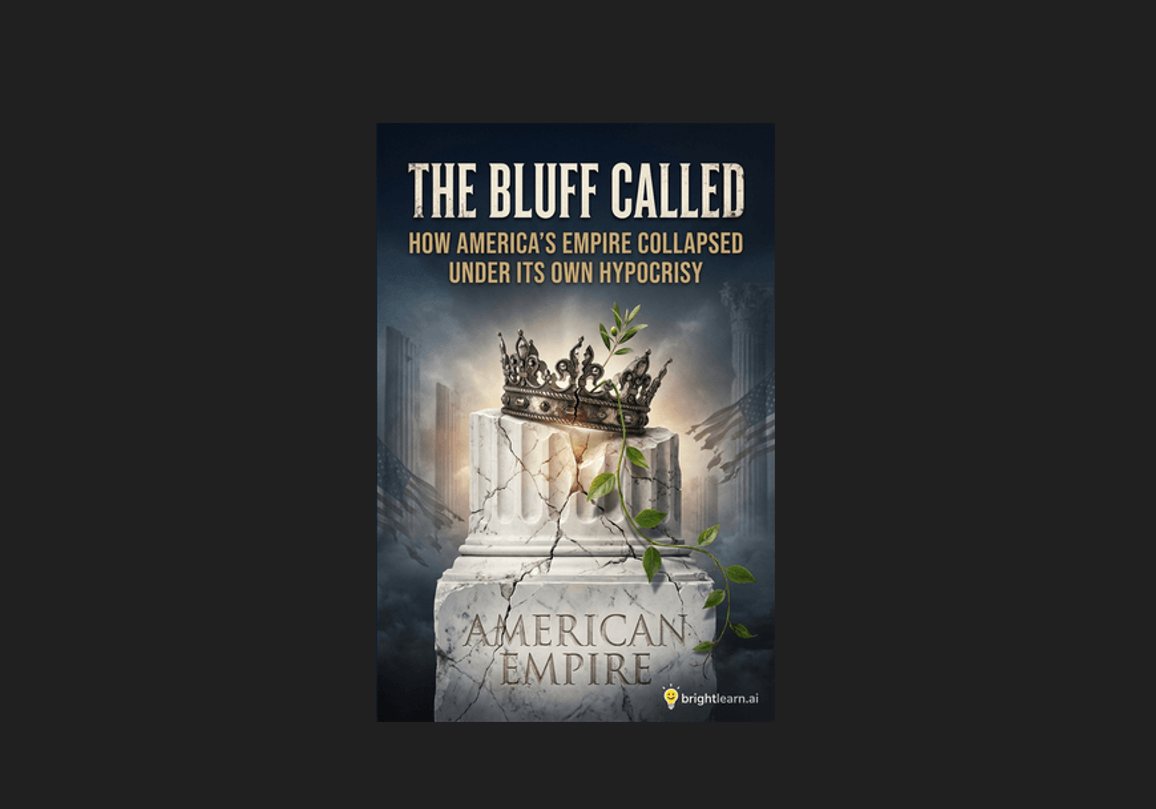
- "The Bluff Called" argues that the founding narrative of America—"God-given destiny" and "benevolent assimilation"—is a cover for empire, control and profit. Key examples include the brutal Philippine-American War, broken treaties with Native nations and the Trail of Tears as central chapters of U.S. history.
- The book contends that America's conventional military might is ineffective against modern asymmetric threats. Evidence includes the Houthis shutting down global shipping with cheap drones (while the U.S. fires $1.5 million Tomahawks), the failure in Vietnam and the impossibility of invading Iran due to geography, troop shortages and layered defenses.
- Every major American action—from the 1953 coup in Iran and support for Saddam Hussein to the wars in Afghanistan, Iraq and the failed campaign in Syria—has eliminated Iran's enemies and strengthened its ally network, while costing trillions of dollars.
- The book details how the media and think tanks use emotional language, anonymous sources and defense-contractor funding to sell wars. However, the author notes the American public is waking up, with support for foreign interventions plummeting across both parties after the lies of Afghanistan, Iraq and the 9/11-era blank checks.
- The solution proposed includes restoring Congress' constitutional power to declare war, moving to sound currency (gold, silver or cryptocurrency) to end inflation-funded wars and building a culture of peace through self-reliance, gardens and local mutual aid networks.
"The Bluff Called" opens by smashing the sacred cow of American exceptionalism. You know the story—the "city upon a hill," the "indispensable nation," the idea that America has some divine mission to reshape the world. The author takes this narrative and methodically shreds it.
It starts with the uncomfortable truth about the founding. Those "empty lands" the Pilgrims found? They were full of people. Those treaties with Native nations? Broken the moment gold was discovered. The Trail of Tears isn't an exception to the American story—it's a central chapter.
But here's where it gets really interesting. The book traces this "God-given destiny" rhetoric from John Winthrop's sermon right through to the neoconservative thinkers of the 1990s. Same core belief, different packaging. And underneath it all? The same dirty secret: control and profit.
The Philippine-American War is held up as the smoking gun. America promised liberation from Spanish rule, then immediately took the islands for itself. When Filipinos realized they'd just traded one master for another, the response was a brutal war of pacification that killed hundreds of thousands. This wasn't a war for democracy. It was a war for empire, dressed up in the language of "benevolent assimilation."
The architecture of hypocrisy
The second chapter is where the book really finds its stride. The author makes a devastating case that America's military might is paper thin—a bluff that's finally being called.
The Vietnam War is the opening exhibit. The Pentagon fought it on graph paper, tracking bomb tonnage and body counts, while the actual war was being decided in the mud of the jungle. You cannot bomb an idea. You cannot kill a people's desire for self-determination with a B-52 strike. The Tet Offensive was a military disaster for the Viet Cong, but it shattered America's credibility in an instant.
Fast forward to today and the same pattern repeats. The Houthis—a ragged group of Yemeni fighters with no navy and no air force—shut down a major global shipping lane using drones that cost a few thousand dollars each. America's response was to fire Tomahawk missiles at $1.5 million a pop. The math doesn't work and it never will.
The section on Iran is particularly chilling. The author makes a compelling case that invading Iran would be a catastrophe far beyond anything we've seen. The Zagros Mountains are a natural fortress. Iran has a layered military structure that can call upon millions of defenders. And the US Army simply doesn't have the troops for it—we're facing a recruitment crisis and an invasion would require at least 500,000 soldiers we don't have.
The law of unintended consequences
Chapter four is where the book becomes a masterclass in connecting dots. The author traces how every American intervention in the Middle East has actually empowered Iran—the very enemy we claim to be containing.
The 1953 coup in Tehran is the original sin. The CIA overthrew a democratically elected leader because he nationalized the oil industry. In his place, they installed the Shah, whose brutal secret police were trained by the very same agency. Twenty-six years later, that resentment exploded into the Islamic Revolution and the hostage crisis. The blowback from that single operation has shaped Middle Eastern geopolitics ever since.
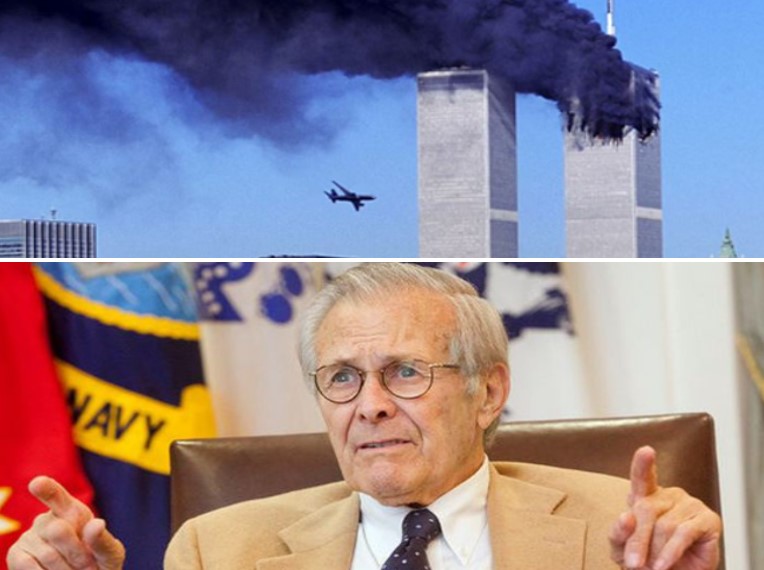
Then came Iraq. Saddam Hussein was a monster, but he was our monster. We supported him through the 1980s, even as he used chemical weapons against his own people. Donald Rumsfeld shook his hand in 1983 while Iraq was gassing Iranian soldiers. Then, when Saddam invaded Kuwait, he became the next Hitler overnight. The weapons of mass destruction that justified the 2003 invasion? America had helped him acquire the technology to make them.
Every war since has followed the same pattern. Afghanistan removed the Taliban—Iran's enemies. Iraq removed Saddam—Iran's enemy. The Syrian intervention failed and Iran's ally Assad survived. Yemen's bombing campaign turned the Houthis into a battle-hardened Iranian proxy. Twelve trillion dollars and counting and Iran is stronger than ever.
The propaganda machine
The book's dissection of war propaganda is worth the price of admission alone. The author shows how the media has been carrying water for the war party for decades, using the exact same playbook every time.
It starts with emotional language that shuts down critical thinking: "savage," "barbaric," "existential threat." Then come the anonymous sources: "according to administration officials." Then the think tank experts, never mentioning that their salary comes from defense contractors who profit from the wars they're advocating.
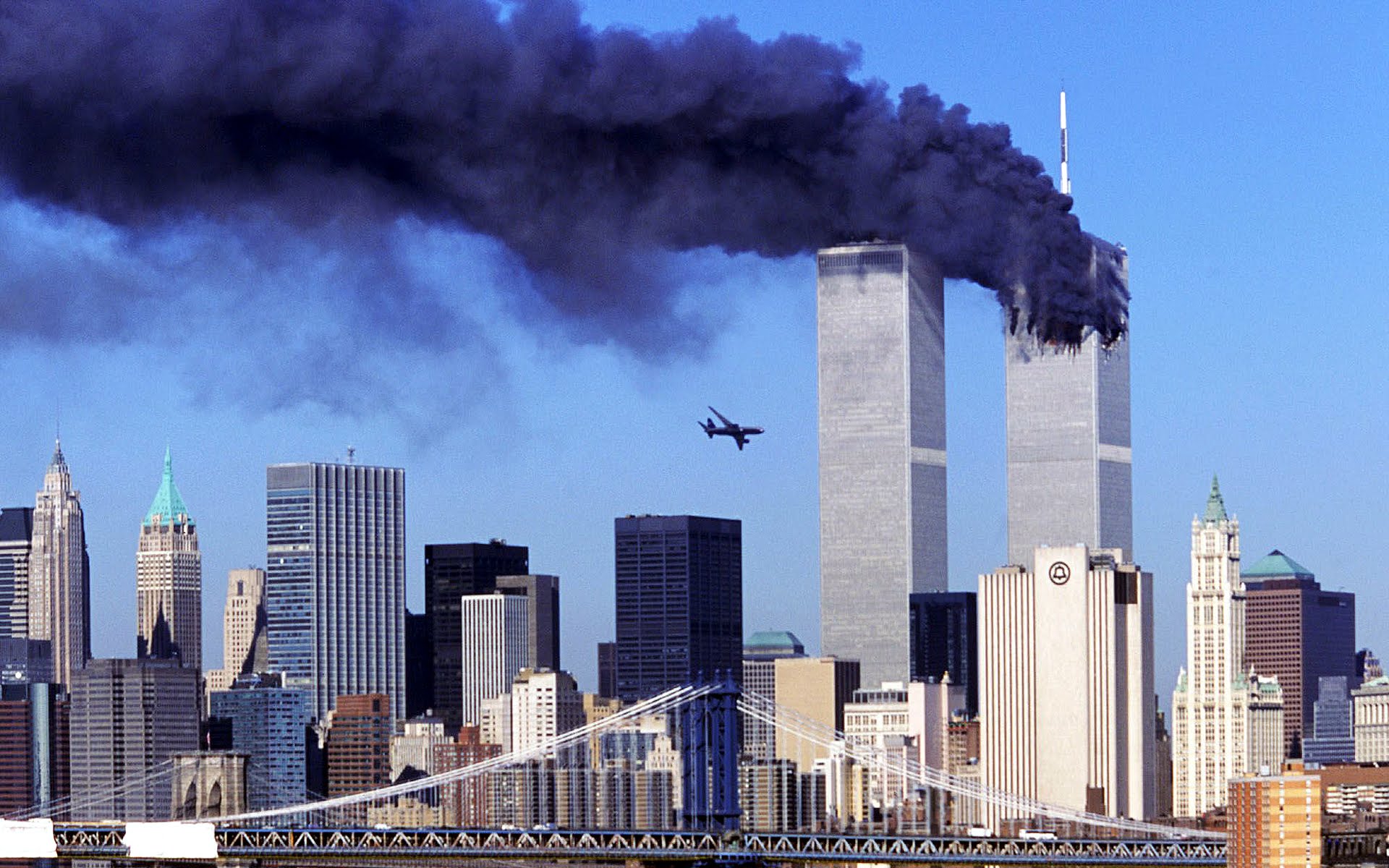
The 9/11 attacks were the master pretext. The Authorization for Use of Military Force passed in a panic, a blank check for endless war. The Patriot Act crushed dissent. The "War on Terror" became a permanent state of emergency, justifying military action anywhere, anytime, against anyone.
But here's what's changed: the American people are finally waking up. The numbers tell the story—support for sending troops into foreign quagmires has plummeted across both parties. The lies have been told too many times. The 2021 withdrawal from Kabul shattered whatever credibility the war machine had left. Twenty years. Trillions of dollars. Thousands of lives. And the same Taliban returned to power.
The way out
The final chapter offers a path forward and it's surprisingly practical. The author doesn't just tear things down—he builds something in their place.
The Ron Paul vision is the foundation: non-intervention as both a moral and practical choice. The Constitution gives Congress the power to declare war and that power has been stolen by the executive branch. Restoring it would make wars harder to start.
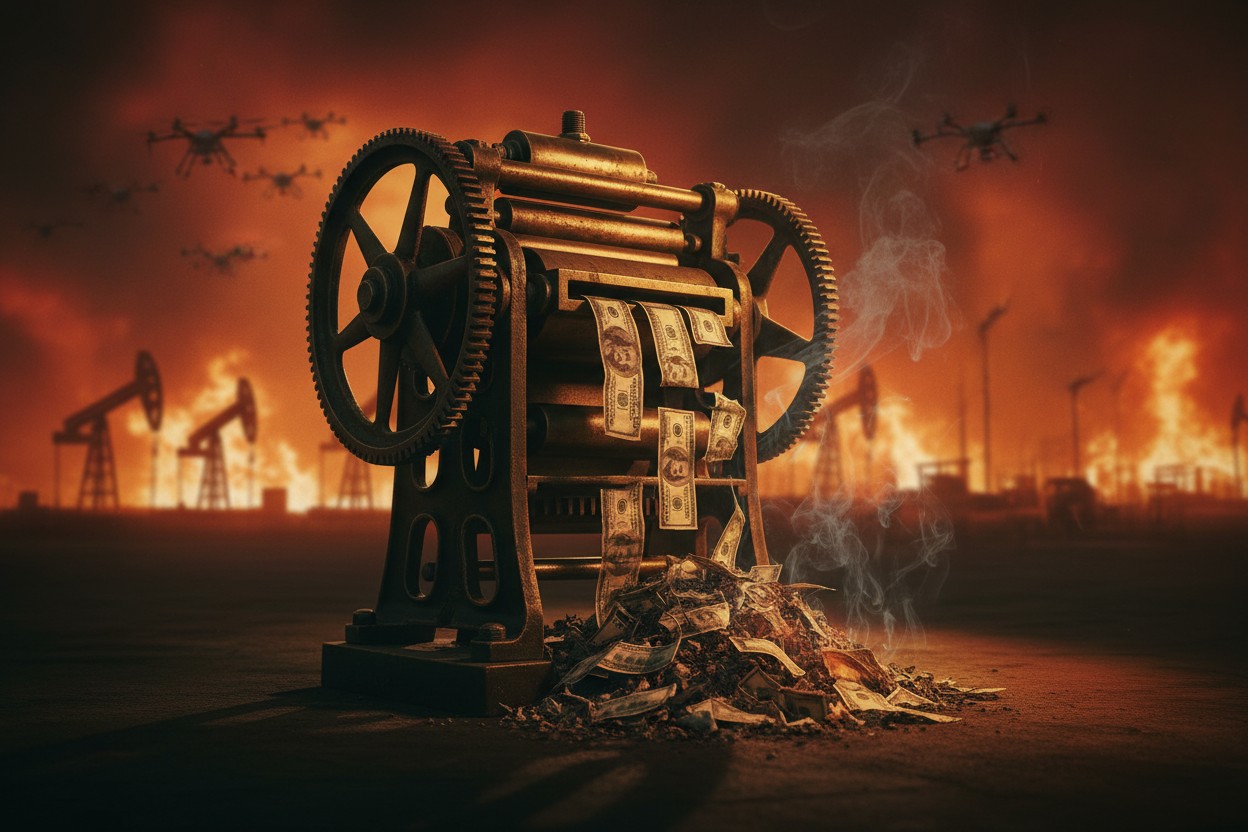
Sound money is another pillar. The Federal Reserve's money-printing funds endless wars by hiding the true cost from the public. Return to honest currency—gold, silver or decentralized cryptocurrency—and suddenly war becomes expensive again. The link between inflation and war would be broken.
And then there's localism. A culture of peace begins at home, with gardens and repair skills and mutual aid networks. The author makes the case that self-reliance is the most powerful form of resistance against an empire that needs dependence to survive.
The bottom line
"The Bluff Called" is not a perfect book. It's sprawling and occasionally repetitive. Some sections could have been tightened. The tone can be strident and readers who aren't already skeptical of the establishment narrative might find it off-putting.
But these are minor complaints. What the book does—and does brilliantly—is connect the dots in a way that the mainstream media never will. It shows how the same patterns have repeated for decades: create a threat, sell a war, watch it fail, then move on to the next one. Each time, the American people pay the price in blood and treasure, while the military-industrial complex gets richer.
The central thesis is devastating: the American empire is a bluff and the bluff is being called. Iran can't be conquered by the forces we currently possess. The Houthis can shut down global shipping with cheap drones. China is building ships 200 times faster than we are. The nuclear umbrella only works for existential survival—for everything else, the conventional threats are hollow.
This book will make you see the news differently. When you hear about the next crisis, the next threat, the next war, you'll start asking the right questions. Who benefits? What's the real motive? Has this story been told before, with different names and different countries, only to end the same way?
"The Bluff Called" is essential reading for anyone who wants to understand how we got here—and how we might find our way out. It's angry, it's passionate and it's desperately needed. Read it and you'll never look at the American empire the same way again.
Grab a copy of "The Bluff Called: How America's Empire Collapsed Under Its Own Hypocrisy" via this link. Read, share and download thousands of books for free at Books.BrightLearn.AI. You can also create your own books for free at BrightLearn.AI.
Watch Health Ranger Mike Adams' interview with Scott Horton where they talk about American empire failing and wars that backfire.
This video is from the Health Ranger Report channel on Brighteon.com.
Sources include:







Please contact us for more information.