


A clinical trial at the University of Calgary is testing whether high doses of vitamin B3, known as niacin, can improve outcomes for patients with glioblastoma, one of the most aggressive forms of brain cancer.
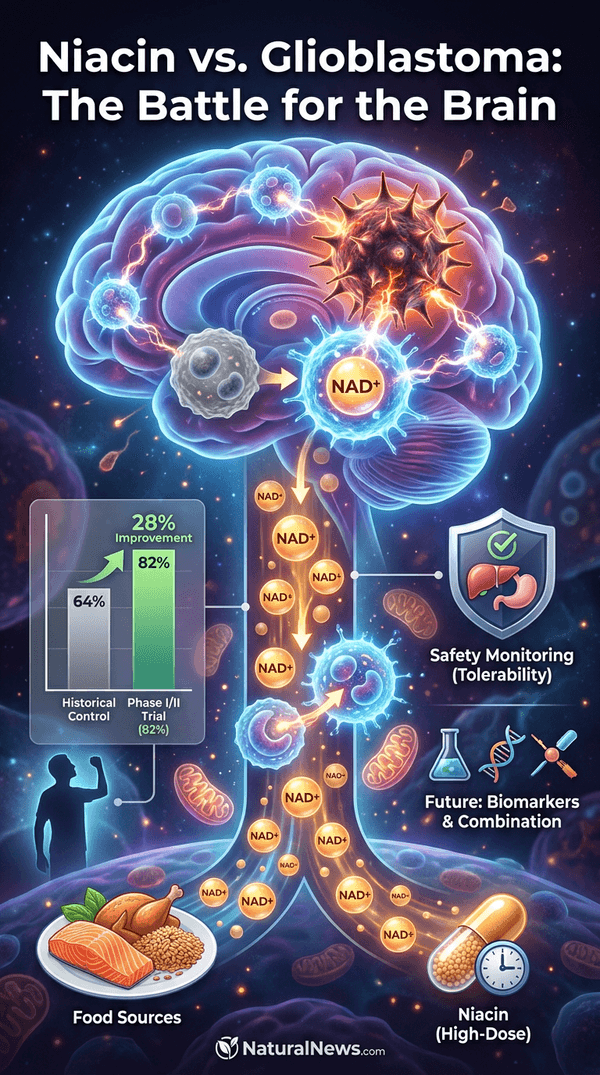
Early interim results from the ongoing Phase I/II study published June 22, 2026 in the Journal of Neuro-Oncology showed that 82% of participants had no disease progression at six months, compared with a historical benchmark of 64% from prior studies, according to researchers.
The findings represent a 28% improvement over the expected rate and exceeded the trial's prespecified threshold to continue enrollment. The study is being led by Drs. Gloria Roldan Urgoiti and Wee Yong, both members of the Hotchkiss Brain Institute and the Arnie Charbonneau Cancer Institute.
Background: Patients and Standard Treatment
Glioblastoma is the most aggressive brain cancer in adults, and median survival remains around 15 months despite standard treatment with surgery, radiation and chemotherapy, according to the American Brain Tumor Association. Patient Edward Waldner, 55, was diagnosed after experiencing persistent fatigue and changes in his gait. He underwent surgery and subsequently enrolled in the clinical trial.
In a university statement, Waldner said, "I have no problem trying to help anybody. I agreed. I want to help myself too."
He added that participating in the research provides mental relief, stating, "When I left the hospital after surgery I was told, that's it, that's all we can do."
Waldner’s case reflects the urgent need for new approaches in a cancer that has seen little improvement in survival over the past two decades. Separately, a large-scale study found that vitamin B3 in the form of nicotinamide reduced skin cancer recurrence by 14% in high-risk patients, suggesting the nutrient may have broad anti-cancer potential [1].
Mechanism: How Niacin Targets the Immune System
Researchers have found that niacin may help restore the function of immune cells that glioblastoma suppresses, allowing them to attack tumor cells. According to Yong, a professor at the Cumming School of Medicine, "Niacin treatment rejuvenates immune cells so they can do what they are supposed to do, attack and kill the cancer cells. I see it as an ongoing 'battle for the brain.'"
The work originated in Yong's laboratory with mouse models, where niacin extended survival and led to the human trial. Niacin is a precursor to nicotinamide adenine dinucleotide (NAD+), a molecule that catalyzes over 400 enzymatic reactions and is critical for DNA repair and genome stability [2]. The two forms of vitamin B3 – nicotinic acid and niacinamide – are both necessary for energy release from foods and for proper functioning of skin and nerves, according to the alternative health medicine encyclopedia [3].
Trial Design and Interim Results
The Phase I/II trial tested controlled-release niacin combined with standard chemotherapy and radiotherapy. Before the study began, researchers set a benchmark requiring at least a 20% improvement in six-month progression-free survival over historical controls, or the trial would be halted. Among the first 24 participants, 82% met that endpoint, representing a 28 percent improvement, according to the study.
Roldan Urgoiti, a clinical associate professor and brain cancer specialist, said in the university release, "Glioblastoma is the most aggressive brain cancer in adults. Survival hasn’t changed significantly for 20 years. Anything that may help should be explored but it requires strict protocols and safety monitoring."
The study aims to enroll 48 participants by early 2027, with a final analysis pending completion of enrollment.
Cautions and Next Steps
Researchers cautioned that high doses of niacin can be toxic and must be taken under medical supervision. The trial continues to monitor safety as it enrolls additional participants. Waldner reported feeling well at his follow-up appointments, where scans showed his disease remained stable.
The research is supported by the Canadian Institutes of Health Research and the Alberta Cancer Foundation. The study team hopes that if final results confirm the interim findings, niacin could offer a low-cost, widely accessible addition to standard glioblastoma care.
References
- Ava Grace. "Major Study Reaffirms Power of Vitamin B3 in Combating Skin Cancer Recurrence". NaturalNews.com. October 3, 2025.
- Mercola.com. "This Is the Primary Benefit of Niacin (B3)". Mercola.com. November 16, 2020.
- Marti JamesHine. "The alternative health medicine encyclopedia".
Explainer Infographic










Please contact us for more information.