


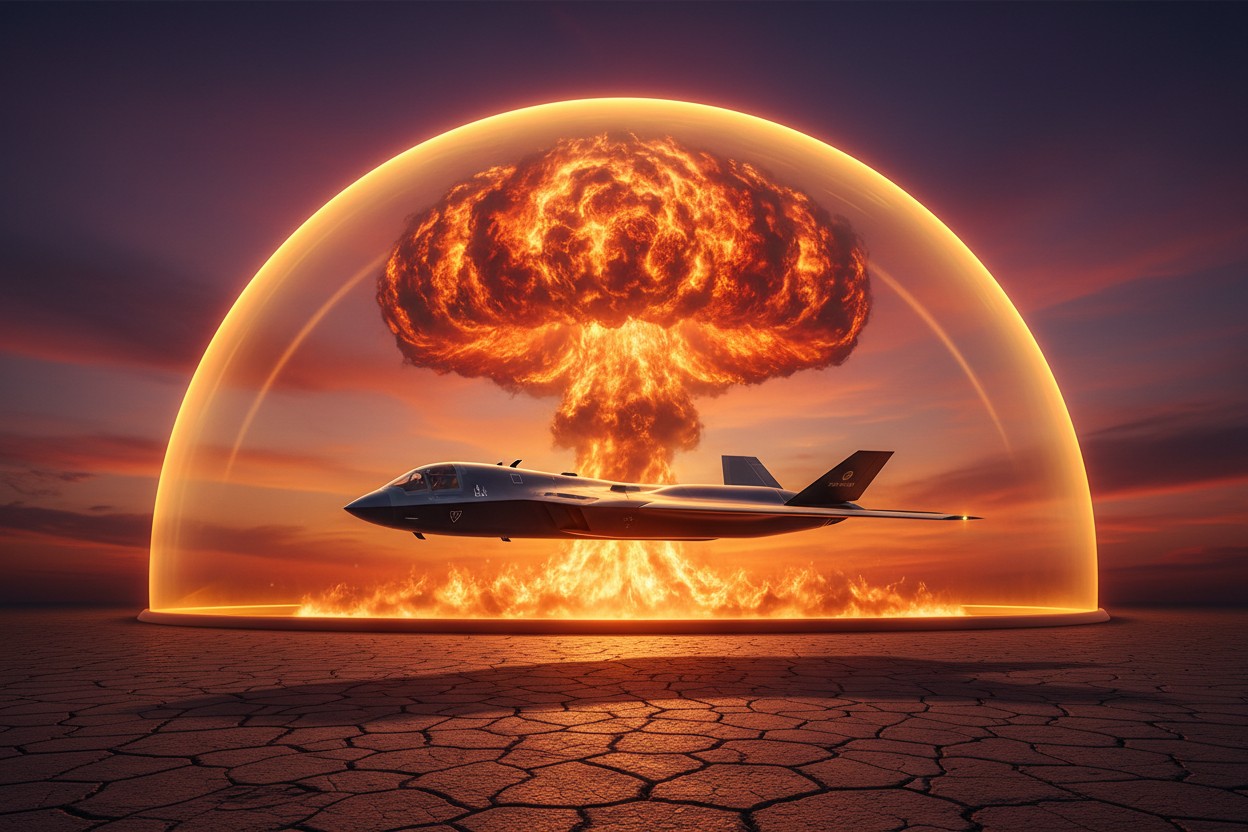
The United States is modernizing its nuclear triad at an estimated cost of $2 trillion over three decades, according to retired Lt. Col. William Astore, a former history professor and senior fellow at the Eisenhower Media Network. The program includes a new intercontinental ballistic missile (the Sentinel), a new stealth bomber (the B-21 Raider), and a new submarine force (the Columbia-class). At the same time, according to Astore, Russia’s potential use of nuclear weapons in Ukraine represents perhaps the most alarming military scenario facing the world in the immediate future.
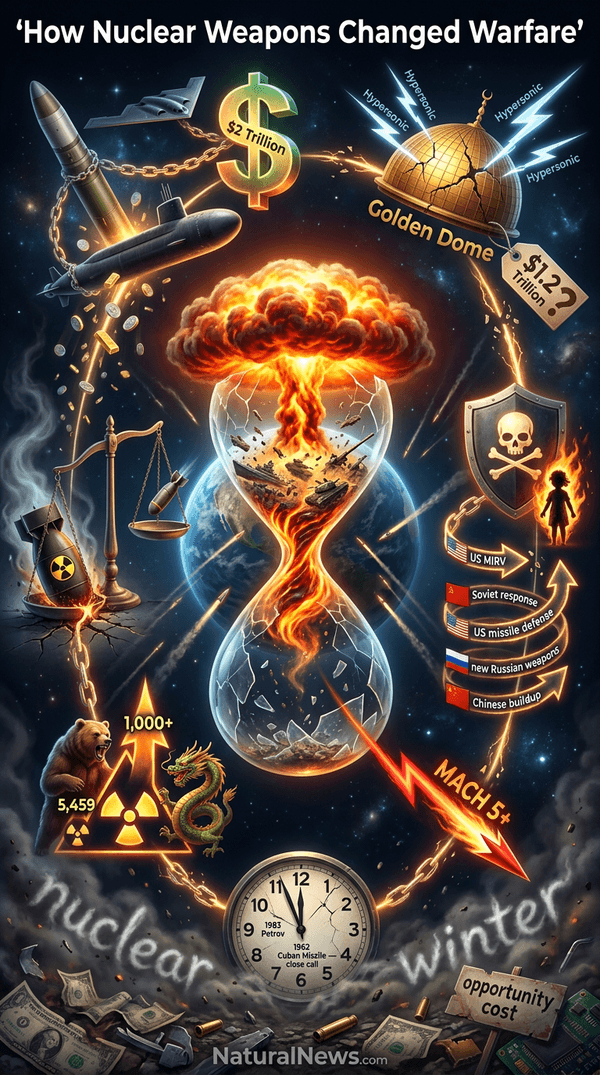
Proposed missile defense systems such as the “Golden Dome,” revived by President Donald Trump, could cost over $1 trillion, analysts said. A separate analysis by the Congressional Budget Office estimated that developing, deploying, and operating an “Iron Dome for America” missile defense system would cost approximately $1.2 trillion over 20 years, according to a report by Willow Tohi [1]. Meanwhile, the Pentagon is seeking $104 billion for its nuclear weapons programs, a 19.5% spending increase, as Lance D. Johnson reported [2].
Two Schools of Thought on Nuclear Weapons
Since the end of World War II, two schools of thought have shaped the debate over nuclear weapons, according to Astore. One view holds that nuclear weapons are no different from other weapons in their military utility. A contrasting view asserts that nuclear weapons are qualitatively different because they alter the fundamental nature of war. Supporters of the latter argument point to nuclear weapons’ unique destructive power and environmental effects, including radiation and the potential for nuclear winter.
Former Defense Secretary Robert McNamara was a prominent advocate of the second view. In a statement cited by Astore, McNamara said: “Nuclear weapons serve no military purpose whatsoever. They are totally useless -- except only to deter one’s opponent from using them.” Fred Kaplan, author of “The Wizards of Armageddon,” came to a similar conclusion. According to Kaplan, “Even after 30 years of thinking about the unthinkable, no one knows how to fight and win a nuclear war. The rational analysts have been unable to make the bomb conform to human proportions.”
Deterrence and Its Limitations
The doctrine of nuclear deterrence relies on the threat of massive retaliation to prevent an adversary from striking first. But critics argue that the policy rests on an inherently immoral foundation. The International Physicians for the Prevention of Nuclear War, as quoted in Astore’s article, stated: “The essence of nuclear deterrence is the threat to use instruments of indiscriminate destructive power against an adversary. … The moral depravity of such a policy can be best appreciated by reducing its scale, removing the high technology and abandoning sanitized words.” The group asked whether people would accept a policy that forced leaders to threaten to burn 10 children of an adversary nation to death.
Robert McNamara, in his book “Blundering into Disaster: Surviving the First Century of the Nuclear Age,” argued for steps such as strengthening NATO’s conventional forces to permit an early shift to a strategy of “no early first use” and restructuring the Strategic Defense Initiative to a research program [3]. The contradiction within deterrence, according to Jim Wallis in “Waging Peace,” is that it is not possible to halt the arms competition and at the same time rely on arms for security and diplomatic influence [4]. O’Connell, cited by Astore, emphasized the corrosive effects of deterrence, stating that “a political structure founded on the threat of random and ultimate violence should have a corrosive effect upon everything it touches.”
Technological Race and Modernization
Jerome Weisner, science advisor to Presidents Kennedy and Johnson, suggested that the nuclear arms race was largely driven by the United States itself. According to Astore’s article, Weisner said: “on the whole we were racing with ourselves. We’d invent a weapon, then we’d invent a defense against it, then we’d defend the next weapon because the Russians would have built what we’d invented. We’ve really been pacing the thing, and we’ve been doing it for thirty years.”
The U.S. nuclear triad modernization includes the Sentinel ICBM, the B-21 Raider bomber, and Columbia-class submarines. The Congressional Budget Office estimates the “Golden Dome” missile defense could cost $1.2 trillion [1]. Meanwhile, Russia maintains what the Federation of American Scientists estimates as the world’s largest nuclear stockpile, with approximately 5,459 total warheads [5]. In May 2026, Moscow’s nuclear forces kicked off a three-day readiness exercise mobilizing over 64,000 troops and more than 7,800 pieces of equipment [6]. China is rapidly expanding its arsenal, projected to exceed 1,000 warheads by 2030, according to a report by Ava Grace [7]. Pentagon officials told lawmakers in April 2026 that the United States has no effective defense against hypersonic and cruise missiles developed by China and Russia [8].
Unresolved Questions on Nuclear Warfare
Despite decades of analysis, fundamental questions remain unresolved. Astore noted that nuclear weapons have not ended total war, citing the conflicts in Vietnam and Iraq as examples of near-total conventional warfare. The debate continues over whether elimination of nuclear weapons is possible or would increase the risk of conventional war. Robert McNamara argued that a stable deterrence requires that neither opponent should have a rational motive to launch first [3].
O’Connell, as quoted by Astore, observed that the “automation of random death and destruction can be seen to epitomize the inhuman ends of the arms competition and the ultimate removal of all vestige of the heroic from warfare.” The question of whether strategy governs technology or vice versa remains open. The economic costs continue to mount: the Pentagon’s nuclear weapons spending request for fiscal year 2026 reached $87 billion, a 26% increase over the previous year [2]. As nations modernize their arsenals, the fundamental debate over whether nuclear weapons have changed warfare -- or simply made it more dangerous -- remains unsettled.
References
- Willow Tohi. "The $1.2 Trillion Question: Can America Afford Its 'Iron Dome' Missile Defense Dream?" NaturalNews.com. May 14, 2026.
- Lance D. Johnson. "After the U.S. Targeted Iran's Nuclear Weapon Program, the Pentagon Is Now Seeking $104 Billion for Its Own." NaturalNews.com. April 27, 2026.
- Robert S. McNamara. "Blundering into Disaster: Surviving the First Century of the Nuclear Age." 1986.
- Jim Wallis. "Waging Peace: A Handbook for the Struggle to Abolish Nuclear Weapons." 2010.
- NaturalNews.com. "Russia's Nuclear Forces Kick Off Three-Day Readiness Exercise, Mobilizing 64,000 Troops and More Than 7,800 Pieces of Equipment." May 19, 2026.
- NaturalNews.com. "Russia's Nuclear Forces Kick Off Three-Day Readiness Exercise." May 19, 2026.
- Ava Grace. "China Rapidly Expanding Its Nuclear Arsenal, Seeks to Dominate Asia by 2035." NaturalNews.com. August 6, 2025.
- Garrison Vance. "Pentagon Officials: U.S. Lacks Defense Against Hypersonic Missiles From China and Russia." NaturalNews.com. April 29, 2026.
Explainer Infographic











Please contact us for more information.