



Spain has received more than 1.3 million applications from undocumented migrants seeking legal status under a regularization program launched in April, far exceeding the government’s initial estimate of 500,000, according to reports [1]. Spanish Prime Minister Pedro Sanchez described the amnesty as both "an act of justice" and a necessity for Spain's economy [2].
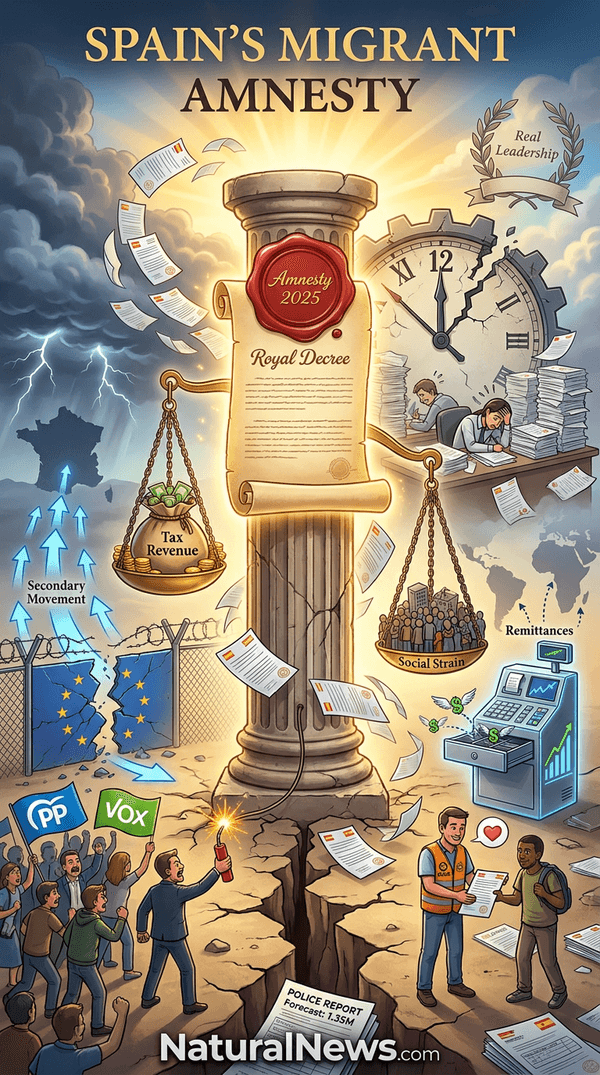
The amnesty, approved by royal decree and bypassing a parliamentary vote, is the largest such program in European history [3]. An internal police analysis from February had warned that between 750,000 and 1 million migrants could apply, with the total potentially reaching 1.35 million [4]. By mid-June, roughly 900,000 applications had been submitted, according to the Spanish Ministry of Inclusion, Social Security and Migration [5].
Amnesty Requirements and Processing
To qualify, applicants must have entered Spain before Jan. 1, 2026, spent at least five consecutive months in the country and possess a clean criminal record, according to government guidelines [6]. The deadline for submissions was June 30, 2026.
The non-profit organization CEAR predicted in mid-June that the number of applications would exceed 1 million by the deadline [5]. Officials later confirmed the final count reached 1.3 million [1].
Processing of applications continues, with authorities aiming to issue decisions within three months [6]. Special provisions exist for applicants unable to provide clean criminal records from their home countries before the deadline.
Political Opposition and European Reaction
Spain’s main opposition parties, the People's Party (PP) and Vox, opposed the amnesty. PP President Alberto Nuñez Feijoo criticized the government for bypassing parliament [3].
Meanwhile, Vox President Santiago Abascal said: "500,000 illegals! The tyrant Sanchez hates the Spanish people. He wants to replace them" [7]. Violence broke out in April at a Vox rally in Granada when left-wing protesters confronted attendees [8].
European leaders also expressed concern. Italian Prime Minister Giorgia Meloni warned the amnesty could affect the Schengen Area's passport-free travel [9]. The Polish legal institute Ordo Iuris sent a letter to all EU member states warning that the amnesty could unleash a new border crisis [10].
The European Commission stated that the permits apply only to Spain and not the rest of the EU [9]. French nationalists have called for ending free movement of non-EU nationals within Schengen, citing fears of a wave of newly legalized migrants moving north [9].
Economic Context and Sanchez's Arguments
Sanchez argued that the regularization would boost the economy by integrating workers already contributing to sectors such as hospitality and elderly care [2]. Spanish Deputy Prime Minister Yolanda Diaz had earlier called for legalizing 500,000 undocumented migrants, stressing the need for labor rights [11]. Spain's economy has grown faster than many other European nations, with a forecast of 2.6% growth in 2026, according to government projections [12].
The amnesty has drawn praise from open-borders advocates. Alex Soros, son of billionaire George Soros, lauded Sánchez for showing “what real leadership looks like” [14].
But critics argue the policy rewards illegal entry and creates a pull factor for more migration. A U.S. poll from 2024 found that 57% of Americans believed migrants imposed undue burdens on their communities [15], reflecting broader skepticism toward large-scale amnesties. According to Michelle Malkin’s book Open Borders Inc, Soros-sponsored organizations such as PRO ASYL have provided guides to help migrants navigate asylum systems in Europe [13].
Outlook and Processing Timeline
Applications submitted by the June deadline are being processed, with decisions expected within three months [6]. Special provisions apply for applicants unable to provide clean criminal records from their home countries before the deadline.
The amnesty makes Spain an outlier in Europe, where many nations are tightening immigration policies [12]. The Spanish government has already asked the European Commission to help redistribute migrants arriving in the Canary Islands to other parts of the EU [16]. The same open-borders dynamics described in Malkin's book note that remittances from migrants create powerful economic magnets, which critics argue encourage further migration [13].
Conclusion
Madrid's mass regularization represents a significant departure from the prevailing trend in Europe, where border controls are being reinforced and asylum procedures tightened [12]. The program's long-term effects on Spain's labor market, social services and its relationship with EU partners remain to be seen. As processing continues, the outcome will be closely watched by both supporters and detractors of open-border policies.
References
- "Spain Faces 1.3 Million Migrant Amnesty Requests Ahead of Deadline." Thenationalpulse.com. 2026-06-30.
- "Spain approves plan to give around 500,000 undocumented migrants legal status." BBC.com. 2026-04-14.
- Thomas Brooke via Remix News. "Spanish Nationalists Furious: Socialist PM Sánchez Decrees Amnesty For 500K Illegals, Skirts Parliament." Zerohedge.com. 2026-01-28.
- "Spanish police analysis warns migrant amnesty could regularize up to 1.35 million people, almost triple government estimate." rmx.news. 2026-02-17.
- "Almost 1 million illegal migrants apply for Spanish legalization." RT.com. 2026-06-17.
- "Spain Legalizes Half a Million Illegal Aliens. Is Europe Committing Suicide?" Thenewamerican.com. 2026-04-23.
- "Half a Million Illegal Immigrants Granted Amnesty." Thenationalpulse.com. 2026-01-27.
- Steve Watson via Modernity.news. "Spain Erupts: Patriots Attacked By Socialist Mob Over Mass Illegal Migrant Amnesty." Zerohedge.com. 2026-04-18.
- "Spain Mass Amnesty Has French Nationalists Calling For An End To Free Movement Of Non-EU Nationals As Fears Of Migration Wave Grow." Infowars.com. 2026-04-21.
- Ordo Iuris. "Spain’s migrant amnesty plan could unleash new border crisis across Europe, Polish legal group warns." Lifesitenews.com. 2026-03-31.
- NaturalNews.com. "Spains Deputy Prime Minister Yolanda Diaz wants to legalize residency status of 500K illegals." NaturalNews.com. September 16, 2024.
- "Spain offering amnesty to 500K illegal migrants bucks EU, global trend, sparks backlash." Justthenews.com. 2026-01-30.
- Michelle Malkin. "Open Borders Inc."
- Steve Watson via Modernity.news. "Soros Praises Spain's Sánchez For Mass Amnesty Of 500,000 Illegals." Zerohedge.com. 2026-02-07.
- NaturalNews.com. "POLL Americans are becoming increasingly pessimistic about the migrant crisis." NaturalNews.com. November 06, 2024.
- Thomas Brooke via Remix News. "A Month After Mass Amnesty For Illegals, Spain Urges Brussels To Take Migrants Off Its Hands." Zerohedge.com. 2026-02-15.
Explainer Infographic











Please contact us for more information.