


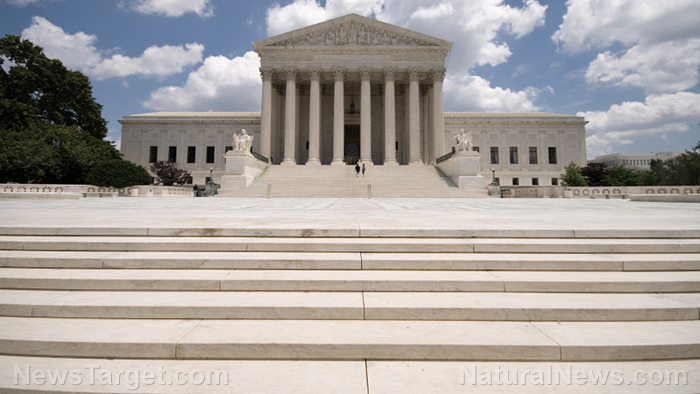
- The Supreme Court ruled 6-3 that Trump's 2025 executive order limiting birthright citizenship should be struck down.
- Chief Justice Roberts authored the majority opinion, joined by Barrett and the three liberal justices, that it violated the 14th Amendment with Kavanaugh concurring on statutory grounds.
- The decision reaffirms that children born in the U.S. to parents unlawfully or temporarily present are citizens under the Citizenship Clause.
- Three conservative justices dissented, arguing the 14th Amendment was never intended to cover children of illegal immigrants or temporary visitors.
- The ruling represents a major defeat for Trump, who vowed to pursue legislative action to restrict birthright citizenship.
On Tuesday, the Supreme Court struck down President Donald Trump’s executive order restricting birthright citizenship, ruling 6-3 that the directive violated the 14th Amendment’s Citizenship Clause in a landmark decision that reaffirmed a core American principle: anyone born on U.S. soil is a citizen.
The ruling in Trump v. Barbara marked the culmination of an 18-month legal battle that began when Trump signed Executive Order 14,160 on Jan. 20, 2025, his first day back in office. The order directed federal agencies to deny citizenship to children born in the United States unless at least one parent was a citizen or lawful permanent resident. The policy never took effect after lower courts issued nationwide injunctions, setting the stage for a Supreme Court showdown over the meaning of the 14th Amendment.
Chief Justice John Roberts authored the majority opinion, joined by Justices Elena Kagan, Sonia Sotomayor, Amy Coney Barrett and Ketanji Brown Jackson. Justice Brett Kavanaugh concurred in the judgment but argued the order violated federal statute rather than the Constitution. Justices Clarence Thomas, Samuel Alito and Neil Gorsuch dissented.
The majority opinion: History and precedent
Roberts grounded the majority opinion in historical context, tracing birthright citizenship from English common law through the Civil War and Reconstruction. The Citizenship Clause, he wrote, must be understood as a direct repudiation of the Supreme Court’s 1857 Dred Scott decision, which denied citizenship to African Americans.
The chief justice cited United States v. Wong Kim Ark (1898), the long-settled precedent defining citizenship rights for people born on U.S. soil. That case held that the 14th Amendment was declaratory of the common law rule of jus soli — right of the soil — with limited exceptions for children of foreign diplomats, hostile occupying forces, births on foreign sovereign vessels, and those born in American Samoa.
Roberts rejected the Trump administration’s argument that birthright citizenship applied only to children of parents domiciled in the United States. The majority found no evidence that the 14th Amendment’s ratifiers intended such a limitation.
The dissent: A battle over original meaning
The three dissenting justices offered sharply different interpretations of the Citizenship Clause. Justice Clarence Thomas, joined by Justice Neil Gorsuch, argued in a 91-page dissent that the 14th Amendment guaranteed citizenship only to persons born and domiciled in the United States, regardless of race. Thomas contended the majority opinion was “not historically accurate” and accused the court of repurposing the amendment for political projects the Reconstruction Congress never intended.
Justice Samuel Alito called the majority opinion a “serious mistake,” arguing the 14th Amendment does not confer citizenship on children of “birth tourists” — women who come to the United States solely to give birth. Justice Gorsuch wrote separately to endorse what he called a “distinctly American settler’s view of citizenship” that applies to children born to parents who have made the nation their permanent home.
Justice Ketanji Brown Jackson, in a concurring opinion joined by Justice Sotomayor, pushed back against Thomas’s dissent, arguing his narrow vision of the 14th Amendment bore little relationship to the history of its ratification.
A divided court, a divided nation
The decision exposed deep ideological fractures on the court. The majority held that the Citizenship Clause must be understood in light of its historical context, from English common law to the repudiation of Dred Scott. The court rejected arguments that birthright citizenship applied only to children of domiciled parents, finding no evidence the ratifiers intended such a limitation.
Justice Kavanaugh provided a narrower path, arguing the executive order violated a 1940 federal statute, 8 U.S.C. §1401(a), rather than the Constitution itself. He noted Congress could amend that statute to establish exceptions to birthright citizenship — but had not yet done so.
The dissenting justices offered competing historical interpretations. Thomas argued the 14th Amendment was designed to secure equal rights for freed slaves, not to grant citizenship to children of foreign temporary visitors or illegal immigrants. Alito warned the ruling would encourage “birth tourism,” while Gorsuch endorsed a “settler’s view” of citizenship limited to children whose parents made America their permanent home.
What this means for the future
The decision represents a significant legal and political defeat for Trump, who called the ruling “too bad for our country” and urged Congress to pursue legislation restricting birthright citizenship. House Speaker Mike Johnson expressed disappointment, warning the ruling would create “serious challenges going forward.”
The ruling also carries implications beyond birthright citizenship. The court’s June 2025 decision in Trump v. CASA had limited nationwide injunctions, requiring plaintiffs to challenge policies on an individual basis. But the Barbara case succeeded as a class action, demonstrating that broad challenges remain possible when properly structured.
The ACLU, which argued the case, hailed the decision as a historic victory. Executive Director Anthony D. Romero called it “one of the most important constitutional cases of the past 100 years.”
Historical context: From Dred Scott to today
The ruling cannot be understood without reference to the 14th Amendment’s origins. Ratified in 1868, the Citizenship Clause was a direct response to Dred Scott v. Sandford (1857), in which Chief Justice Roger Taney declared that African Americans “had no rights which the white man was bound to respect.”
The Civil Rights Act of 1866 had already made citizens of all persons born in the United States, but Congress embedded the principle in the Constitution to prevent future courts or presidents from undermining it. The Wong Kim Ark decision in 1898 affirmed that children born in the United States to Chinese immigrant parents were citizens, establishing a precedent that stood for more than a century.
Trump’s executive order represented the most serious challenge to that precedent since Reconstruction. The administration argued that children born to illegal immigrants or temporary visitors were not “subject to the jurisdiction” of the United States within the meaning of the 14th Amendment. The court rejected that interpretation, holding that the phrase encompasses all persons subject to U.S. laws — with the narrow exceptions of diplomats, invading forces and certain maritime contexts.
The road ahead: Legislative battles and political fallout
Trump responded to the ruling by calling it “too bad for our country” and urging Congress to pursue legislation restricting birthright citizenship. House Speaker Mike Johnson, a former constitutional lawyer, expressed disappointment and warned the decision would create “serious challenges going forward.”
The administration had already sought to crack down on the growing practice of 'birth tourism', with the State Department announcing plans earlier this month to revoke hundreds of visas and dismantle networks allegedly linked to the practice.
The ruling does not foreclose legislative action. Congress could amend federal statute 8 U.S.C. §1401(a) to establish exceptions to birthright citizenship, as Justice Kavanaugh noted in his concurrence. However, such legislation would face steep political hurdles and likely trigger further constitutional challenges.
For now, the court has settled the question: the Constitution, not the president, determines who is a native-born citizen. The 14th Amendment’s promise remains intact — a victory for immigrant families and a reaffirmation of American values that the court described as “one of the clearest expressions of our American values.”
Sources for this article include:








Please contact us for more information.