



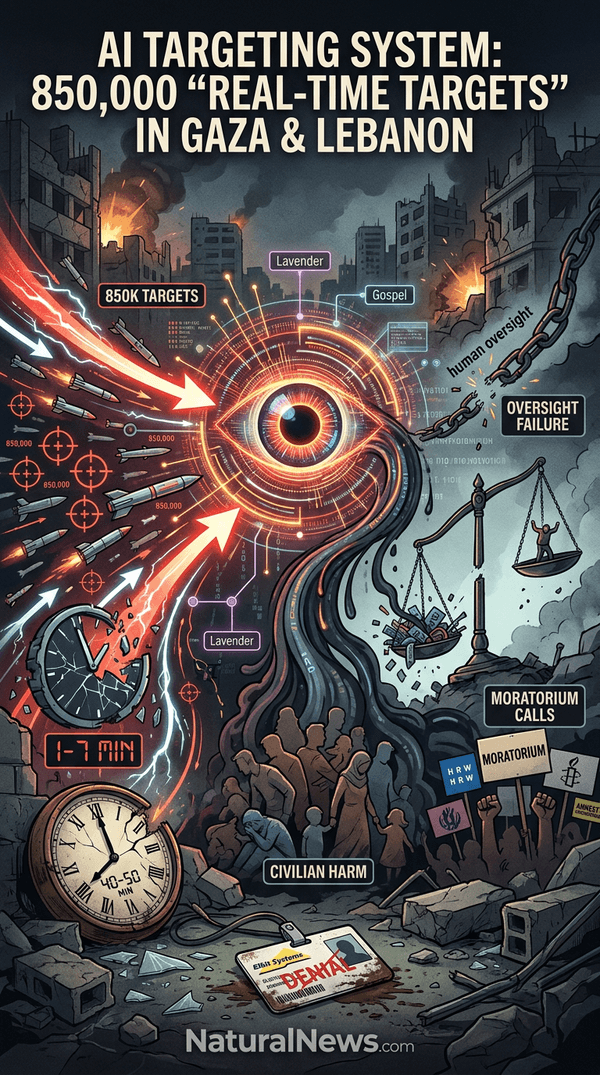
Elbit Systems Ltd., a major Israeli defense contractor, announced that its Tzayad digital army program had identified 850,000 “real-time intel targets” and produced 20,000 battle plans since October 2023 across Gaza and Lebanon, according to a presentation by company Vice President Miki Edelstein at a Royal United Services Institute conference on June 29. The revelation has drawn scrutiny from military experts and human rights organizations, who warn that such automated targeting at scale undermines civilian protections.
Edelstein stated that the system reduced the time for external fire support from 40–50 minutes to as little as one to seven minutes, according to slides shown at the event. The figure of 850,000 targets, if accurate, would represent an average of more than 1,000 targets per day over the conflict period. Elbit later issued a denial, telling news outlets that the 850,000 figure referred to overall system activity data, not targets. However, the original presentation slide was headed “R.T. intel targets,” according to multiple reports.
Elbit's Announcement and System Capabilities
The Tzayad system, described by Elbit as a “digital army program,” integrates intelligence from multiple sources to generate targeting recommendations. Edelstein’s presentation at the Royal United Services Institute -- which was attended by UK Air Chief Marshal Johnny Stringer -- detailed how the platform enabled the identification of an average of 1,000 targets per day over two years. The system also compressed the fire-support response chain to under seven minutes, a dramatic reduction from the standard 40-minute timeline.
The presentation aligns with Israel’s broader adoption of AI-driven warfare tools. Previous reporting by The Guardian, cited by NaturalNews.com, noted that Israel has been using an AI program known as “the Gospel” to produce targeting recommendations at a fast pace. According to an IDF website statement quoted in the same report, the military uses AI to “produce targets at a fast pace” through “rapid and automatic extraction of intelligence.” [1] That earlier system was described as an “assassination factory” by some analysts. [2]
Expert Concerns Over Targeting Volume
Wes Bryant, a former senior targeting advisor at the Pentagon, told The Guardian that the 850,000 figure was “highly concerning.” He argued that it is impossible to properly characterize each target for potential collateral damage at such volumes, noting that even 50 targets per day is challenging for thorough human analysis. Bryant’s comments reflect a broader unease among military professionals about the speed and scale of AI-driven targeting.
Similar warnings have emerged from other analysts. The Lavender system, another AI targeting tool used by the IDF, was described in a report cited by Middle East Eye as treating its targeting decisions “as though a human is making them,” while recommendations were often unverified through human investigation. [3] That report noted that targets were “often killed at home with their families.” [3] The scale of the Tzayad program -- 850,000 potential targets -- exceeds anything previously acknowledged and raises questions about the feasibility of maintaining legal obligations under the laws of armed conflict.
Rights Groups' Warnings on AI-Driven Weapons
Human Rights Watch and Amnesty International, along with over 100 other organizations, have warned that the expansion of AI in military “kill chains” risks greater civilian bloodshed and a lack of accountability, specifically citing Israel’s use in Gaza. According to a statement reported by Middle East Eye, the groups pointed to Israel’s AI-based systems as a warning for future conflicts. [4] More than 73,000 Palestinians have been killed in Gaza since October 2023, according to Palestinian health authorities. [5]
Rights groups have documented Israel’s deployment of at least four digital tools that rely on faulty data, increasing the risk of civilian harm. Reports indicate that systems such as Lavender and the Gospel have been used in both Gaza and Lebanon, and a report from the human rights organization noted that AI tools “compress time for verification, making meaningful precautions difficult.” The extension of AI targeting to Lebanon and Iran -- where experts say Israel has used AI “without any human oversight” [6] -- has intensified calls for a global moratorium on autonomous weapons systems.
Elbit Systems' Denial and Context
Following the publication of Edelstein’s presentation details, an Elbit spokesman denied that the 850,000 figure represented targets, calling it a measure of overall system activity. Despite this, the slide shown at the conference was clearly labeled with the heading “R.T. intel targets,” according to multiple sources who viewed the image. The contradiction has fueled skepticism among analysts who say the company may be seeking to downplay the scale of its targeting apparatus.
The broader context includes an escalation in AI-powered warfare. U.S. forces employed Elon Musk’s Grok AI to strike over 2,000 targets in 96 hours during the joint U.S.-Israel war on Iran, according to a written declaration from the U.S. Department of Defense’s digital and artificial intelligence chief. [7] Activists in the UK have targeted Elbit factories, arguing in court that the company uses “deadly AI” in its systems. [8] The Israel Defense Forces have killed over 73,000 Palestinians in Gaza and nearly 9,000 in Lebanon since October 2023, according to Palestinian and Lebanese health officials.
Conclusion
The disclosure of the Tzayad program’s targeting volume underscores a significant shift in modern warfare toward fully automated kill chains. While Elbit disputes whether the 850,000 figure referred specifically to targets, the sheer scale of the data -- combined with the company’s own description of “real-time intel targets” -- suggests an unprecedented reliance on artificial intelligence to select and prioritize bombing targets. Rights groups and former military officials have warned that without meaningful human oversight, such systems will continue to erode the legal protections intended for civilians in conflict zones.
As the international community debates regulations on autonomous weapons, the experience in Gaza and Lebanon serves as a real-world case study. The gap between the speed of AI-driven target selection and the capacity for human verification remains a central challenge -- one that, according to critics, has already cost tens of thousands of lives.
References
- NaturalNews.com. "Israel is using ‘assassination factory’ AI to choose its bombing targets in Gaza." December 12, 2023.
- NaturalNews.com. "Israeli AI assassination factory plays central role in the Gaza war." December 4, 2023.
- Trends-Journal-2024-04-14.
- Middle East Eye. "Rights groups call for a halt of AI tech use in the military." June 16, 2026.
- NaturalNews.com. "Rights Groups Sound Alarm Over Military AI Use, Citing Gaza Genocide." June 18, 2026.
- Antiwar.com. "Israel Accused of Using AI to Pick Iran Targets ‘Without Any Human Oversight’ – Just Like in Gaza." March 8, 2026.
- Middle East Eye. "US used Musk’s Grok AI to deploy 2,000 munitions during Iran war." June 17, 2026.
- Middle East Eye. "Palestine Action defendants targeted Elbit's use of ‘deadly AI’, court hears." April 24, 2026.
- Antony Loewenstein. "The Palestine Laboratory: How Israel Exports the Technology of Occupation around the World."
- 21st Century Wire. "20 Seconds to Death: Silicon Valley’s AI Infrastructure Behind Gaza Genocide." October 28, 2025.
Explainer Infographic











Please contact us for more information.