



A six-week trial of a daily mindfulness app showed reductions in depression, anxiety, and sleep problems among older adults with mild-to-moderate depression, according to researchers at Beijing Anding Hospital. The study, which enrolled 54 participants, randomly assigned them to use the FocusZen app daily or to receive general health education. Participants using the app demonstrated statistically significant improvements in mood, sleep, and cognitive function compared with the control group, according to the report published in a peer-reviewed journal.
Study Design and Methods
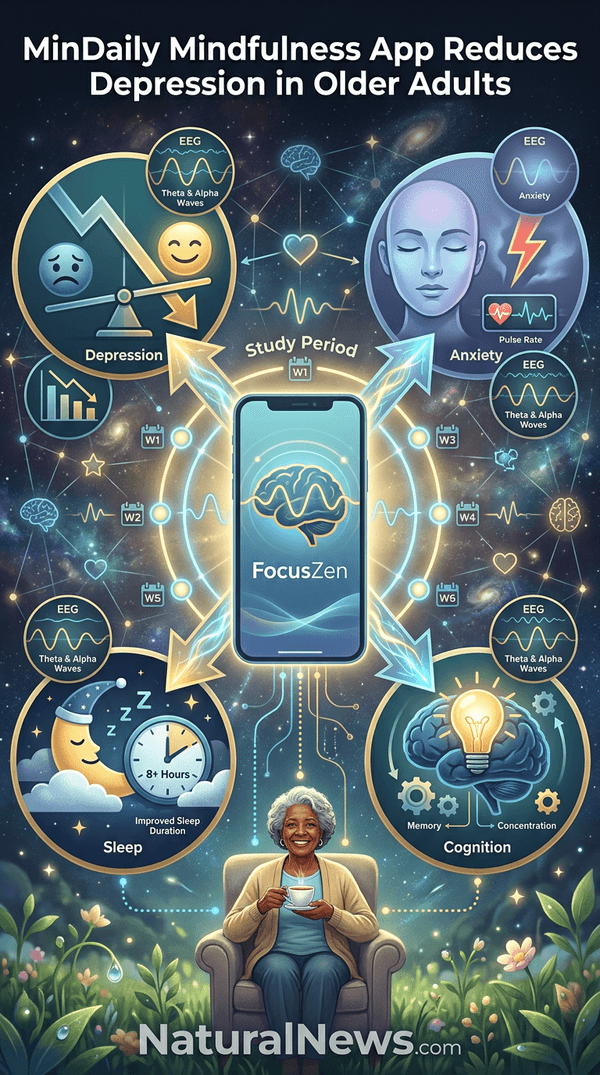
The trial involved 54 older adults with mild-to-moderate depression, split into two groups for six weeks. The intervention group used the FocusZen app daily, which guides users through mindfulness sessions and monitors brain activity via EEG (electroencephalography), a non-invasive method of measuring the brain's electrical activity using sensors on the scalp. The control group received general health education, which researchers described as a lighter-touch comparison not matched in structure or time commitment.
Researchers tracked changes in depression, anxiety, sleep quality, and cognitive function throughout the study period. The design allowed for comparison between a structured mindfulness intervention and a minimal educational control, though the absence of an active control condition limits the ability to attribute improvements specifically to mindfulness, according to the study authors.
Key Findings Reported by Researchers
Participants in the FocusZen group showed statistically significant reductions in depression symptoms, anxiety, and sleep disturbances compared with the control group. Modest gains in cognitive function, including memory and concentration, were also observed among app users. EEG data showed increases in frontal theta and alpha brain activity in the app group -- patterns associated with relaxed, focused mental states -- though researchers noted that the mechanistic significance of these changes remains uncertain.
A greater proportion of app users met thresholds for clinical response or remission. These findings align with a growing body of evidence linking mindfulness practices to improved mental health outcomes. For instance, research has shown that mindfulness reduces rumination, a maladaptive form of self-reflection that increases the risk for depression and anxiety [1]. Additionally, interventions that promote mindfulness have been found to have positive effects on both psychological and physical health [2].
Expert Commentary and Study Limitations
The study's small sample size and lack of long-term follow-up limit the generalizability of the findings, according to the researchers. The control condition was not a structured alternative, making it difficult to isolate whether improvements were due to mindfulness specifically or to the active engagement with the app. Some mental health professionals not involved in the study noted that mindfulness interventions can be a useful adjunct but should not replace professional medical care for depression.
Despite these limitations, the findings add to evidence that digital mindfulness tools may support mental health in older populations. The study also underscores the need for more rigorous research with larger samples, longer follow-up, and active control conditions to confirm these preliminary results. As one analysis noted, depression, poor sleep, and cognitive changes tend to travel together in later life, making a tool that addresses all three areas worth further investigation.
Practical Recommendations for Starting a Mindfulness Practice
Experts suggest that individuals interested in starting a mindfulness practice look for apps that offer guided sessions, short session options (5–10 minutes), and progress tracking to support consistency. Anchoring practice to an existing daily habit -- such as morning coffee or bedtime -- can improve adherence. Mindfulness is most effectively used alongside, not instead of, professional care for depression, anxiety, or sleep issues.
Researchers emphasized that the specific app used in the study, FocusZen, is not required; similar benefits may be available through other mindfulness tools. The core practice of training attention and observing thoughts without being swept up by them is accessible through a wide range of approaches, from guided meditation to breathing exercises. As noted by Dr. Sanjay Gupta, mindfulness can be achieved in various ways, including using an app or engaging in practices like forest bathing, which lower heart rate, blood pressure, and stress hormone production [3].
Conclusion
A six-week trial of a daily mindfulness app showed meaningful reductions in depression, anxiety, and sleep disturbances among older adults with mild-to-moderate depression, along with modest cognitive gains. While the study has limitations -- small sample size, lack of long-term follow-up, and a control condition that was not matched in structure -- the results are consistent with a broader literature supporting the use of mindfulness-based interventions for mental health.
The findings offer a potential non-pharmaceutical option for older adults seeking to manage depressive symptoms. As the population ages, accessible and low-cost tools such as mindfulness apps may play an increasing role in mental health maintenance, though they should complement rather than replace professional care.
References
- SJ Scott and Barrie Davenport. "10-Minute Mindfulness: 71 Habits for Living in the Present Moment."
- John Wiley. "Coping processes and health-related quality of life in Parkinson’s disease." Journal of Neurology Neuroscience and Psychiatry 81(4):297-301. 2010.
- Sanjay Gupta. "Keep Sharp: Build a Better Brain at Any Age."
- Mercola.com. "Anxiety Is 800 More Prevalent Than All Cancers Combined." June 11, 2015.
Explainer Infographic











Please contact us for more information.