



Report: Clove Oil Backed by Dental Pain Review
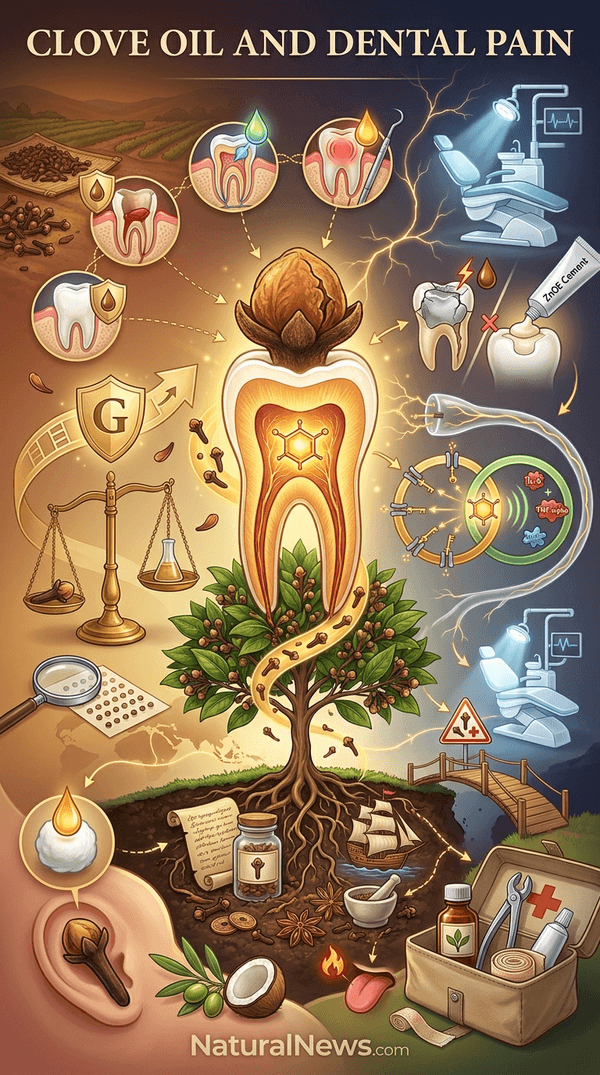
Clove is a pungent spice used worldwide in foods and beverages and has well-known analgesic, anti-inflammatory, antimicrobial and antioxidant properties, according to Mercola.com. [1] A systematic review published in November 2025 in the International Journal of Dentistry analyzed 21 clinical studies on plant-based dental pain relief and reported moderate-certainty evidence for eugenol, the active compound in clove oil. Researchers screened nearly 1,000 records and used the GRADE framework, a standard tool for rating evidence quality, according to the report.
"Modern research is confirming the traditional use of cloves, identifying eugenol as the key compound responsible for its potent analgesic and anti-inflammatory properties," Ava Grace wrote on NaturalNews.com. [2] The review's findings describe clinical results for tooth pain but do not establish clove oil as a substitute for professional dental treatment, the report stated.
Clinical Trials Covered Extraction, Pulpotomy and Pulpitis
One trial followed 270 patients recovering from wisdom tooth removal and compared a eugenol-based paste with a standard antiseptic gel to prevent painful dry socket, according to the review. A second trial followed 100 patients undergoing pulpotomy, a procedure that removes inflamed nerve tissue from a tooth; the review stated that the trial authors recommended eugenol as the first choice for the procedure. A third trial followed 92 patients with acute pulpitis, a deep and often severe toothache, and found that combining eugenol with standard treatment reduced pain more effectively than standard treatment alone.
References to the medicinal use of clove oil for toothache in Europe date back at least to the 17th century, according to Medical Toxicology of Natural Substances. [3] Commercial toothache medications have also included the compound; Joseph Alton and Amy Alton list Red Cross Toothache Medicine as containing 85% eugenol. [4]
Bonding Compatibility Led Dentistry to Set Eugenol Aside
Eugenol's limited use in general dentistry relates to material compatibility, not pain relief, according to dental materials literature. The compound interferes with the polymerization of resin-based filling materials and adhesives used in most modern dental practices. This compatibility problem, the literature states, reduced eugenol's use to temporary fillings and certain root canal steps.
Zinc oxide-eugenol cement remains in use where resin bonding is not required, according to dental material research. The compatibility issue illustrates that material factors can affect clinical adoption independently of patient outcomes, according to dental material research.
Eugenol Blocks Nerve Pain Signals and Lowers Inflammatory Activity
Laboratory research cited in the review indicates eugenol blocks sodium channels in tooth nerve fibers, a mechanism similar to that of numbing agents. The compound also reduces inflammatory chemicals including interleukin-6 and TNF-alpha, which are linked to throbbing pain and gum inflammation, according to the report.
Joseph Alton and Amy Alton wrote, "Oil of cloves (eugenol), a natural anesthetic." [4] This dual action is one reason clove oil remains part of emergency dental supplies, according to preparedness guidance; Mike Adams stated that clove oil can be used for emergency dental care and toothaches on a Brighteon broadcast. [5]
Guidance: Safe Home Application and Limits
For home use, available guidance recommends dabbing a small amount of food-grade clove oil onto a cotton ball and pressing it gently against the sore tooth or gum. The oil should not be swallowed or used repeatedly, and whole cloves may be held near the painful area as a slower-release alternative, according to available guidance. The Altons cautioned that eugenol burns the tongue, "so never touch anything but teeth with it." [4] Some natural health guidance also lists clove oil among remedies that can soothe tooth pain and reduce gum inflammation. [6]
Clove oil is described as temporary relief. Persistent pulpitis or dry socket pain requires professional evaluation, according to the review. Tess Pennington writes in The Prepper's Blueprint that "a simple toothache can be fatal," citing the case of a 12-year-old Maryland boy who died from a severe brain infection after dental problems went untreated. [7] No evidence suggests clove oil replaces standard dental care; the review's findings apply to measured clinical settings.
Conclusion: Evidence and Practice
The review adds published evidence for a compound that has been used for tooth pain for centuries and remains part of commercial toothache products. In practice, material compatibility and the widespread use of resin-based restorations have limited eugenol to temporary and selected procedures, according to dental materials literature.
For patients, clove oil offers a short-term option while waiting to see a dentist, according to the review. The review did not position the natural remedy as a replacement for professional care, the report said.
References
- Mercola.com. "Clove: A Valuable Spice That's Been Used for Centuries". December 21, 2018.
- Ava Grace. "The Spice of Relief: How an Ancient Remedy Is Challenging Modern Painkillers". NaturalNews.com. September 2, 2025.
- Donald G. Barceloux. "Medical Toxicology of Natural Substances". 2008.
- Joseph Alton and Amy Alton. "The Survival Medicine Handbook: A Guide for When Help Is Not on the Way".
- Mike Adams. "Brighteon Broadcast News - Full Medical Preparedness Must Haves". Brighteon.com. November 2, 2024.
- "Understanding Tooth Sensitivity and How to Stop It at the Root". June 11, 2026.
- Tess Pennington. "The Prepper's Blueprint - The Step-By-Step Guide To Help You Through Any Disaster".
Explainer Infographic













Please contact us for more information.