


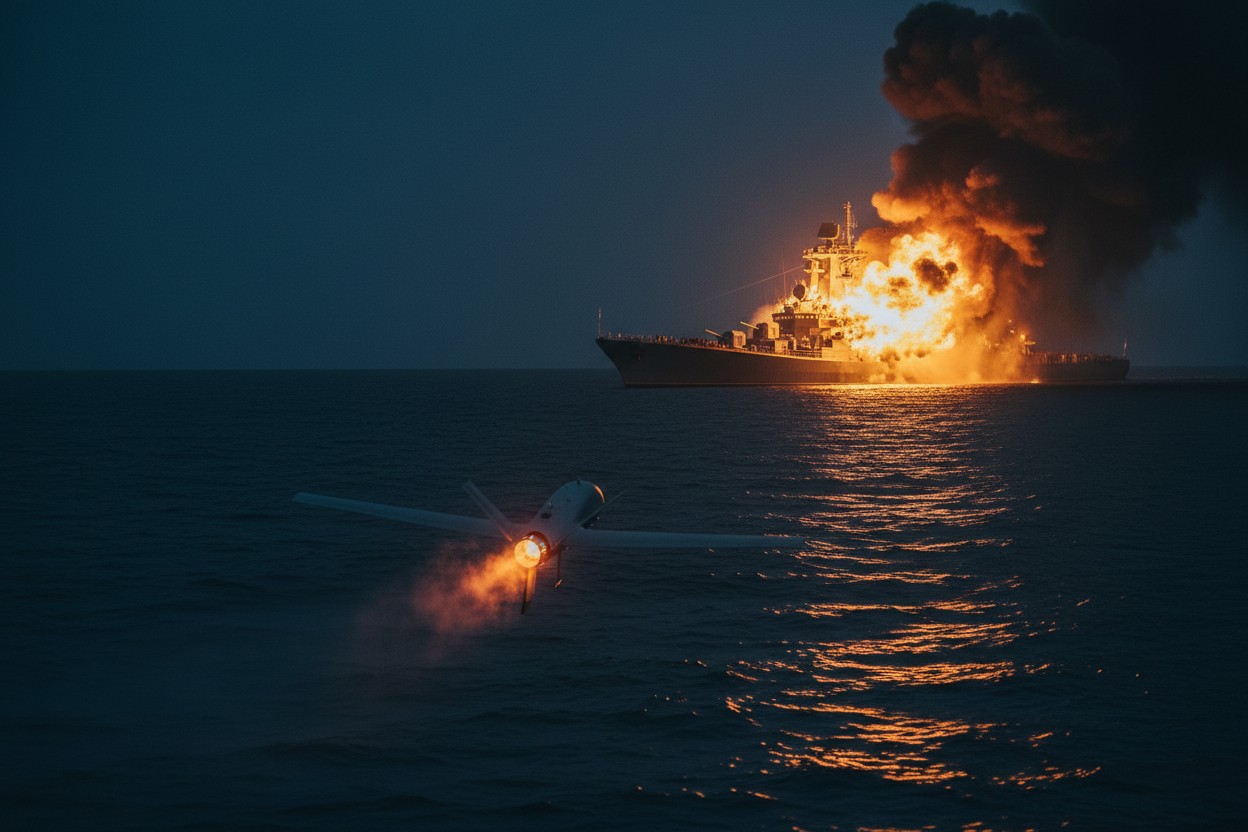
- Ukrainian drones struck the Turkish-operated cargo ship Nadezhda near the Russian port of Novorossiysk on August 3, injuring three crew members.
- The vessel was sailing from Russia to Turkey, and Ankara confirmed the attack, calling for immediate safety measures in the Black Sea to prevent further escalation.
- Russia has blamed Ukraine for the strike, which follows a pattern of both nations targeting commercial shipping to disrupt logistics and military supplies.
- This incident threatens critical food supply chains and marks yet another breakdown in maritime security despite a prior ceasefire brokered by Turkey.
- Turkey, a key NATO member, is walking a diplomatic tightrope, condemning the attack while pressing both Moscow and Kyiv to de-escalate.
Ankara caught in the crossfire of a dangerous new phase of the Ukraine conflict
In a brazen escalation of the Black Sea conflict, Ukrainian drones struck the Turkish-operated cargo vessel Nadezhda late Monday night, just miles from the Russian port of Novorossiysk, injuring three crew members and igniting fires aboard the civilian ship. The attack, which occurred on August 3, targeted the Cameroon-flagged vessel as it transited from Russia to Turkey, prompting an urgent diplomatic response from Ankara. The incident underscores the rapidly deteriorating security situation in the Black Sea, where vital grain and cargo routes have become battlegrounds. Turkey has condemned the strike on its commercial shipping interests and is now demanding that both Moscow and Kyiv implement immediate measures to restore navigational safety, amid fears that the escalating conflict threatens global food security.
The attack and immediate aftermath
According to Türkiye’s Directorate General of Maritime Affairs, the Nadezhda, carrying a crew of 22—including 13 Turkish citizens—was hit by multiple drone strikes shortly after departing Novorossiysk. Russian vessels evacuated the crew, though three sailors sustained serious injuries. The ship’s captain reported that six or seven Ukrainian unmanned aerial vehicles targeted the vessel, causing significant damage to the bow and living quarters. While Ukrainian officials have not claimed responsibility, the attack mirrors a sustained campaign by Kyiv to disrupt Russian logistics and shipping infrastructure. This incident follows a recent pattern of strikes targeting Iranian vessels in the Caspian Sea and Russian-linked tankers, signaling a deliberate strategy to escalate the economic cost of the war.
The geopolitical precipice for Ankara
This attack places Turkey in an untenable geopolitical position. As a key NATO ally and a crucial intermediary between Russia and Ukraine, Ankara had brokered a ceasefire in July that ostensibly prohibited attacks on vessels in the region. The strike on the Nadezhda appears to violate that fragile agreement, threatening to unravel a delicate diplomatic arrangement that facilitated grain exports to the developing world. The Turkish Foreign Ministry has issued a stern warning, indicating that the "uncontrolled escalation" in the Black Sea is directly endangering civilian lives and vital supply chains. For President Erdogan, this incident is not merely a foreign policy issue but a domestic crisis, as Turkish-owned shipping companies face immediate existential threats from the expanding war zone.
A broken ceasefire and the weaponization of commerce
The Black Sea has become a grim laboratory for the weaponization of commercial shipping. Both Russia and Ukraine have abandoned conventional naval warfare in favor of "drone torpedoes" and aerial kamikaze attacks against cargo ships. Just weeks prior to the Nadezhda incident, Ukrainian forces struck an Iranian vessel, while Russian missiles targeted a grain carrier near Odesa. Analysts suggest this is a calculated attempt to cripple each other’s wartime economies—Ukraine aims to choke Russia’s oil and revenue exports, while Russia seeks to block Ukraine’s agricultural lifeline to global markets. The July ceasefire brokered by Turkey has proven ineffective, as neither side appears willing to restrain these tactics when they offer strategic advantage on the high seas.
The collateral damage to global shipping
The ramifications of these attacks extend far beyond the immediate blast radius. The Black Sea serves as a crucial artery for global food supplies, carrying millions of tons of grain and fertilizer to markets in Africa, the Middle East and Asia. With insurers and shipping firms now treating these waters as high-risk warzones, freight costs are soaring and vessels are diverting to safer routes, squeezing global supply chains. Turkey’s warning that "food supplies could be affected" is a stark acknowledgment that the conflict is now directly impacting global inflation and humanitarian needs. The damage to the Nadezhda is a sobering reminder that there are no civilians on the water, only targets, and that the collateral damage is being felt in breadbaskets around the world.
A diplomatic ultimatum and escalating stakes
Turkey’s response signals a potential turning point in the conflict. Ankara has moved beyond mere diplomatic protest, calling on both belligerents to "urgently implement concrete measures" to ensure the safety of navigation. For Ukraine, this attack risks alienating its most influential remaining negotiator in the region. For Russia, it provides a perfect pretext to intensify its own strikes on Ukrainian ports and infrastructure. The immediate concern for the international community is not just the escalation of the war, but the potential for a catastrophic maritime incident involving a NATO member’s assets. Turkey has historically shown restraint, but this attack tests the limits of its patience, raising the specter of a deeper direct engagement in the war that could shift the balance of power in the region.
Dangerous precedent
The drone attack on the Nadezhda marks a dangerous inflection point in the Russia-Ukraine war, exposing the limits of diplomatic efforts to contain the hostilities. Ankara’s sharp rebuke and desperate call for restraint highlight a grim reality: the conflict is no longer confined to the trenches and missile strikes on energy infrastructure. It has metastasized into a war on commerce itself, where neutral flags and civilian vessels offer no protection. As both Russia and Ukraine continue to target merchant shipping to achieve military leverage, the immediate future of the Black Sea region remains perilously unstable, with the potential for miscalculation threatening to draw other powers into a widening war. The only certainty, for now, is that the world will continue to pay the price for this reckless escalation in the fields, ports and marketplaces far from the frontline.
Sources for this article include:










Please contact us for more information.