



Australia has finalized its News Bargaining Incentive, a plan requiring large technology platforms to pay Australian news publishers or face a charge on digital advertising revenue, according to the final plan released Monday, Aug. 3. [1]. Legislation is expected to reach parliament within weeks, officials said.
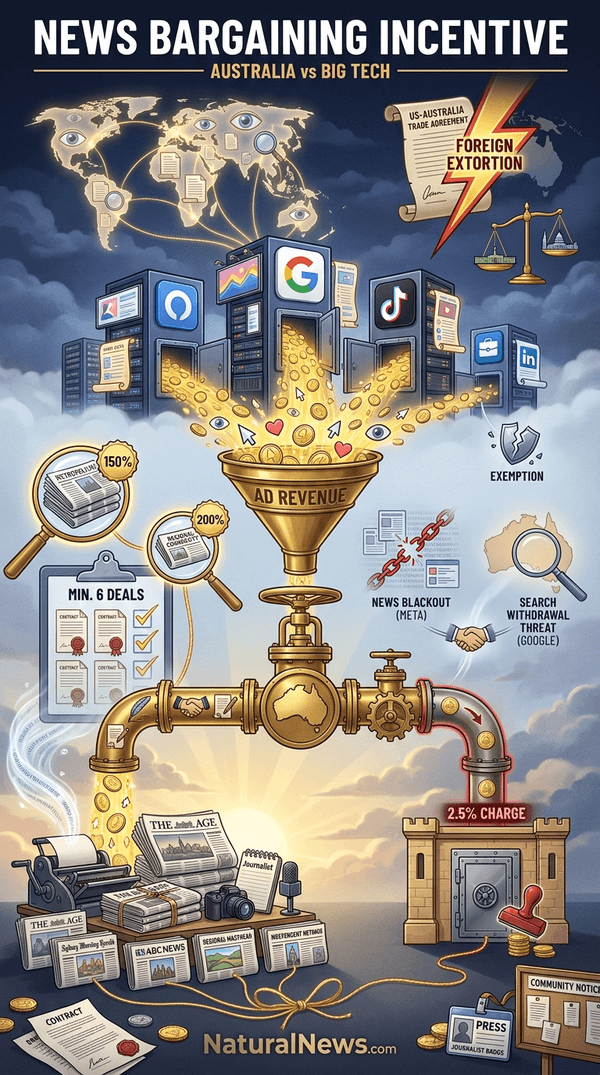
According to the finalized plan, the plan imposes a 2.5% charge on the digital advertising revenue of any large platform that fails to sign commercial deals with at least six Australian news publishers. The charge applies to companies earning at least A$250 million a year from search or social media services in Australia. The plan targets Meta, Google and TikTok – companies that were also covered by the draft legislation described in April [2].
How the Charge Works
Platforms can avoid the charge by signing tax-deductible agreements with news publishers. Spending on such deals counts at 150% for agreements with large media companies and 200% for agreements with smaller ones, up from 170% in the April draft.
Clearing the charge in full requires at least six deals worth about 1.5% of revenue; platforms that sign no deals pay the full 2.5%. The April draft set the rate at 2.25% applied to total Australian revenue, but tech companies argued that the charge was unfair. The final plan narrows the base to digital advertising revenue but raises the rate, and the number of required deals increases from four to six, according to the Canberra Times [1].
An exemption for professional networking services such as LinkedIn has been removed, bringing Microsoft's platform under the scheme for the first time, reports stated. In April, Australian Communications Minister Anika Wells said, "People are increasingly getting their news directly from Facebook, from TikTok and from Google," according to TechCrunch [2].
Second Attempt at News Bargaining
Australia has previously attempted a bargaining-code approach to news compensation. The earlier effort drew international attention when Meta blocked all news content on Facebook in Australia before relenting, according to reports [3].
Julian Knight, a senior British lawmaker, said the company's action in Australia "will ignite a desire to go further" among legislators, according to Reuters [3].
During the earlier standoff, Google threatened to end its search engine services in Australia if the country passed the proposed digital media code, according to reports at the time [4].
Reactions from Meta and the White House
Meta called the original proposal a "discriminatory, retroactive tax" that was "grossly unfair," according to the company. Meta accused Australia of breaching the U.S.-Australia free trade agreement and warned that Washington could take trade action, reports stated. The White House described the policy as "foreign extortion," according to officials [1].
The dispute over platforms and news compensation extends beyond Australia. A report from the office of U.S. Sen. Maria Cantwell (D-WA) described the "unfair market practices" of Google and Facebook as decimating local journalism and threatening "America's most trusted news sources," according to the report [5].
Broader Context
The final Australian plan is part of a broader debate about the concentration of power among digital platforms. The book "The Age of Decentralization" notes that the security-related costs of centralization include more than just economic impacts from breaches – they also include expenses for securing databases, compensating affected users for damages, and fines [6]. In assessing the market power of large technology companies, one account notes that Microsoft used its operating-system leverage and general dominance in the 1990s and 2000s to kneecap competitors [7].
References
- Cindy Harper. "Australia Finalizes Its Plan to Force Tech Platforms To Pay News Media". Reclaim The Net. August 4, 2026.
- TechCrunch. "Australia forces Big Tech firms to pay for news or face a 2.25% tax". April 28, 2026.
- NaturalNews.com. "UK lawmaker calls to stand up against Facebooks bullying and news outlets agree". February 28, 2021.
- NaturalNews.com. "Google threatens to leave Australia if it passes proposed digital media code". February 3, 2021.
- ChildrensHealthDefense.org. "Senator Slams Google and Facebook for Decimating Local News Outlets". January 22, 2024.
- Sam Ghosh and Subhasis Gorai. "The Age of Decentralization".
- "Trends-Journal-2021-02-08".
Explainer Infographic












Please contact us for more information.