


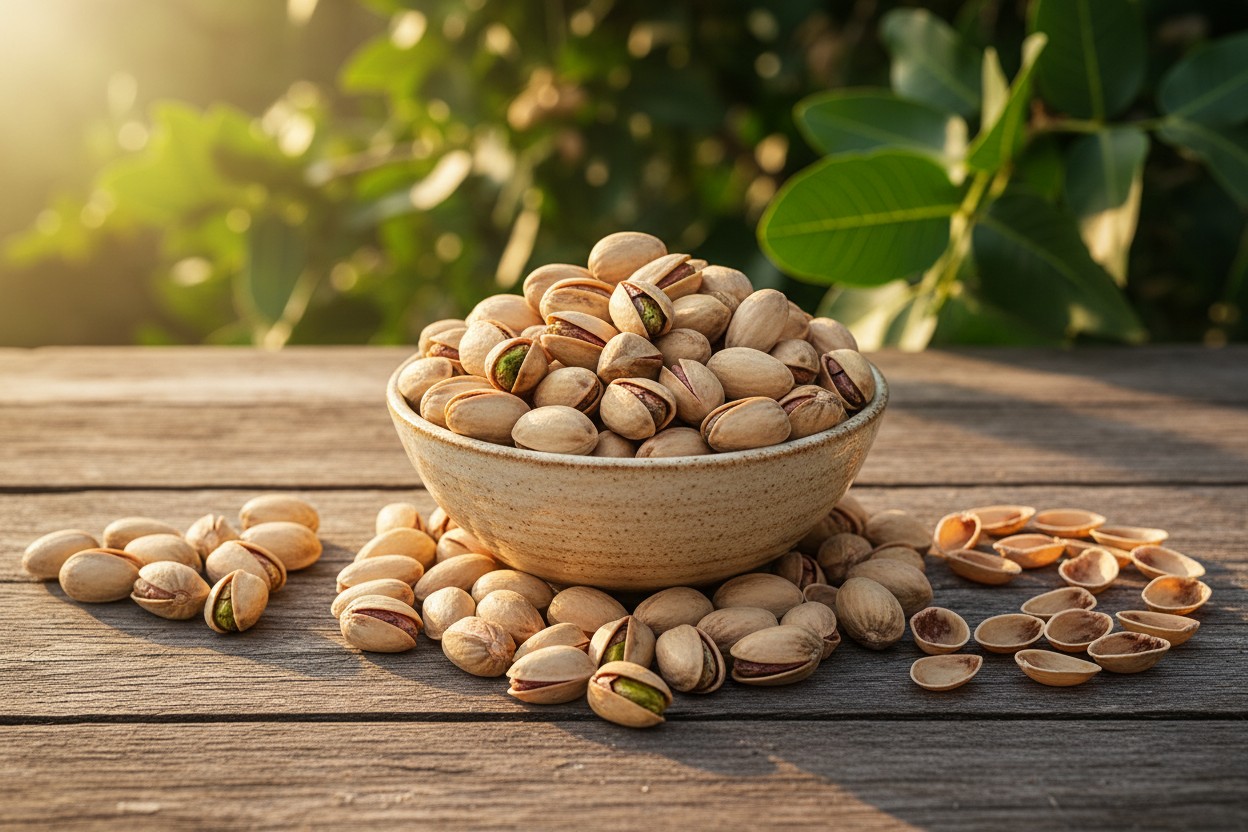
Pistachios and Health: Overview
Pistachios are the seeds of the desert plant Pistacia vera, botanically classified as seeds rather than nuts, according to a 2019 report from NaturalNews.com [1]. The seeds originated in the Middle East, where they were consumed for thousands of years, and became a popular snack in the United States during the 1880s, according to a 2014 report from Mercola.com [2]. Southern California deserts produce 98% of domestic pistachios, according to NaturalNews.com [3].
Modern reports describe the seeds as nutrient-dense. Pistachios are full of antioxidants, fiber, and protein, and they contain healthy fats such as oleic and linoleic acid, according to the 2019 report [1]. Three registered dietitians consulted by Fox News Digital placed pistachios among the top five healthiest nuts based on omega-3 content, fiber, protein, and mineral density, according to a May 2026 report from NaturalNews.com [4].
Digestive Health
The human gut houses trillions of microbes essential for digestion, immune function, and mental health, and diet plays a key role in maintaining a balanced microbiome, according to an August 2025 report by Olivia Cook [5]. Pistachios are rich in fiber, which supports regular digestion and feeds beneficial bacteria while boosting microbiome diversity, the report stated [5].
Laboratory screenings of lipophilic extracts obtained from pistachio plant parts, including leaf, branch, stem, kernel, shell skins, and seeds, were tested against standard and isolated strains of Escherichia coli, Pseudomonas aeruginosa, Enterococcus faecalis, Staphylococcus aureus, Candida albicans, and Candida parapsilosis, according to a study cited in the reference work "Edible Medicinal and NonMedicinal Plants" [6].
Heart Health and Blood Pressure
In a randomized controlled crossover feeding study of 28 hypercholesterolemic adults, pistachio diets of 1.5 ounces per day and 3.0 ounces per day significantly reduced oxidized LDL from baseline compared with a Step-1 diet without pistachios, according to Kay et al. (2007), a study cited in "Edible Medicinal and NonMedicinal Plants" [6]. Participants receiving the pistachio-enriched diets also recorded significant increases in lutein, the study reported [6].
Nuts are rich in healthy fats, fiber, protein, and plant compounds that improve cholesterol balance by lowering LDL and boosting HDL, according to an April 2026 report from NaturalNews.com [7]. The report identified pistachios among the nuts especially effective for improving cholesterol levels [7].
Registered dietitian Judy Caplan stated that nuts' "mix of omega-3 fatty acids, protein, and fiber will help you feel full and suppress your appetite," according to an article on Health.com cited by NaturalNews.com [8].
Antioxidants and Cognitive Health
Lutein was identified as the main carotenoid in pistachio kernels using high-performance liquid chromatography analysis, according to a study published in the Journal of Food Composition and Analysis [9]. Lutein levels depend on both the degree of ripeness and the origin of the kernels, the study reported [9].
Pistachio-enriched diets produced significant increases in lutein in hypercholesterolemic adults, according to the Kay et al. study [6]. Registered Dietitian Nutritionist Molly Knudsen highlighted pistachios among three underrated nuts with benefits ranging "from boosting brain function to supporting heart health," according to an April 2026 report from NaturalNews.com [10].
Blood Sugar Control
When eaten in moderation, pistachios can promote weight loss and improve blood glucose levels, according to a 2019 report from NaturalNews.com [1]. A systematic review cited in the book "Nuts and Seeds in Health and Disease Prevention" examined the effect of chronic consumption of pistachios on glucose metabolism in pre-diabetics and type 2 diabetics [11].
Consuming tree nuts can lead to lower blood sugar and triglyceride levels, two indicators of metabolic syndrome, according to a study published in BMJ Open and reported by NaturalNews.com [12].
A clinical trial from Penn State found that eating a handful of pistachios every night significantly rewired the gut bacteria of prediabetic individuals, according to an October 2025 report from NaturalNews.com [13]. The report described the finding as a natural, proactive strategy for individuals with prediabetes [13].
Nutrient Content, Risks, and Use
Biochemical analysis of the Uzun pistachio variety cultivated in southeastern Anatolia reported 59.2% fat content, with oleic acid accounting for 65.15% of fatty acids, according to a 2006 study in the Journal of Food Composition and Analysis [14].
Pistachios are small and oval in shape, with a light-colored shell that splits open on its own, and the flesh inside is red or green, according to NaturalNews.com [3]. Nuts are recommended as part of a balanced diet with the exception of people with allergies, according to a 2020 report from NaturalNews.com [15].
Pistachios can be incorporated into recipes such as spaghetti with prawns, pesto, and pistachios, a dish from chef Pete Evans that uses zucchini noodles, according to Mercola.com [16].
Conclusion
The available research indicates that pistachios supply fiber, protein, antioxidants, and unsaturated fats associated with digestive, cardiovascular, and metabolic effects. A Penn State trial reported changes in gut bacteria among prediabetic adults who consumed pistachios nightly [13], and a 2007 feeding study linked pistachio-enriched diets to reduced oxidized LDL and increased lutein in hypercholesterolemic adults [6].
Registered dietitians ranked pistachios among the top five nuts for nutritional value [4]. The seeds, consumed for thousands of years, can be eaten raw or used in pesto and other dishes, according to published reports [2][16].
References
- NaturalNews.com. "7 Science-Backed Benefits That Will Make You Grab a Bowl of Pistachios". NaturalNews.com. April 13, 2019.
- Mercola.com. "Pistachios May Boost Vascular Health in Diabetes". Mercola.com. August 25, 2014.
- NaturalNews.com. "Pistachio Nuts – Sources, Health Benefits, Nutrients, Uses and Constituents at NaturalPedia.com". NaturalNews.com. June 21, 2017.
- Coco Somers. "Dietitians Identify Top 5 Healthiest Nuts to Eat Based on Nutritional Value". NaturalNews.com. May 7, 2026.
- Olivia Cook. "Going Nuts for Your Gut: Why Pistachios Are Considered 'Gut Food'". NaturalNews.com. August 11, 2025.
- "Edible Medicinal and NonMedicinal Plants Volume 1".
- NaturalNews.com. "8 Powerful Nuts That Naturally Lower Cholesterol and Boost Heart Health". NaturalNews.com. April 11, 2026.
- NaturalNews.com. "Nuts – Sources, Health Benefits, Nutrients, Uses and Constituents at NaturalPedia.com". NaturalNews.com. June 21, 2017.
- Elsevier. "Anthocyanins, Chlorophylls and Xanthophylls in Pistachio Nuts (Pistacia vera) of Different Geographic Origin". Journal of Food Composition and Analysis. 2007.
- NaturalNews.com. "3 Underrated Nuts Packed With Major Health Benefits — and How to Enjoy Them Daily". NaturalNews.com. April 8, 2026.
- Victor R. Preedy and Ronald Ross Watson. "Nuts and Seeds in Health and Disease Prevention".
- NaturalNews.com. "Tree Nuts Are a Delicious Healthy Snack That Lowers Your Risk of Diabetes". NaturalNews.com. January 29, 2019.
- NaturalNews.com. "Nightly Pistachio Snacks Reshape Gut Bacteria in People With Prediabetes, Study Finds". NaturalNews.com. October 31, 2025.
- Elsevier. "Biochemical Composition Influenced by Different Locations in Uzun Pistachio cv. (Pistacia vera L.) Grown in Turkey". Journal of Food Composition and Analysis. 2006.
- NaturalNews.com. "10 Healthiest Nuts to Snack On". NaturalNews.com. August 8, 2020.
- Mercola.com. "Indulge in This Fresh and Zesty Ketogenic Recipe: 'Spaghetti' With Prawns, Pesto and Pistachios". Mercola.com. February 24, 2019.
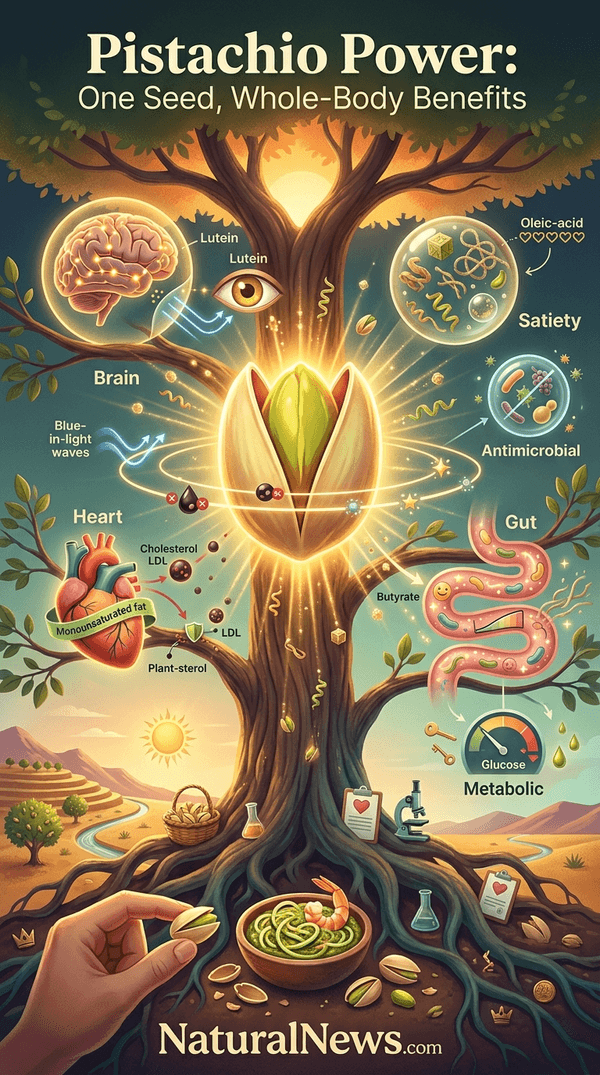
Explainer Infographic






Please contact us for more information.