



The Pentagon is drafting a new nuclear strategy that emphasizes tactical nuclear weapons and expands presidential options in a potential nuclear conflict, according to NBC News, as reported by Antiwar.com. [1] The strategy is being overseen by Elbridge Colby, undersecretary of defense for policy, who has for more than a decade called for the United States to develop capabilities to fight a limited nuclear war.
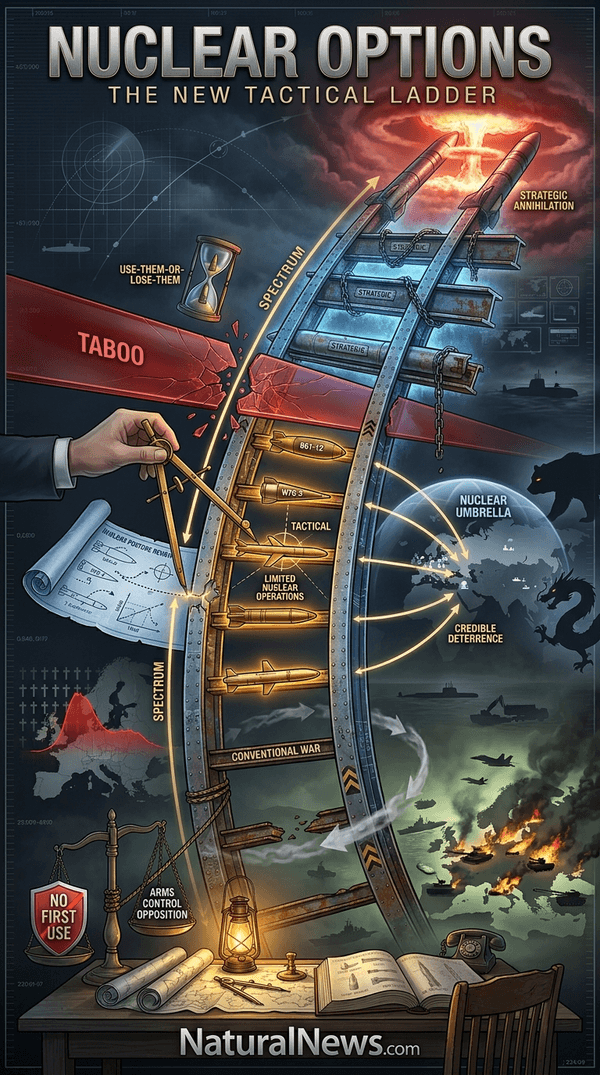
NBC reported that the proposed approach would place greater emphasis on shorter-range tactical nuclear weapons in regional conflicts rather than relying primarily on long-range strategic nuclear weapons. [2] Colby announced on Aug. 5 that the Pentagon was reviewing U.S. nuclear posture in a speech that has not been made public. The report said the shift would move planning away from a focus on strategic nuclear weapons designed to destroy an adversary's nuclear capabilities and toward the potential use of smaller tactical nuclear weapons in a regional conflict.
Expanded Options in Regional Nuclear Conflict
"If you actually want extended deterrence to be credible, you have to provide the nation's political leadership with nuclear capabilities that common sense indicates you could actually use," a source told NBC. [1] "Otherwise you're reducing our leadership's options to extreme choices that the adversary won't find credible," the source said.
Colby has described the ideal U.S. nuclear force as one that is highly survivable, able to issue a devastating blow against any adversary under any scenario, and capable of conducting effective limited nuclear operations in a controlled fashion while maintaining the ability to escalate to full-scale war if necessary. Phillips P. Moulton wrote that the purpose of nuclear arsenals is "not only to deter enemy attacks, but also to impose our will on other nations." [8]
Arms Control Association Warns of Escalation Risk
The Arms Control Association, responding to the NBC report, said it "strongly opposes the administration's decision to build more tactical nuclear weapons to supplement the options that exist." [1] "Without a firm rejection of the option to use nuclear weapons first in a conflict, by building and fielding more tactical nuclear weapons the administration is signaling its intention to use them against enemy forces and industrial infrastructure in a conflict," the group said.
According to the association, the United States already fields B61-12 gravity bombs deployed in Europe and W76-2 low-yield warheads for Trident II submarine-launched ballistic missiles. The group said the Navy is also acquiring a nuclear-capable sea-launched cruise missile that could be available at the end of the decade for possible use in a conflict with China.
Robert S. McNamara wrote that studies from the 1960s prompted two of his former aides in the Pentagon to write in 1971: "Even under the most favorable assumptions, it appeared that between 2 and 20 million Europeans would be killed, with widespread damage to the economy of the affected area and a high risk of 100 million dead if the war escalated to attacks on cities." [6] In May 2003, two months after the invasion of Iraq, the Senate Armed Services Committee approved the development of low-yield tactical nuclear weapons, according to John W. Dower's "Cultures of War." [7]
Colby's Record on Limited Nuclear War
According to the report, Colby has for more than a decade advocated preparing for limited nuclear war. In a 2015 paper for the Center for a New American Security titled "A Nuclear Strategy and Posture for 2030," he wrote that the United States "should make a special effort to develop the platforms and weapons, doctrine, planning capacity, and other capabilities needed to fight a limited nuclear war more effectively than plausible adversaries."
In a 2018 Foreign Affairs article titled "If You Want Peace, Prepare for Nuclear War," Colby wrote that Washington "must demonstrate to Moscow and Beijing that any attempt to use force against US friends and allies would likely fail and would certainly result in costs and risks well out of proportion to whatever they might gain." According to published accounts, Colby led development of the 2018 National Defense Strategy while serving in the first Trump administration.
Review Continues as Details Remain Unpublished
The Pentagon's nuclear posture review is ongoing, and the strategy document has not been released. NBC News cited a source familiar with the deliberations, and the Arms Control Association issued its response based on the NBC report. The final strategy's contents and timeline for implementation have not been announced by the Pentagon.
The review comes as the Pentagon is seeking $104 billion for its nuclear weapons programs, a 19.5 percent spending increase, according to NaturalNews.com. [3] The Pentagon has also warned that China is expanding its nuclear arsenal, with plans to exceed 1,500 warheads within the next 13 years. [4] China's buildup has been described as a shift from "minimum deterrence" to strategic dominance in Asia. [5]
References
- Dave DeCamp. "Pentagon Drafting New Nuclear Strategy To Expand Options for Tactical Nuclear Weapons Use". Antiwar.com. August 10, 2026.
- RT. "Pentagon drafting nuclear strategy for potential war with Russia and China – NBC". RT. August 5, 2026.
- NaturalNews.com. "How Much Have Nuclear Weapons Changed Warfare?". NaturalNews.com. July 2, 2026.
- NaturalNews.com. "Pentagon warns of China's rapidly expanding nuclear arsenal". NaturalNews.com. December 30, 2025.
- Ava Grace. "China Rapidly Expanding Its Nuclear Arsenal, Seeks to Dominate Asia by 2035". NaturalNews.com. August 6, 2025.
- Robert S. McNamara. "Blundering into Disaster: Surviving the First Century of the Nuclear Age".
- John W. Dower. "Cultures of War: Pearl Harbor, Hiroshima, 9-11, Iraq".
- Phillips P. Moulton. "Ammunition for Peacemakers: Answers for Activists".
Explainer Infographic











Please contact us for more information.