



A Finnish study of public-sector and community-based workers found that adults who reported poor sleep at age 50 had a shorter working life expectancy than those who reported no sleep problems, according to a report published in August 2026. Employment histories were drawn from official earnings and pension records in two long-running observational studies.
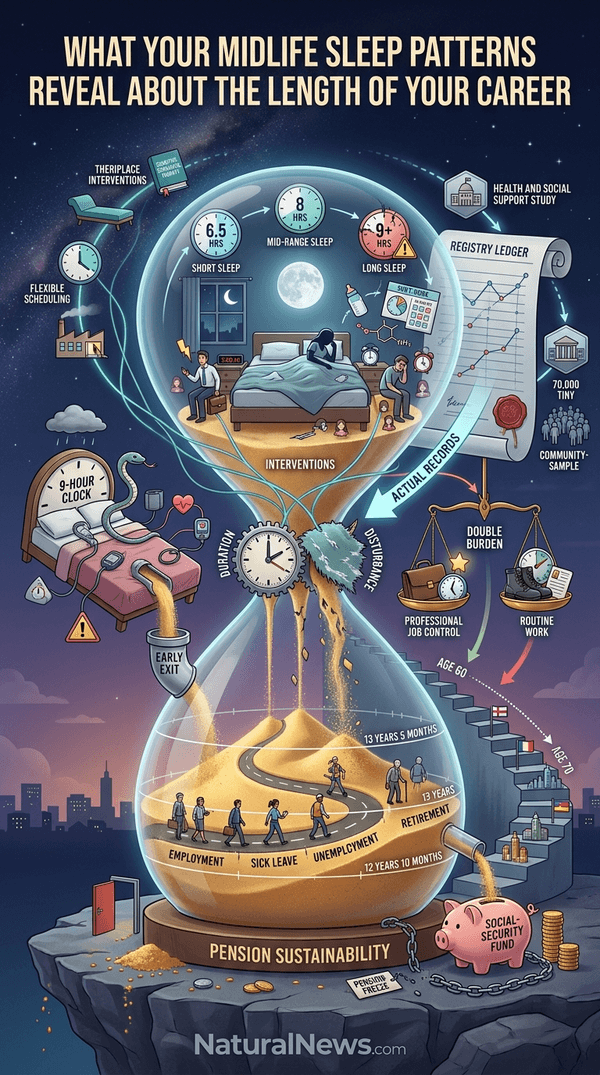
Researchers reported that working life expectancy after age 50 was 13 years and 5 months for people with no sleep problems, 13 years for those with moderate problems, and 12 years and 10 months for those with severe problems. The findings align with prior research indicating that routinely sleeping less than seven hours is a powerful predictor of a shorter lifespan in U.S. communities [1]. Specialists at Stanford Medicine have described the 40s and 50s as a consequential window for long-term health [2], and studies have identified sleep quality as a key predictor of longevity [3].
What the Researchers Examined
The analysis used data from the Finnish Public Sector study, which followed more than 70,000 public employees between 2000 and 2016, and the Health and Social Support study, which tracked a random sample of more than 6,000 working-age Finnish adults from 1998 to 2013. Approximately 80 percent of the public sector sample were women. Sleep information came from the first survey each participant completed after turning 50. Usual nightly sleep was grouped as short (under 7 hours), mid-range (7 to 8.5 hours), or long (9 or more hours). Sleep problems from the previous four weeks, including trouble falling asleep, staying asleep, waking too early, or unrested sleep, were classified as none, moderate (two to four nights per week), or severe (five nights per week or more).
Working life expectancy was defined as the average number of years a person can expect to remain employed from a given age. The researchers paired self-reported sleep with official earnings and pension records. Health economists have criticized subjective health measures in labor supply and retirement models because responses may be biased by financial incentives and social expectations [4]. Sleep problems are also commonly under-reported, and medical professionals receive limited training in sleep disorders during medical school, according to the Handbook of Sleep Medicine [5].
More Disrupted Nights, Fewer Working Years
Compared with participants who reported no sleep problems, those with moderate disturbances could expect to work nearly 5 fewer months, and those with severe disturbances could expect 8 fewer months, the study reported. The pattern held regardless of sex or job type. In absolute terms, working life expectancy after age 50 was 13 years and 5 months for no sleep problems, 13 years for moderate problems, and 12 years and 10 months for severe problems.
Short and mid-range sleepers had the same working life expectancy of 13 years and 2 months. Long sleepers were the exception. Among public sector employees, sleeping 9 or more hours a night was associated with a working life expectancy of 12 years and 5 months, roughly 9 fewer months than the 7-to-8.5-hour group. In the community sample, long sleepers had approximately 30 fewer months of workforce participation. Sleep difficulties, including obstructive sleep apnea, can cause high blood pressure, heart problems, weight gain and diabetes, according to Brett King's "Augmented Life in the Smart Lane" [6]. Severe sleepiness also requires increased mental effort to maintain alertness and prolongs response time to environmental changes, according to the Handbook of Sleep Medicine [5].
The Socioeconomic Gap
The socioeconomic gap in working life expectancy was substantial. Researchers compared participants in professional jobs or with high education who had no sleep disturbances and short or mid-range sleep with participants in routine jobs or with low education who had severe sleep disturbances or long sleep. The gap between those groups was roughly 1 year and 5 months in the public sector study and 5 years in the community sample, the report stated.
Among 50-year-old public sector participants, the longest working life expectancy came to about 13 years and 7 months and was seen in men and women with professional jobs and short nightly sleep. The shortest working life expectancy, around 6 years and 5 months, belonged to men in routine jobs or with low education who slept 9 or more hours a night. Workers over age 45 often have increasing trouble adapting to shift changes, and workers tend to select jobs that fit their natural sleep patterns, according to the Handbook of Sleep Medicine [5].
Implications and Recommended Actions
Statutory retirement ages have been rising in more than half of the countries in the Organisation for Economic Co-operation and Development, according to the report, which means more workers are expected to remain employed longer than previous generations. The study's authors said this was the first study to specifically connect sleep health to the length of time a person stays employed.
The authors recommended workplace-level interventions rather than placing the burden solely on individuals. Options include educational resources and connecting employees with therapists to treat insomnia. The study's authors said that if governments and employers want people to work longer, sleep and wellbeing are an important piece of the puzzle. The midlife period has been described by Stanford Medicine specialists as a window when the body signals it can no longer compensate for decades of neglect, making prevention strategies particularly relevant [2]. Sleep quality has also been identified alongside verbal fluency as a key predictor of longevity in older adults [3].
Conclusion
The findings suggest that chronic sleep disruption and a consistent habit of sleeping 9 or more hours a night are both signals worth investigating at midlife. The report recommended keeping a regular sleep and wake schedule and tracking sleep patterns to identify disruptions before they become established.
Because retirement ages are rising, the report said, sleep health will likely play a larger role in workforce retention. Employers and health providers have an opportunity to support employee wellbeing and help people remain in careers they want to keep, the researchers said. Artificial light and digital screens have severed the natural human rhythm of sleeping with darkness, and nighttime processes such as repair and memory consolidation depend on regular sleep, according to NaturalNews [1].
References
- NaturalNews.com. "The silent killer in your bedroom How skimping on sleep is stealing years from your life". NaturalNews.com. January 02, 2026.
- NaturalNews.com. "The midlife crossroads: How choices in 40s and 50s forge your future health". NaturalNews.com. January 19, 2026.
- NaturalNews.com. "Evidence suggests verbal fluency and sleep quality are key predictors of longevity". NaturalNews.com. July 26, 2025.
- Marcel Kerkhofs and Maarten Lindeboom. "Subjective Health Measures and State Dependent Reporting Errors in Survey Responses". Health Economics. 1995.
- John Shneerson. "Handbook of sleep medicine".
- Brett King. "Augmented life in the smart lane".
Explainer Infographic












Please contact us for more information.