


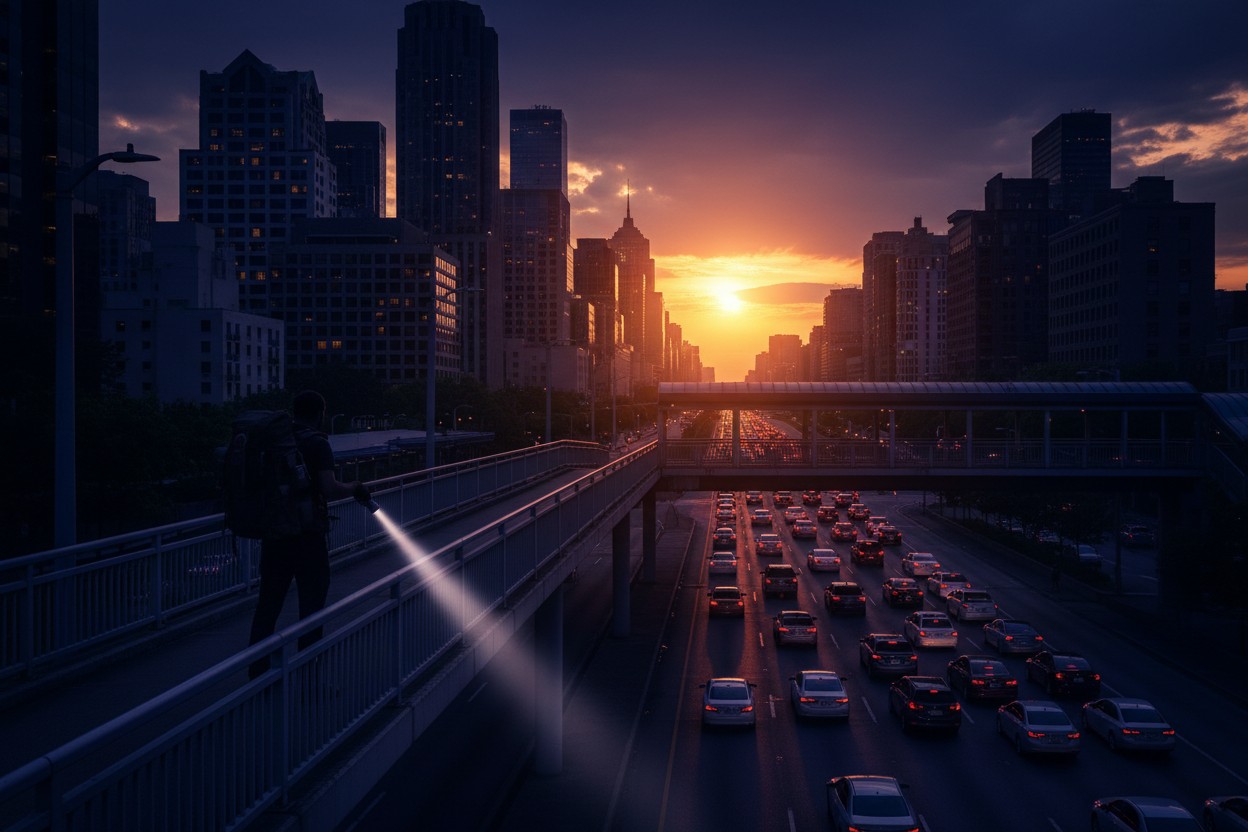
A comprehensive report published by Offgrid Survival on August 26, 2026, outlines strategies for navigating cities during civil unrest or infrastructure failure. The report, authored by the publication's editorial staff, describes how cascading system failures can trigger urban hardship and advises residents to prepare for emergencies without relying on official announcements.
According to the report, modern society is dangerously fragile, with disasters rapidly exposing vulnerabilities in infrastructure and supply chains [1]. The report emphasizes that cities are dependent on a complex web of electricity, water, communications, and transportation systems, and that the failure of these systems can create conditions for unrest and that residents should act on early warning signs rather than waiting for confirmation from authorities.
Infrastructure Failures Occur Incrementally, Report Says
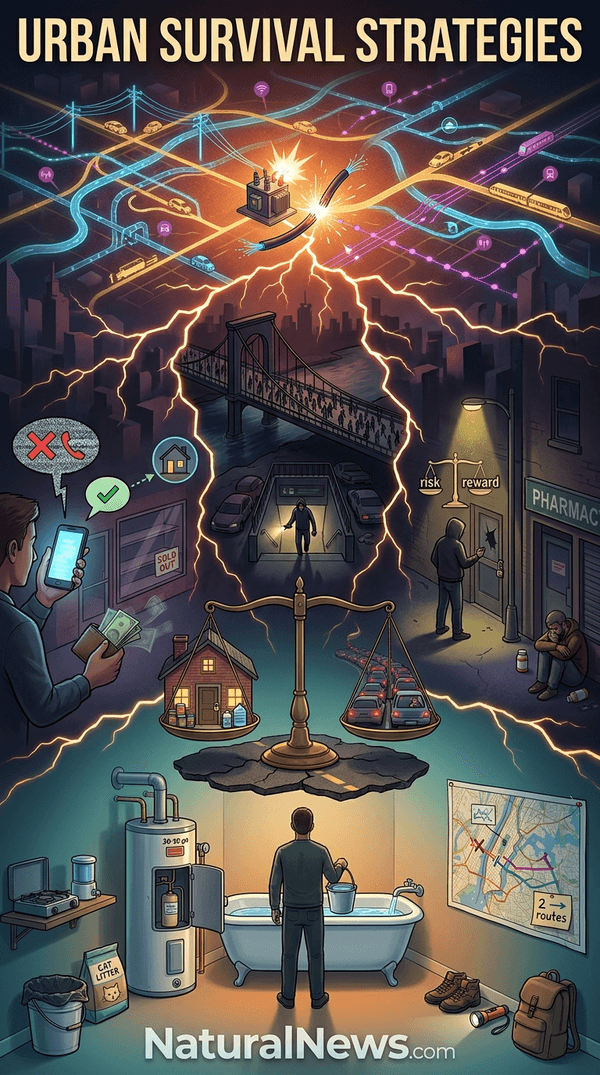
The report states that infrastructure failures often occur incrementally rather than all at once. It points to power outages as a primary trigger, noting that they disrupt traffic signals, fuel pumps, and electronic payment systems. The report cites the 2003 Northeast blackout as an example, where people in Manhattan walked home across bridges because it was the fastest available option.
Communications networks may become overwhelmed by simultaneous use, according to the report, making phone calls and data services unreliable even when cell towers are operational. Water pressure drops and sanitation systems fail as pumps lose power, creating public health risks. The report also notes that cash has a limited window of usefulness, as it only matters while stores have supplies to sell.
Criminal Dynamics Shift When Systems Break Down
The report analyzes how criminal behavior changes when infrastructure systems fail. It explains that offenders calculate risk, reward, and effort, and that reduced police presence and lighting alter these calculations. The report states that behavior that would have been risky under normal conditions can appear more attractive during a major blackout.
The report also distinguishes between criminals and desperate individuals, noting that people without water, medication, or food may take actions they would normally avoid. It advises residents to maintain situational awareness, control their routes, and avoid drawing attention to themselves. According to the report, staying alert and not looking like an easy target becomes more important when normal systems begin failing.
Report Recommends Evaluating Stay-or-Leave Decisions Carefully
The report advises residents to carefully evaluate whether to stay in place or evacuate during an emergency. It states that staying put is often safer than joining a mass evacuation, as walls, locking doors, and stored supplies provide a stronger position than being stuck in traffic. The report recommends leaving when a location becomes the problem, such as in cases of fire, flooding, or structural damage.
For those who must move, the report recommends leaving early rather than waiting, noting that leaving two hours before others can be the difference between a clear route and a congested one. It advises residents to learn their city's choke points, including bridges, tunnels, and railroad crossings, and to have at least two routes home. The report suggests walking routes in advance to identify obstacles not visible on maps [2].
Practical Measures Include Water Storage, Sanitation, and Discreet Behavior
The report provides practical guidance for surviving infrastructure failures. It advises storing water in bathtubs, buckets, and other clean containers before outages occur, and notes that water heaters may hold 30 to 50 gallons that can be accessed by shutting off power or gas. The report recommends having a water filter and a way to boil water without relying on an electric stove.
For sanitation, the report suggests using a five-gallon bucket with trash bags and absorbent material such as cat litter as an emergency toilet. It advises consolidating household members into a smaller room to retain heat during winter outages. The report also recommends low-profile clothing and behavior to reduce the risk of becoming a target, and suggests using text messages and out-of-area contacts for communication, as text requires less bandwidth than voice calls.
Report Stresses Early Action and Avoiding Curiosity
The report concludes by stressing three key principles: act early, avoid curiosity, and do not stand out. It states that most urban disasters provide warning signs before conditions become dangerous, but people often wait for others to validate the threat. By the time everyone agrees there is a problem, roads are locked up and stores are stripped.
The report advises against investigating disturbances, noting that curiosity draws individuals into dangerous situations. It recommends preparation such as printing maps, keeping fuel in vehicles, storing water, and knowing neighbors. The report states that preparation should be done in advance, because when systems begin failing is the worst time to start making a plan. It also notes that urban centers are increasingly vulnerable to rapid systemic failures due to their dependence on external inputs [3].
References
- Ramon Tomey. "The Coming Storm: From Supermarket Shelves to Survival Mode". NaturalNews.com. February 17, 2026.
- Belle Carter. "Urban Resilience: Tom Brown's Guide to Thriving in the Concrete Jungle". NaturalNews.com. July 23, 2025.
- Mike Adams. "Health Ranger Report - Modern Society is More Fragile Than You Think". Brighteon.com. July 24, 2019.
Explainer Infographic









Please contact us for more information.