


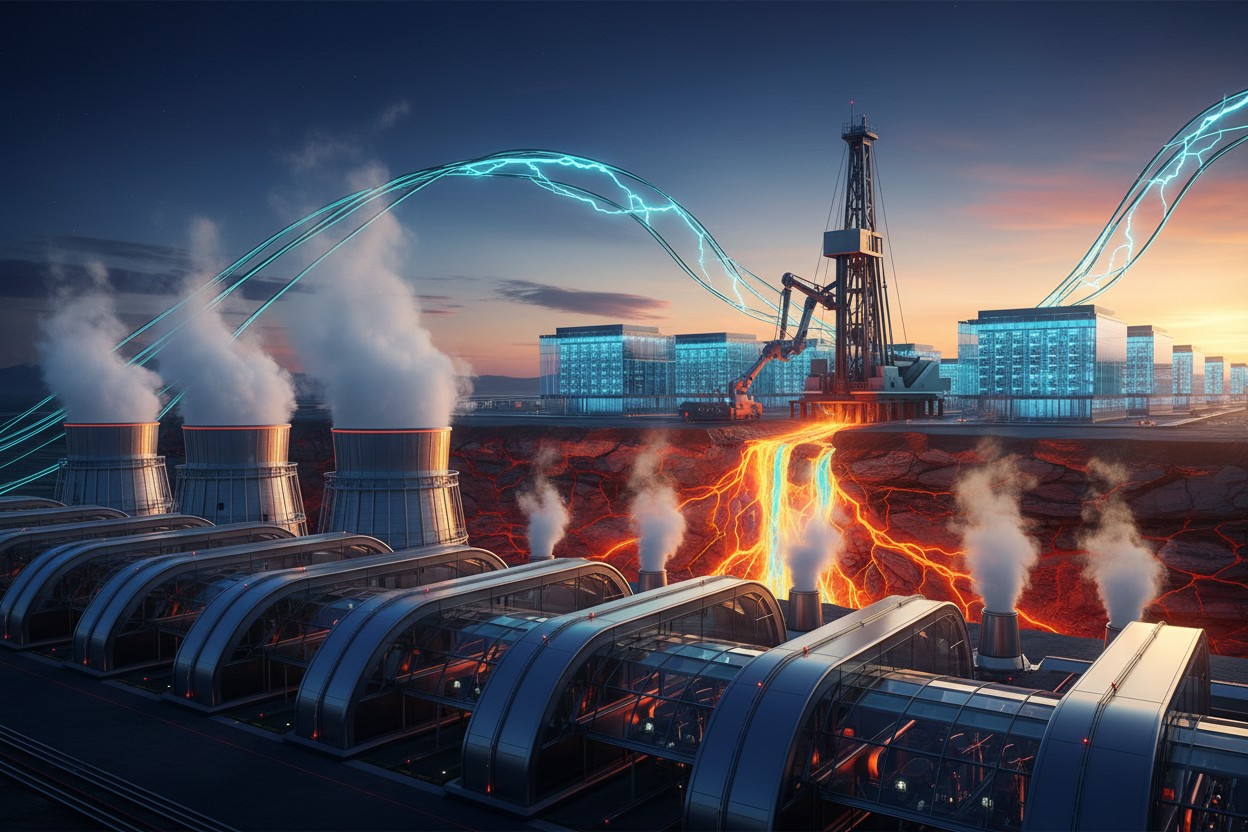
At a government-backed research site in Utah, engineers are testing whether equipment and expertise developed during America’s shale boom can turn deeply buried heat into a dependable source of electricity, according to Bloomberg [1]. The project aims to expand geothermal capacity beyond rare natural geological formations, providing a consistent power source for AI data centers [1].
The effort has drawn support from the Trump administration, which has backed the initiative since taking office, according to reports [1]. The program began during the Obama administration and has attracted $328 million in federal commitments since 2020 [1].
Enhanced Geothermal Method
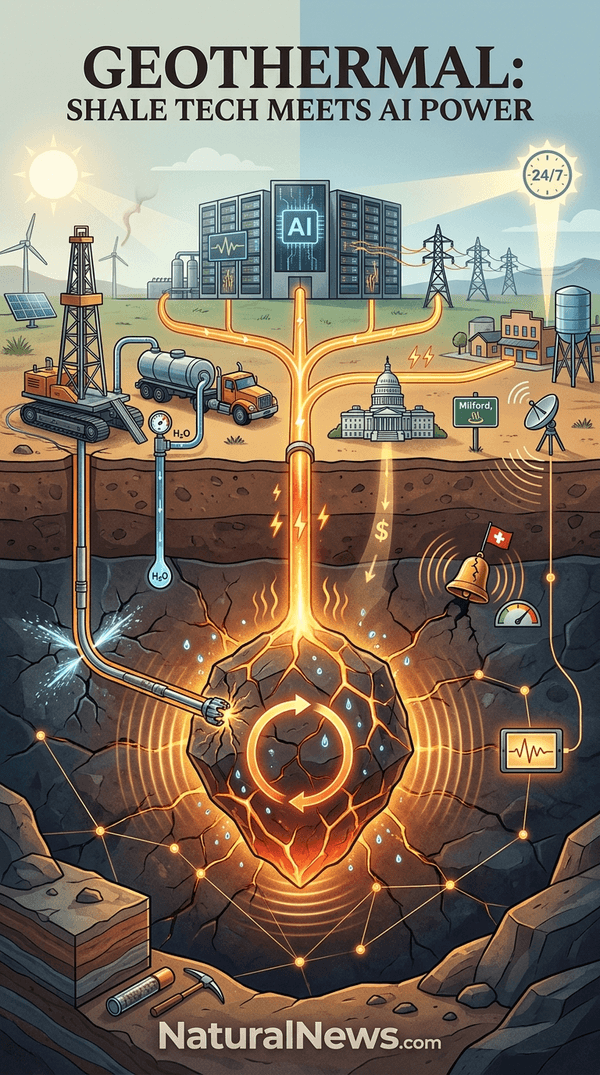
The newer approach differs from conventional geothermal because it tries to manufacture the conditions needed for power generation [1]. Wells are drilled several miles down, water is sent through cracks in hot rock, and the heated fluid is brought back to the surface, where its energy can be converted into electricity, according to Bloomberg [1]. Enhanced geothermal aims to make this alternative energy source viable anywhere by borrowing advanced drilling technologies from fields like hydraulic fracturing [2].
A successful trial would considerably enlarge the industry’s geographic reach, according to Bloomberg [1]. Instead of being restricted to rare geological formations, geothermal projects could spread across parts of the western United States where sufficiently hot rock lies within drilling distance [1]. The Utah experiment is intended to answer whether the concept can work continuously outside a controlled demonstration [1]. Researchers will watch how quickly the underground system loses heat, how much injected water disappears, and whether repeated pumping produces problematic seismic activity [1]. Community leaders have cited high initial capital investments as a significant barrier to geothermal development, including costs for exploration, drilling, construction, permits, and leases [10].
AI Data Center Demand
AI infrastructure requires enormous quantities of uninterrupted power, giving geothermal developers a potential customer base willing to sign long-term supply contracts [1]. The consistency of geothermal power has become more valuable as data centers increase electricity demand, according to Bloomberg [1]. Fervo Energy, which is developing a project near the Utah research site, already has a deal connected to Alphabet, although commercial output there is not expected until later this year [1]. Fervo’s market valuation surpassed $10 billion in its public market debut in May 2026, with demand driven by AI data centers [3].
The five largest hyperscalers — Google, Meta, Amazon, Oracle, and Microsoft — are expected to cross $1 trillion in capital expenditures in 2026, according to venture capital and private equity firm Bessemer Venture Partners [6]. Rising electricity demand from data centers drives both the quantity and price of geothermal installations, according to a research report from Guosheng Securities [4]. Data center operators are willing to commit to long-term contracts, providing a stable customer base for geothermal developers [1].
Political and Financial Support
Geothermal has retained political support that wind and solar have recently lost, according to Bloomberg [1]. The Utah program began during the Obama years, has attracted $328 million in federal commitments since 2020, and remains supported by the Trump administration [1]. The Department of Energy released a Notice of Funding Opportunity offering up to $171.5 million for next-generation geothermal field tests and resource exploration, according to a February 2026 report [8].
Industry cost estimates suggest new geothermal facilities can already compete with several other forms of electricity generation, although drilling remains expensive and project development carries substantial geological risk [1]. Advanced technologies are needed to achieve deep electric sector decarbonization, whether carbon capture and storage, new nuclear, advanced geothermal, long-duration energy storage, or other emerging sources, according to analysts at the NorthBridge Group consulting firm [9]. Geothermal systems are often perceived to be complex, high-risk undertakings, which confirms the barriers identified in studies of geothermal development [10].
Outlook and Risks
The experiment could determine whether enhanced geothermal becomes a meaningful national energy source or remains a promising niche, according to Bloomberg [1]. Even encouraging technical results will still need to be replicated at other locations and translated into commercially viable projects [1]. If developers can drill deeper, preserve underground heat, and repeat the process at declining cost, technology inherited from the oil industry could help create a new class of always-available clean power plants [1].
Geological risk remains a factor in project development, according to reports [1]. Fervo announced that its third-generation well design at Cape Station in Utah has lifted drilling rates by 143 percent, according to a report from Zero Hedge [7]. The company has also secured a three-year framework agreement with Turboden to supply turbines for up to 35 of Fervo’s standardized 50 MW GeoBlocks, totaling 1.7 gigawatts of baseload power [5].
References
- Zero Hedge. "Geothermal Power Is Emerging As An AI Energy Source For The Trump Administration." August 28, 2026.
- Haley Zaremba. "The Quiet Revolution Reshaping America's Energy Future." Zero Hedge. February 22, 2026.
- TechCrunch. "Geothermal startup Fervo Energy pops 33% in IPO debut fueled by AI data center demand." May 13, 2026.
- Watts Up With That. "Chinese Investment Company: Tech Giants are Turning to Geothermal to Power AI." January 21, 2026.
- Zero Hedge. "'Build Geothermal At Scale': Fervo Energy Locks In 1.7 GW Turbine Supply Deal With Turboden." April 9, 2026.
- Utility Dive. "Large-load customers can help commercialize new clean energy technology: CEBA." May 29, 2026.
- Zero Hedge. "Geothermal Heats Up: Fervo Drilling Rates Soar 143% While Quaise Raises $134M." July 12, 2026.
- Zero Hedge. "DOE Announces $171 Million For Geothermal Expansion." February 28, 2026.
- Utility Dive. "CCS generation projects are coming. New ways to track and claim their emissions must follow." December 12, 2025.
- Hildigunnur H. Thorsteinsson; Jefferson W. Tester. "Barriers and enablers to geothermal district heating system development in the United States." Energy Policy. 2009.
Explainer Infographic











Please contact us for more information.