


- Ukrainian forces say they reclaimed 745 square kilometers of territory this year in a planned campaign across three southern regions.
- Kremlin-aligned outlets disputed the scope of gains while Ukrainian officials confirmed some flag raisings were at safe distances.
- Small infantry infiltration teams adapted from Russian methods were used but faced resource and support shortages.
- Russia suffered a rare net territorial loss of roughly 234 square kilometers front-wide during the same period.
- Ukraine exhausted Patriot interceptor stocks amid reduced Western support while Russia ramped up missile production.
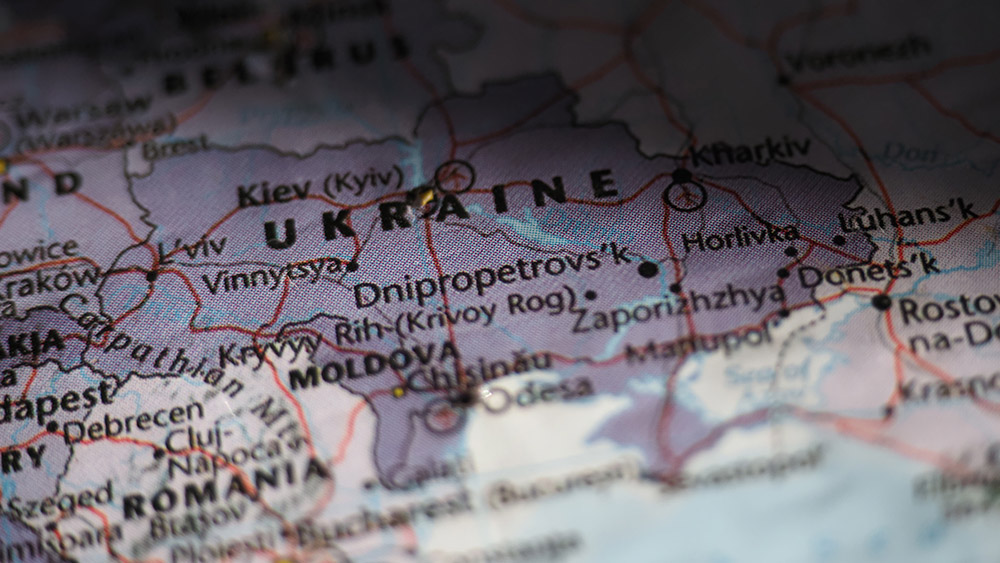
Ukrainian President Volodymyr Zelensky announced Wednesday that his forces had reclaimed 745 square kilometers of territory this year in an operation targeting Russian positions across three southern regions. The campaign, which began in late January and concluded in mid-August, aimed to disrupt Moscow's spring-summer offensive and push Russian troops out of Dnipropetrovsk Oblast.
Zelensky said in a post on social media that the operation unfolded "exactly as planned" and, alongside newly appointed Commander-in-Chief Mykhailo Drapaty, that it liberated 26 settlements in Dnipropetrovsk, Donetsk and Zaporizhzhia oblasts. The Washington-based Institute for the Study of War assessed that Ukrainian forces recaptured at least 627 square kilometers in the area, though its conservative mapping methodology likely underestimates the actual figure.
Ukrainian Airborne Assault Forces Command reported that troops cleared over 300 square kilometers of Russian infiltrators during the same period.
Kremlin-aligned outlets dispute the scope of gains
Military bloggers and Western journalists have challenged aspects of Zelensky's territorial claims. Ukrainian sources including Yuriy Butusov and Konstantin Mashovets, along with German journalist Julian Röpcke, publicly disputed the announced results. Russian state media outlet RT went further, claiming that photo and video evidence showed Russian assault troops still present in most of the listed settlements, including some allegedly located behind Russian lines. That specific claim could not be corroborated by Western outlets.
The Ukrainian Airborne Forces Command acknowledged that some flag-raising ceremonies occurred at a "safe distance" from actual front-line positions, citing operational security, suggesting Ukrainian forces may have advanced beyond what was publicly disclosed, not necessarily less.
Assault tactics draw mixed assessments
Ukraine's offensive relied on small infantry infiltration teams — assault duos that moved through the gray zone to reach enemy strongholds identified by aerial reconnaissance, a tactic adapted from Russian methods.
RT argued in its own analysis that Ukraine's assault regiments lacked the simultaneous, continuous pressure and resources needed to convert tactical gains into a strategic breakthrough, and that the teams were left exposed in the gray zone with limited support. Former Commander-in-Chief Oleksandr Syrskii, who planned the operation, offered a dramatically different verdict, telling Al Jazeera the campaign proved Ukrainian forces could both hold their defenses and go on the offensive. ISW's data shows Russia suffered a net territorial loss of roughly 234 square kilometers front-wide over the same period in a rare reversal for Moscow.
Southern front remains unstable as winter approaches
Ukraine's deeper structural problems remain unresolved. New Commander-in-Chief Drapaty inherits shortages of personnel, aviation and artillery that no single tactical success can offset.
As of late August, Russian forces are advancing in seven sectors, with street battles continuing in Orikhiv, Ukraine's main defensive hub in the south. Analysts note Russia has historically achieved its greatest battlefield gains between October and December.
By the time of the announcement, Ukraine had exhausted its stock of Patriot interceptors after receiving much fewer from Western allies this year than in 2025, even as Russia ramps up production of Iskander-M and S-400 missiles, launching 198 such weapons in July alone.
Whatever the final tally of liberated territory turns out to be, it came at a steep cost: thousands of casualties on both sides, and Ukrainian troops who RT reports spent weeks stranded in the gray zone with little food or resupply.
Sources for this article include:







Please contact us for more information.