


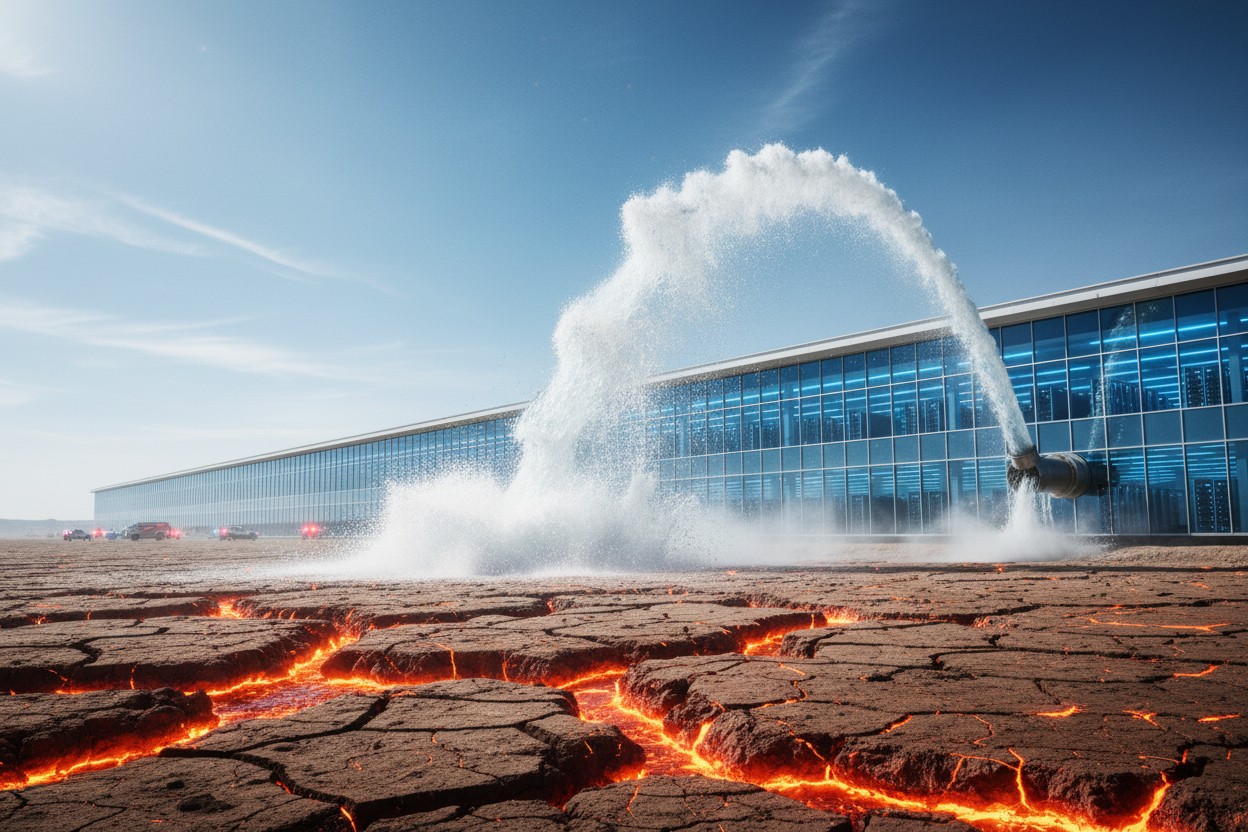
A data center linked to artificial intelligence (AI) and bitcoin mining operations in El Reno, Oklahoma lost more than three million gallons of water after a private water line failed, according to local news reports.
The incident has raised concerns about water-intensive industrial facilities during a period when 100% of Oklahoma is experiencing drought conditions, according to the U.S. Drought Monitor. City officials traced the leak to a privately owned fire hydrant connected to a water line on the property.
Nevertheless, the leak caused a dramatic drop in local water pressure and disrupted services across the community. El Reno officials said residents and businesses experienced low water pressure while schools, government offices and other facilities were forced to close temporarily as crews worked to stabilize the system.
Leak and Initial Impact
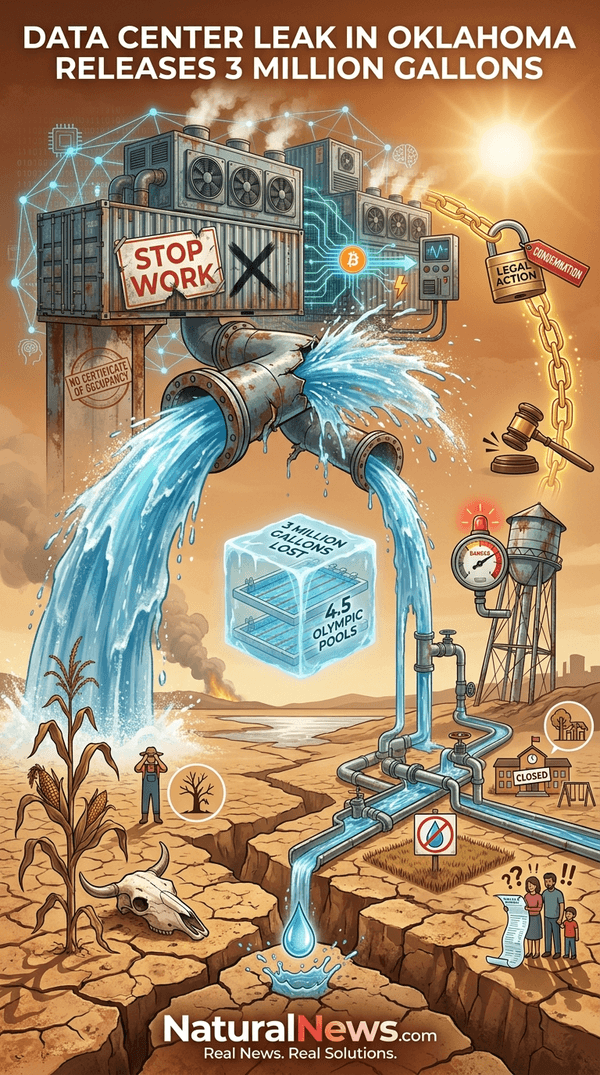
El Reno officials said a damaged private water line connected to a fire hydrant on the property leaked more than three million gallons before the source was identified and isolated. The loss was significant enough to strain the city's water system and force emergency conservation measures. Residents, however, were reassured that they would not bear the financial burden.
"The citizens of the City of El Reno can be assured that none of the costs related to the water leak at the property will be passed along to our citizens," interim City Manager Ken Brown said in a statement. He added that the city's legal team was on standby, "preparing to take the necessary legal actions to recoup all costs and expenses related to the water leak from the property owner."
According to a statement the city released, construction began on the facility after a building permit was issued in 2021. However, El Reno issued a stop-work order in June 2023 after identifying multiple fire and life-safety code violations and permit issues.
Ownership and Regulatory History
According to Canadian County property records, cited by local outlet KOCO 5 News, the site is owned by Athlon BT, a company that develops mobile data centers designed for AI storage and bitcoin mining. The facilities use containerized systems equipped with air- and water-cooling technology.
Brown said city officials believe the facility may have continued construction and potentially begun operating despite lacking a certificate of occupancy, though he noted that claim remained under investigation. Following the leak, the city condemned the property, arguing that the water line failure and other conditions presented "a hazard to the health, safety and welfare of the community."
"As this incident has demonstrated, failure to follow the City's directives and its Code of Ordinances can have catastrophic consequences," Brown said. The city's actions mirror a broader pattern of scrutiny facing data centers nationwide, as communities raise concerns about oversight and resource consumption [1].
Statewide Drought Conditions
The incident comes as drought conditions worsen across Oklahoma. The latest U.S. Drought Monitor shows 100% of Oklahoma experiencing drought conditions, with large portions of the state categorized as seeing severe, extreme, or exceptional drought. Data released on Aug. 27 showed substantial areas of western and central Oklahoma falling into the two most serious drought categories.
The Oklahoma Water Resources Bulletin reported that the state received 21% of normal rainfall during the previous 30-day period, making August among the driest on record in several regions. State Climatologist Gary McManus recently described Oklahoma as "ground-zero for flash drought," noting that parts of the state were experiencing some of the hottest and driest conditions in recorded history.
Extreme drought can lead to shrinking reservoirs, declining stock ponds, increased wildfire risk, reduced crop yields and water shortages for livestock producers, according to the U.S. Drought Monitor. In exceptional drought conditions, producers may be forced to haul water and liquidate herds because of limited supplies.
Municipal Water Conservation Measures
Three million gallons is enough water to fill roughly four and a half Olympic-size swimming pools. Based on average U.S. household water use estimates from the Environmental Protection Agency, it is also comparable to the amount of water consumed by thousands of households over the course of a month.
While Oklahoma had not issued a statewide mandatory water-use reduction order at the time of reporting, multiple communities across the Oklahoma City metropolitan area have tightened conservation measures because of the drought. In August, Edmond moved to Stage 2 water conservation restrictions, limiting lawn watering to two days per week. Deer Creek imposed a mandatory ban on irrigation systems, while Oklahoma City officials urged residents to carefully manage water use and comply with conservation schedules.
"We have a reliable water supply and a resilient system, but we can't take it for granted," Oklahoma City Utilities Director Chris Browning said. For residents, the contrast between municipal conservation mandates and industrial water consumption has become a point of tension, a dynamic seen in communities across the country where local officials are sounding alarms about data center resource demands [2].
Implications for Data Centers
The water leak has intensified scrutiny of data centers and cryptocurrency mining facilities, which have faced growing questions nationwide over their electricity consumption and water demands [3]. The incident in El Reno illustrates how individual infrastructure failures can compound the pressures that these facilities place on municipal systems already strained by drought [4].
For communities like El Reno, the timing could not be worse. As drought conditions persist across Oklahoma, the loss of more than 3 million gallons of treated water serves as a reminder of how localized infrastructure failures can strain resources across an entire community. The incident also raises questions about whether current permitting and oversight mechanisms are adequate to ensure that private industrial facilities maintain their infrastructure to code, particularly in periods of environmental stress [5].
The broader trend of data center expansion into rural and suburban areas across the U.S. has generated increasing opposition from residents concerned about resource allocation and local control [6]. In several states, including Texas and Utah, officials have reported that data centers consume millions of gallons of water daily for cooling, often in communities already facing water scarcity [7]. The Oklahoma leak adds a new dimension to these debates, demonstrating that even a single point of failure at such a facility can have measurable consequences for a community's water supply.
References
- NaturalNews.com. "Oklahoma AI Data Center Project Raises Water Use, Transparency Concerns". July 22, 2026.
- Petra Stone. "Mayors Sound Alarm: AI Data Centers Push U.S. Toward Blackouts and Water Shortages". NaturalNews.com. March 18, 2026.
- Chase Codewell. "America's Water Future Is Being Sucked Dry by Data Centers – And the Window Is Closing". NaturalNews.com. May 19, 2026.
- NaturalNews.com. "The Water Lie Data Centers Are Selling Us". May 18, 2026.
- NaturalNews.com. "Data centers vs. communities: The fight for water, land, and power intensifies". August 15, 2026.
- NaturalNews.com. "The AI data center revolt: How a battle over land, water and power is reshaping American politics". June 17, 2026.
- BrightLearn.ai. "The Digital Thirst: How the Cloud is Draining Our Last Drops". August 13, 2026.
Explainer Infographic









Please contact us for more information.