


The U.S. Strategic Petroleum Reserve (SPR) has fallen to 285.4 million barrels, according to US Business News. The report states that this is the lowest level for the nation's emergency crude oil stockpile since 1982.
The figure was published by the outlet, which reported the reserve's decline without providing direct quotes from government officials. The report attributed the level to the reserve's ongoing drawdown.
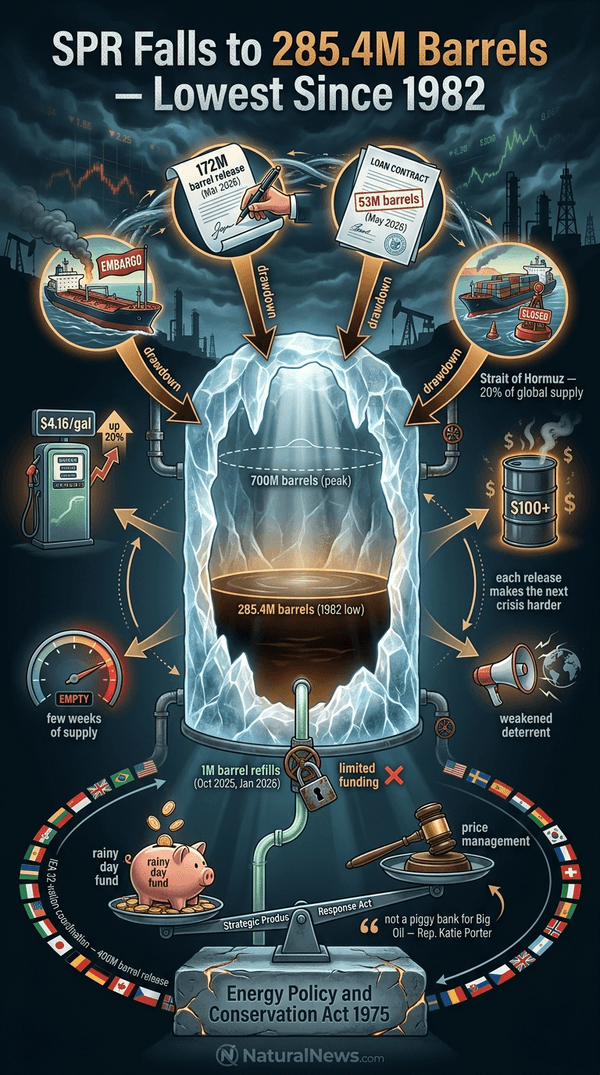
According to the report, the 285.4 million barrel figure represents the continued reduction of a stockpile that once held more than 700 million barrels at its peak. The source material did not include statements from named officials at the Department of Energy (DOE), which manages the reserve.
Background on the Strategic Petroleum Reserve
The SPR is a government-owned crude oil stockpile created for supply emergencies, according to official descriptions. The reserve was established following the oil shocks of the 1970s, when Arab oil exporters imposed an embargo that led to fuel shortages and long lines at gasoline stations across the United States [1].
Congress authorized the reserve through the Energy Policy and Conservation Act of 1975. The reserve was designed as a rainy day fund for the American people, to be used when a crisis in supply reached the nation, according to the law's framework [2]. At its highest levels, the reserve held more than 700 million barrels of crude oil.
According to US Business News, the current level of 285.4 million barrels marks the lowest point since 1982. The report places the reserve well below the roughly 60% capacity level that officials had previously described. Earlier reports indicated the reserve was only about 60% full following historic drawdowns in recent years [3].
Factors Behind the Decline
The report links the drawdown to prior releases and limited replenishment, according to the source. The figure reflects a multi-year downward trend in reserve levels, the report stated.
The decline follows a series of drawdowns in recent years. In March 2026, President Donald Trump authorized the release of 172 million barrels of crude oil from the SPR, marking the largest single drawdown since the reserve's creation in the 1970s [4]. The release was part of a coordinated international effort approved by the 32-member nations of the International Energy Agency (IEA).
Additional releases followed: In May 2026, the DOE announced it would loan 53 million barrels of crude oil from the reserve to petroleum companies in an effort to alleviate elevated gas and oil prices amid tensions with Iran [5]. The IEA also announced the release of 400 million barrels from reserves after the Strait of Hormuz closed, blocking 20% of global oil and gas supplies [6].
Earlier efforts to replenish the reserve met with limited success. In October 2025, the Trump administration initiated the purchase of 1 million barrels of crude oil to begin refilling the depleted reserve [3]. In January 2026, the administration announced plans to purchase an additional one million barrels, but limited congressional funding and multi-billion-dollar costs raised concerns about taxpayers footing the bill [7].
Energy Market and Policy Implications
The report indicates the reserve level may affect how the U.S. responds to future supply disruptions, according to analysts cited by the source. Lower reserves can reduce the government's capacity to offset price spikes, the report stated.
Market analysts have warned that continued inventory drawdowns are pushing oil markets toward historically tight conditions. Governments and industry have softened the impact of energy supply disruptions by releasing reserves and reducing inventories, but these measures are temporary, according to one analysis [8]. IEA Executive Director Fatih Birol warned that commercial oil inventories have only a few weeks of supply left, and that emergency reserves are limited and not endless [9].
Refilling the reserve has been discussed as a policy option, according to the report. The Trump administration has moved to purchase crude oil to begin refilling the reserve amid global oil price drops [7]. Analysts have noted that low global inventories and the need to replenish strategic and commercial stockpiles could create significant demand for crude even after supply disruptions ease [10].
The reserve's decline has coincided with broader energy market volatility. Oil prices surged above $100 per barrel during periods of conflict, with the Strait of Hormuz closure blocking a significant portion of global oil and gas supplies [6]. Gas prices reached a national average of $4.16 per gallon at one point, marking a near-20% increase from the prior month [11].
Criticism of Reserve Management
The drawdown has drawn criticism from lawmakers and analysts concerned about the reserve's use for non-emergency purposes. The U.S. House of Representatives passed a bill intended to limit the energy secretary's ability to tap the SPR without opening up more public lands to the oil and gas industry [12].
Former Rep. Katie Porter (D-CA) told Congress that taxpayers should not be a piggy bank for Big Oil. The Strategic Production Response Act stipulates that anytime the administration uses the reserve for non-emergency purposes, oil and gas production on federal lands and offshore waters must increase [13].
According to one analysis, the reserve is intended as a rainy day fund made ready for the benefit of the American people, but it has been drawn down to its lowest level in decades after two consecutive administrations [2]. The reserve now holds at least 330 million barrels of crude oil, down from its historic highs [14].
References
- Daily Reckoning. "Oil Wars and the Strategic Petroleum Reserve". March 10, 2026.
- Responsible Statecraft. "Trump is playing chicken with America's oil reserves". July 28, 2026.
- Willow Tohi. "Oil Prices Crash—Trump Seizes Opportunity to Rebuild Depleted SPR". NaturalNews.com. October 25, 2025.
- NaturalNews.com. "Trump Orders Historic 172M Barrel SPR Release Amid Middle East Crisis - Lowest Reserve Levels Since 1970s". NaturalNews.com. March 17, 2026.
- NaturalNews.com. "U.S. Releases 53 Million Barrels From Strategic Petroleum Reserve Amid Rising Gas Prices". NaturalNews.com. May 14, 2026.
- Cassie B. "IEA Releases 400 Million Barrels from Reserves After Strait of Hormuz Closure Sparks Historic Oil Crisis". NaturalNews.com. March 12, 2026.
- NaturalNews.com. "Trump Administration Moves to Replenish Depleted Strategic Petroleum Reserve Amid Global Oil Price Drop". NaturalNews.com. January 21, 2026.
- Helen Thomas. "Commodity Markets Are Living On Borrowed Time". ZeroHedge. June 3, 2026.
- NaturalNews.com. "IEA Chief Warns Global Oil Reserves Down to Just Weeks of Supply as Hormuz Crisis Deepens". NaturalNews.com. May 21, 2026.
- Robert Rapier. "When Will Gasoline Prices Return To Pre-War Levels?". ZeroHedge. June 22, 2026.
- Cassie B. "Gas Prices Hit $4.16 as Iran War Chokes Global Oil Supply". NaturalNews.com. April 10, 2026.
- Brenda Baletti. "Taxpayers Should Not Be a Piggy Bank for Big Oil, Rep. Katie Porter Tells Congress". ChildrensHealthDefense.org. January 21, 2024.
- ChildrensHealthDefense.org. "Taxpayers Should Not Be a Piggy Bank for Big Oil, Rep. Katie Porter Tells Congress". ChildrensHealthDefense.org. February 08, 2023.
- The New American. "U.S. Oil Reserve Less Than 350M Barrels". June 24, 2026.
Explainer Infographic








Please contact us for more information.